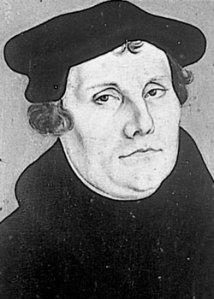
[Post 494 Years Ago Today]
DISPUTATION OF DR. MARTIN LUTHER CONCERNING PENITENCE AND INDULGENCES.
In the desire and with the purpose of elucidating the truth, a disputation will be held on the underwritten propositions at Wittemberg, under the presidency of the Reverend Father Martin Luther, Monk of the Order of St. Augustine, Master of Arts and of Sacred Theology, and ordinary Reader of the same in that place. He therefore asks those who cannot be present and discuss the subject with us orally, to do so by letter in their absence. In the name of our Lord Jesus Christ. Amen.
1. Our Lord and Master Jesus Christ in saying: “Repent ye,”1 etc., intended that the whole life of believers should be penitence.
2. This word cannot be understood of sacramental penance, that is, of the confession and satisfaction which are performed under the ministry of priests.
3. It does not, however, refer solely to inward penitence; nay such inward penitence is naught, unless it outwardly produces various mortifications of the flesh.
4. The penalty2 thus continues as long as the hatred of self—that is, true inward penit- ence—continues; namely, till our entrance into the kingdom of heaven.
5. The Pope has neither the will nor the power to remit any penalties, except those which he has imposed by his own authority, or by that of the canons.
6. The Pope has no power to remit any guilt, except by declaring and warranting it to have been remitted by God; or at most by remitting cases reserved for himself; in which cases, if his power were despised, guilt would certainly remain.
7. God never remits any man’s guilt, without at the same time subjecting him, humbled in all things, to the authority of his representative the priest.
8. The penitential canons are imposed only on the living, and no burden ought to be imposed on the dying, according to them.
9. Hence the Holy Spirit acting in the Pope does well for us, in that, in his decrees, he always makes exception of the article of death and of necessity.
10. Those priests act wrongly and unlearnedly, who, in the case of the dying, reserve the canonical penances for purgatory.
11. Those tares about changing of the canonical penalty into the penalty of purgatory seem surely to have been sown while the bishops were asleep.
12. Formerly the canonical penalties were imposed not after, but before absolution, as tests of true contrition.
13. The dying pay all penalties by death, and are already dead to the canon laws, and are by right relieved from them.
14. The imperfect soundness or charity of a dying person necessarily brings with it great fear, and the less it is, the greater the fear it brings.
15. This fear and horror is sufficient by itself, to say nothing of other things, to constitute the pains of purgatory, since it is very near to the horror of despair.
16. Hell, purgatory, and heaven appear to differ as despair, almost despair, and peace of mind differ.
17. With souls in purgatory it seems that it must needs be that, as horror diminishes, so charity increases.
18. Nor does it seem to be proved by any reasoning or any scriptures, that they are outside of the state of merit or of the increase of charity.
19. Nor does this appear to be proved, that they are sure and confident of their own blessedness, at least all of them, though we may be very sure of it.
20. Therefore the Pope, when he speaks of the plenary remission of all penalties, does not mean simply of all, but only of those imposed by himself.
21. Thus those preachers of indulgences are in error who say that, by the indulgences of the Pope, a man is loosed and saved from all punishment.
22. For in fact he remits to souls in purgatory no penalty which they would have had to pay in this life according to the canons.
23. If any entire remission of all penalties can be granted to any one, it is certain that it is granted to none but the most perfect, that is, to very few.
24. Hence the greater part of the people must needs be deceived by this indiscriminate and high-sounding promise of release from penalties.
25. Such power as the Pope has over purgatory in general, such has every bishop in his own diocese, and every curate in his own parish, in particular.
26. The Pope acts most rightly in granting remission to souls, not by the power of the keys (which is of no avail in this case) but by the way of suffrage.
27. They preach man, who say that the soul flies out of purgatory as soon as the money thrown into the chest rattles.
28. It is certain that, when the money rattles in the chest, avarice and gain may be in- creased, but the suffrage of the Church depends on the will of God alone.
29. Who knows whether all the souls in purgatory desire to be redeemed from it, accord- ing to the story told of Saints Severinus and Paschal.
30. No man is sure of the reality of his own contrition, much less of the attainment of plenary remission.
31. Rare as is a true penitent, so rare is one who truly buys indulgences—that is to say, most rare.
32. Those who believe that, through letters of pardon, they are made sure of their own salvation, will be eternally damned along with their teachers.
33. We must especially beware of those who say that these pardons from the Pope are that inestimable gift of God by which man is reconciled to God.
34. For the grace conveyed by these pardons has respect only to the penalties of sacra- mental satisfaction, which are of human appointment.
35. They preach no Christian doctrine, who teach that contrition is not necessary for those who buy souls out of purgatory or buy confessional licences.
36. Every Christian who feels true compunction has of right plenary remission of pain and guilt, even without letters of pardon.
37. Every true Christian, whether living or dead, has a share in all the benefits of Christ and of the Church, given him by God, even without letters of pardon.
38. The remission, however, imparted by the Pope is by no means to be despised, since it is, as I have said, a declaration of the Divine remission.
39. It is a most difficult thing, even for the most learned theologians, to exalt at the same time in the eyes of the people the ample effect of pardons and the necessity of true contrition.
40. True contrition seeks and loves punishment; while the ampleness of pardons relaxes it, and causes men to hate it, or at least gives occasion for them to do so.
41. Apostolical pardons ought to be proclaimed with caution, lest the people should falsely suppose that they are placed before other good works of charity.
42. Christians should be taught that it is not the mind of the Pope that the buying of pardons is to be in any way compared to works of mercy.
43. Christians should be taught that he who gives to a poor man, or lends to a needy man, does better than if he bought pardons.
44. Because, by a work of charity, charity increases, and the man becomes better; while, by means of pardons, he does not become better, but only freer from punishment.
45. Christians should be taught that he who sees any one in need, and, passing him by, gives money for pardons, is not purchasing for himself the indulgences of the Pope, but the anger of God.
46. Christians should be taught that, unless they have superfluous wealth, they are bound to keep what is necessary for the use of their own households, and by no means to lavish it on pardons.
47. Christians should be taught that, while they are free to buy pardons, they are not commanded to do so.
48. Christians should be taught that the Pope, in granting pardons, has both more need and more desire that devout prayer should be made for him, than that money should be readily paid.
49. Christians should be taught that the Pope’s pardons are useful, if they do not put their trust in them, but most hurtful, if through them they lose the fear of God.
50. Christians should be taught that, if the Pope were acquainted with the exactions of the preachers of pardons, he would prefer that the Basilica of St. Peter should be burnt to ashes, than that it should be built up with the skin, flesh, and bones of his sheep.
51. Christians should be taught that, as it would be the duty, so it would be the wish of the Pope, even to sell, if necessary, the Basilica of St. Peter, and to give of his own money to very many of those from whom the preachers of pardons extract money.
52. Vain is the hope of salvation through letters of pardon, even if a commissary—nay, the Pope himself—were to pledge his own soul for them.
53. They are enemies of Christ and of the Pope, who, in order that pardons may be preached, condemn the word of God to utter silence in other churches.
54. Wrong is done to the word of God when, in the same sermon, an equal or longer time is spent on pardons than on it.
55. The mind of the Pope necessarily is that, if pardons, which are a very small matter, are celebrated with single bells, single processions, and single ceremonies, the Gospel, which is a very great matter, should be preached with a hundred bells, a hundred processions, and a hundred ceremonies.
56. The treasures of the Church, whence the Pope grants indulgences, are neither suffi- ciently named nor known among the people of Christ.
57. It is clear that they are at least not temporal treasures, for these are not so readily lavished, but only accumulated, by many of the preachers.
58. Nor are they the merits of Christ and of the saints, for these, independently of the Pope, are always working grace to the inner man, and the cross, death, and hell to the outer man.
59. St. Lawrence said that the treasures of the Church are the poor of the Church, but he spoke according to the use of the word in his time.
60. We are not speaking rashly when we say that the keys of the Church, bestowed through the merits of Christ, are that treasure.
61. For it is clear that the power of the Pope is alone sufficient for the remission of penalties and of reserved cases.
62. The true treasure of the Church is the Holy Gospel of the glory and grace of God.
63. This treasure, however, is deservedly most hateful, because it makes the first to be last.
64. While the treasure of indulgences is deservedly most acceptable, because it makes the last to be first.
65. Hence the treasures of the Gospel are nets, wherewith of old they fished for the men of riches.
66. The treasures of indulgences are nets, wherewith they now fish for the riches of men.
67. Those indulgences, which the preachers loudly proclaim to be the greatest graces, are seen to be truly such as regards the promotion of gain.
68. Yet they are in reality in no degree to be compared to the grace of God and the piety of the cross.
69. Bishops and curates are bound to receive the commissaries of apostolical pardons with all reverence.
70. But they are still more bound to see to it with all their eyes, and take heed with all their ears, that these men do not preach their own dreams in place of the Pope’s commission.
71. He who speaks against the truth of apostolical pardons, let him be anathema and accursed.
72. But he, on the other hand, who exerts himself against the wantonness and licence of speech of the preachers of pardons, let him be blessed.
73. As the Pope justly thunders against those who use any kind of contrivance to the injury of the traffic in pardons,
74. Much more is it his intention to thunder against those who, under the pretext of pardons, use contrivances to the injury of holy charity and of truth.
75. To think that Papal pardons have such power that they could absolve a man even if—by an impossibility—he had violated the Mother of God, is madness.
76. We affirm on the contrary that Papal pardons cannot take away even the least of venial sins, as regards its guilt.
77. The saying that, even if St. Peter were now Pope, he could grant no greater graces, is blasphemy against St. Peter and the Pope.
78. We affirm on the contrary that both he and any other Pope has greater graces to grant, namely, the Gospel, powers, gifts of healing, etc. (1 Cor. xii. 9.)
79. To say that the cross set up among the insignia of the Papal arms is of equal power with the cross of Christ, is blasphemy.
80. Those bishops, curates, and theologians who allow such discourses to have currency among the people, will have to render an account.
81. This licence in the preaching of pardons makes it no easy thing, even for learned men, to protect the reverence due to the Pope against the calumnies, or, at all events, the keen questionings of the laity.
82. As for instance:—Why does not the Pope empty purgatory for the sake of most holy charity and of the supreme necessity of souls—this being the most just of all reasons—if he redeems an infinite number of souls for the sake of that most fatal thing money, to be spent on building a basilica—this being a very slight reason?
83. Again; why do funeral masses and anniversary masses for the deceased continue, and why does not the Pope return, or permit the withdrawal of the funds bequeathed for this purpose, since it is a wrong to pray for those who are already redeemed?
84. Again; what is this new kindness of God and the Pope, in that, for money’s sake, they permit an impious man and an enemy of God to redeem a pious soul which loves God, and yet do not redeem that same pious and beloved soul, out of free charity, on account of its own need?
85. Again; why is it that the penitential canons, long since abrogated and dead in themselves in very fact and not only by usage, are yet still redeemed with money, through the granting of indulgences, as if they were full of life?
86. Again; why does not the Pope, whose riches are at this day more ample than those of the wealthiest of the wealthy, build the one Basilica of St. Peter with his own money, rather than with that of poor believers?
87. Again; what does the Pope remit or impart to those who, through perfect contrition, have a right to plenary remission and participation?
88. Again; what greater good would the Church receive if the Pope, instead of once, as he does now, were to bestow these remissions and participations a hundred times a day on any one of the faithful?
89. Since it is the salvation of souls, rather than money, that the Pope seeks by his par- dons, why does he suspend the letters and pardons granted long ago, since they are equally efficacious.
90. To repress these scruples and arguments of the laity by force alone, and not to solve them by giving reasons, is to expose the Church and the Pope to the ridicule of their enemies, and to make Christian men unhappy.
91. If then pardons were preached according to the spirit and mind of the Pope, all these questions would be resolved with ease; nay, would not exist.
92. Away then with all those prophets who say to the people of Christ: “Peace, peace,” and there is no peace.
93. Blessed be all those prophets, who say to the people of Christ: “The cross, the cross,” and there is no cross.
94. Christians should be exhorted to strive to follow Christ their head through pains, deaths, and hells.
95. And thus trust to enter heaven through many tribulations, rather than in the security of peace.
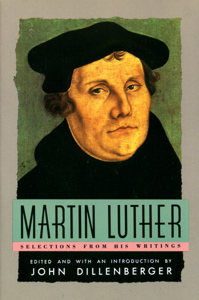
~Martin Luther~
Ninety-Five Theses (Grand Rapids, Michigan; Christian Classics Ethereal Library; 2006) eBook: First Principles of the Reformation
Books by Martin Luther
Biography of Martin Luther
Other Luther Quotes
Tags: Martin Luther, The First Principles of the Reformation









 The Old Guys