Archive by Author

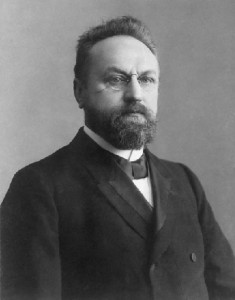
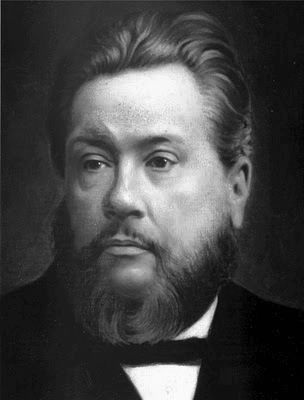
Herman Bavinck – The Doctrine of the Trinity

27 Sep

The doctrine of the Trinity is of incalculable importance for the Christian religion. The entire Christian belief system, all of special revelation, stands or falls with the confession of Gods Trinity. It is the core of the Christian faith, the root of all its dogmas, the basic content of the new covenant. It was this religious Christian interest, accordingly, that sparked the development of the church’s doctrine of the Trinity. At stake in this development—let it be said emphatically—was not a metaphysical theory or a philosophical speculation but the essence of the Christian religion itself. This is so strongly felt that all who value being called a Christian recognize and believe in a kind of Trinity. The profoundest question implicit in every Christian creed and system of theology is how God can be both one and yet three. Christian truth in all its parts comes into its own to a lesser or greater extent depending on how that question is answered. In the doctrine of the Trinity we feel the heartbeat of God’s entire revelation for the redemption of humanity. Though foreshadowed in the Old Testament, it only comes to light fully in Christ. Religion can be satisfied with nothing less than God himself. Now in Christ God himself comes out to us, and in the Holy Spirit he communicates himself to us. The work of re-crearion is trinitarian through and through. From God, through God, and in God are all things. Re-creation is one divine work from beginning to end, yet it can be described in terms of three agents: it is fully accomplished by the love of the Father, the grace of the Son, and the communion of the Holy Spirit. A Christian’s faith life, accordingly, points back to three generative principles… We know ourselves to be children of the Father, redeemed by the Son, and in communion with both through the Holy Spirit. Every blessing, both spiritual and material, comes to us from the triune God. In that name we are baptized; that name sums up our confession; that name is the source of all the blessings that come down to us; to that name we will forever bring thanksgiving and honor; in that name we find rest for our souls and peace for our conscience. Christians have a God above them, before them, and within them. Our salvation, both in this life and in the life to come, is bound up with the doctrine of the Trinity.

~Herman Bavinck~


Reformed Dogmatics Vol. 1: Prolegomena (Grand Rapids, Michigan; Baker Academic; 2003) p. 333-334.
Read More By Bavinck

Read More About Bavinck

Other Bavinck Quotes

Charles Spurgeon – God on His Throne

26 Sep

Spurgeon Bio

6. “Thy throne, O God, is for ever and ever.” To whom can this be spoken but our Lord ? The Psalmist cannot restrain his adoration. His enlightened eye sees in the royal Husband of the church. God, God to be adored, God reigning, God reigning everlastingly. Blessed sight! Blind are the eyes that cannot see God in Christ Jesus! We never appreciate the tender condescension of our King in becoming one flesh with his church, and placing her at his right hand, until we have fully rejoiced in his essential glory and deity. What a mercy for us that our Saviour is God, for who but a God could execute the work of salvation? What a glad thing it is that he reigns on a throne which will never pass away, for we need both sovereign grace and eternal love to secure our happiness. Could Jesus cease to reign we should cease to be blessed, and were he not God, and therefore eternal, this must be the case. No throne can endure for ever, but that on which God himself sitteth.

~Charles Spurgeon~


The Treasury of David Vol. 1 (Peabody, Maryland; The Hendrikson Publisher; 1988) p. 315 – Commentary on Psalm 45:6.

Read More By Spurgeon

Read More About Spurgeon

Other Spurgeon Quotes

Charles Spurgeon – The Holy Spirit

24 Sep

We are so much accustomed to talk about the influence of the Holy Ghost and his sacred operations and graces, that we are apt to forget that the Holy Spirit is truly and actually a person–that he is a subsistence–an existence; or, as we Trinitarians usually say, one person in the essence of the Godhead. I am afraid that, though we do not know it, we have acquired the habit of regarding the Holy Ghost as an emanation flowing from the Father and the Son, but not as being actually a person himself. I know it is not easy to carry about in our mind the idea of the Holy Spirit as a person. I can think of the Father as a person, because his acts are such as I can understand. I see him hang the world in ether; I behold him swaddling a new-born sea in bands of darkness; I know it is he who formed the drops of hail, who leadeth forth the stars by their hosts, and calleth them by their name; I can conceive of Him as a person, because I behold his operations. I can realize Jesus, the Son of Man, as a real person, because he is bone of my bone and flesh of my flesh. It takes no great stretch of my imagination to picture the babe in Bethlehem, or to behold the “Man of sorrows and acquainted with grief,” of the king of martyrs, as he was persecuted in Pilate’s hall, or nailed to the accursed tree for our sins. Nor do I find it difficult at times to realize the person of my Jesus sitting on his throne in heaven; or girt with clouds and wearing the diadem of all creation, calling the earth to judgment, and summoning us to hear our final sentence. But when I come to deal with the Holy Ghost, his operations are so mysterious, his doings are so secret, his acts are so removed from everything that is of sense, and of the body, that I cannot so easily get the idea of his being a person; but a person he is. God the Holy Ghost is not an influence, an emanation, a stream of something flowing from the Father; but he is as much an actual person as either God the Son, or God the Father.

~Charles Spurgeon~


Spurgeon’s Sermons (Spokane, Washington; Olive Tree Bible Software; 2010) eBook. Vol. 1, Sermon No. 4; Titled: The Personality of the Holy Spirit; Delivered on Sabbath Morning, January 21, 1855.
Read More By Spurgeon

Read More About Spurgeon

Other Spurgeon Quotes

Herman Bavinck – A Theologian’s Sole Responsibilty

23 Sep

The imperative task of the dogmatician is to think God’s thoughts after him and to trace their unity. His work is not finished until he has mentally absorbed this unity and set it forth in a dogmatics. Accordingly, he does not come to God’s revelation with a ready-made system in order, as best he can, to force its content into it. On the contrary, even in his system a theologian’s sole responsibility is to think God’s thoughts after him and to reproduce the unity that is objectively present in the thoughts of god and has been recorded for the eye of faith in Scripture.

~Herman Bavinck~


Reformed Dogmatics Vol. 1: Prolegomena (Grand Rapids, Michigan; Baker Academic; 2003) p. 44.

Read More By Bavinck

Read More About Bavinck

Other Bavinck Quotes

Thomas Chalmers – Come Over Entirely to the Ground of a Redeemer’s Blood

22 Sep

The foundation of your trust before God, must be either your own righteousness out and out, or the righteousness of Christ out and out. . . If you are to lean upon your own merit, lean upon it wholly — if you are to lean upon Christ, lean upon him wholly. The two will not amalgamate together, and it is the attempt to do so, which keeps many a weary and heavy-laden inquirer at a distance from rest, and at a distance from the truth of the gospel. Maintain a clear and consistent posture. Stand not before God with one foot upon a rock and the other upon a treacherous quicksand…We call upon you not to lean so much as the weight of one grain or scruple of your confidence upon your own doings — to leave this ground entirely, and to come over entirely to the ground of a Redeemer’s blood and a Redeemer’s righteousness.

~Thomas Chalmers~


Lectures on Romans (http://newble.co.uk/chalmers) Excerpted from Lecture XI on Romans 3:20-26 [Also found cited by the editor in a footnote in Calvin’s Commentaries on Romans 3:21]

Read More By Chalmers

John Flavel – The Aim of Paul’s Ministry

21 Sep

“I determined to know nothing,” that is, to study nothing myself, to teach nothing to you, but “Jesus Christ.” Christ shall be the center to which all the lines of my ministry shall be drawn. I have spoken and written of many other subjects in my sermons and epistles, but it is all reductively the preaching and discovery of Jesus Christ: of all the subjects in the world, this is the sweetest; if there be any thing on this side heaven, worthy our time and studies, this is it. Thus he magnifies his doctrine, from the excellency of its subject-matter, accounting all other doctrines but airy things, compared with this.

~John Flavel~


The Fountain of Life Opened Up (Portland, Oregon; MonergismBooks.com; 2010) eBook. Sermon 1: The Excellency of the Subject.

Read More by Flavel

Geerhardus Vos – The Aim of Revelation

20 Sep

God’s self-revelation to us was not made for a primarily intellectual purpose. It is not to be overlooked, of course, that the truly pious mind may through an intellectual contemplation of the divine perfections glorify God. This would be just as truly religious as the intensest occupation of the will in the service of God. But it would not be the full-orbed religion at which, as a whole, revelation aims. It is true, the Gospel teaches that to know God is life eternal. But the concept of ‘knowledge’ here is not to be understood in its Hellenic sense, but in the Shemitic sense. According to the former, ‘to know’ means to mirror the reality of a thing in one’s consciousness. The Shemitic and Biblical idea is to have the reality of something practically interwoven with the inner experience of life. Hence ‘to know’ can stand in the Biblical idiom for ‘to love’, ‘to single out in love.’ Because God desires to be known after this fashion, He has caused His revelation to take place in the milieu of the historical life of a people. The circle of revelation is not a school, but a ‘covenant’.

~Geerhardus Vos~

Biblical Theology: Old and New Testaments (Edinburgh, Scotland; The Banner of Truth Trust; 1975), p. 8.

Find more Vos resources here.

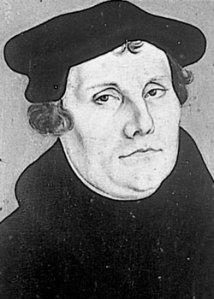
Martin Luther – Free… to Serve

19 Sep

A Christian man is the most free lord of all, and subject to none; a Christian man is the most dutiful servant of all, and subject to every one.

~Martin Luther~


Concerning Christian Liberty as found in Christian Apologetics Past and Present Vol. 2 (Wheaton, Illinois; Crossway Books; 2011) p. 24

Read More By Luther

Read More About Luther

Other Luther Quotes

The Old Guys Book Giveaway!

19 Sep

Starting today and ending this Friday, September 23 any who wish will have the opportunity to win a copy of a book written by one of the old guys! We hope to have these giveaways from time to time and our desire is that this will help someone have the opportunity to dive deeper into a specific work by one of our beloved old guys.

This week’s giveaway features: John Owen.

J.I. Packer had this to say about him:

“Owen was by common consent the weightiest Puritan theologian, and many would bracket him with Jonathan Edwards as one of the greatest Reformed theologians of all time. “

The Book: Communion with the Triune God


WTS Books describes the book this way:

“Does it make a difference that the God Christians claim to worship has revealed himself as triune—the Father, Son, and Holy Spirit? Does this fundamental truth of biblical authority have an effect on a believe’s personal fellowship with God?

Puritan theologian John Owen (1616-1683) recognized the great need for every believer to understand the triune God. Communion with the Triune God revisits the truth presented by John Owen and challenges all believers to truly recognize and appreciate the ministry that God the Father, God the Son, and God the Holy Spirit have in their lives. This work of John Owen encourages Christians to enjoy true communion with each person of the triune God.”


To Win All You Have to Do Is:

1. Leave a comment below and answer the question “Who is your favorite old guy?”.
2. Subscribe to The Old Guys via RSS, Email, Facebook or Twitter and help get the word out about the old guys!


A winner will be chosen at random and contacted via email.

Charles Spurgeon – Life Proved by Love

17 Sep

So, Brothers and Sisters, if we can say that we love God’s people, as God’s people, because they are God’s people, that is a mark that we have passed from death unto life! Do you love them for Christ’s sake? Do you say to yourself, “That is one of Christ’s people. That is one who bears Christ’s Cross. That is one of the children of God and, therefore, I love him and take delight in his company”? Then that is an evidence that you are not of the world. If you were, you would love the world, but, belonging to Christ, you love those who are Christ’s and you love them for Christ’s sake.

~Charles Spurgeon~


Spurgeon’s Sermons (Spokane, Washington; Olive Tree Bible Software; 2010) eBook. Vol. 44, Sermon No. 2556; Titled: Life Proved by Love; Delivered on Thursday Evening, January 18, 1883.

Read More By Spurgeon

Read More About Spurgeon

Other Spurgeon Quotes