Archive | God RSS feed for this section

John Calvin – When The Fewness of Believers Disturbs You

28 Jan

If God has willed this treasure of understanding to be hidden from his children, it is no wonder or absurdity that the multitude of men are so ignorant and stupid! Among the “multitude” I include even certain distinguished folk, until they become engrafted into the body of the church. Besides, Isaiah, warning that the prophetic teaching would be beyond belief, not only to foreigners but also to the Jews who wanted to be reckoned as members of the Lord’s household, at the same time adds the reason: “The arm of God will not be revealed” to all [Isa. 53:1 p.]. Whenever, then, the fewness of believers disturbs us, let the converse come to mind, that only those to whom it is given can comprehend the mysteries of God [cf. Matt. 13:11].

~John Calvin~


Institutes of the Christian Religion, Volumes 1 & 2, ed. John T. McNeill, trans. Ford Lewis Battles, The Library of Christian Classics (Louisville, KY: Westminster John Knox Press, 2011) Vol. 1.7.5. p. 81.

Books by John Calvin

Biography of John Calvin

Kindle Books

Online Books Available

Other Calvin Quotes

George Smeaton – Just and Justifier

24 Jan
SMEATON-George-210x263

1814-1889. Scottish minister and Professor of New Testament Exegesis at New College, Edinburgh.

The design or final cause which God had in view in the whole matter of the atonement is next subjoined: that He might be just, and the justifier (Rom. 3:26). The allusion is to the concurrence or harmony of these two perfections of God. The word JUST, applied to God, means that He asserts just claims and inflicts just punishment. It is a perversion of language to interpret the term as if it could mean anything else than justice in the ordinary acceptation of the word among men made in the image of God. The contrast in which it is placed to divine forbearance, and the allusion to the propitiatory, allow no doubt as to its import Justice seemed to slumber during that period of forbearance; now it is displayed.

But this determines the character of the atonement Such language would be unmeaning, if it were not admitted that the atonement is in the proper sense of the word a satisfaction of divine justice. This single clause, therefore, fully warrants the expression in common use, notwithstanding all the objections which have been adduced against it as unfitting or unwarrantable. And when the apostle adds, “that He might be just, AND THE JUSTIFIER,” he alludes to the fact that these two apparently conflicting perfections, justice and grace, meet in full harmony on the cross: justice suffers no violence, and grace has full outlet.

~George Smeaton~


The Doctrine of the Atonement, as Taught by the Apostles (Edinburgh: T&T Clark, 1870), 142-143.

Books by George Smeaton

The Smeaton Theology Collection on Logos Bible Software

Kindle Books

More Smeaton Quotes at The Old Guys

George Smeaton – Love Is Prominent in the Atonement

15 Jan
SMEATON-George-210x263

1814-1889. Scottish minister and Professor of New Testament Exegesis at New College, Edinburgh.

16 “For God so loved the world, that he gave his only Son, that whoever believes in him should not perish but have eternal life. – John 3:16

The atonement is here described as emanating from the love of God. These words of Christ plainly show that the biblical doctrine on this point is not duly exhibited, unless love receives a special prominence; and that it would be a misrepresentation against which the biblical divine must protest, if, under the influence of any theory or dogmatic prejudice, love is not allowed to come to its rights. If even justice were made paramount, the balance of truth would be destroyed.

~George Smeaton~


The Doctrine of the Atonement, as Taught by Christ Himself, Second Edition (Edinburgh: T&T Clark, 1871), 45-46.

Books by George Smeaton

The Smeaton Theology Collection on Logos Bible Software

Kindle Books

More Smeaton Quotes at The Old Guys

Louis Berkhof – The Great Presupposition of Theology

9 Jan
1873-1957. Reformed Systematic theologian. President of Calvin Seminary.

1873-1957. Reformed Systematic theologian. President of Calvin Seminary.

For us the existence of God is the great presupposition of theology. There is no sense in speaking of the knowledge of God, unless it may be assumed that God exists. The presupposition of Christian theology is of a very definite type. The assumption is not merely that there is something, some idea or ideal, some power or purposeful tendency, to which the name of God may be applied, but that there is a self-existent, self-conscious, personal Being, which is the origin of all things, and which transcends the entire creation, but is at the same time immanent in every part of it. The question may be raised, whether this is a reasonable assumption, and this question may be answered in the affirmative. This does not mean, however, that the existence of God is capable of a logical demonstration that leaves no room whatever for doubt; but it does mean that, while the truth of God’s existence is accepted by faith, this faith is based on reliable information. While Reformed theology regards the existence of God as an entirely reasonable assumption, it does not claim the ability to demonstrate this by rational argumentation. Dr. Kuyper speaks as follows of the attempt to do this: “The attempt to prove God’s existence is either useless or unsuccessful. It is useless if the searcher believes that God is a rewarder of those who seek Him. And it is unsuccessful if it is an attempt to force a person who does not have this pistis by means of argumentation to an acknowledgment in a logical sense.”

~Louis Berkhof~


Systematic Theology (Grand Rapids, MI: Wm. B. Eerdmans publishing co., 1938), 20–21.

Books by Louis Berkhof

Kindle Books

Louis Berkhof on Logos Bible Software

More Berkhof Quotes

Herman Bavinck – The Central Fact of the Entire History of the World

30 Dec

The doctrine of Christ is not the starting point, but it certainly is the central point of the whole system of dogmatics. All other dogmas either prepare for it or are inferred from it. In it, as the heart of dogmatics, pulses the whole of the religious-ethical life of Christianity. It is “the mystery of godliness” (1 Tim. 3:16). From this mystery all Christology has to proceed. If, however, Christ is the incarnate Word, then the incarnation is the central fact of the entire history of the world; then, too, it must have been prepared from before the ages and have its effects throughout eternity.

~Herman Bavinck~


Reformed Dogmatics Volume 3: Sin and Salvation in Christ (Grand Rapids, MI: Baker Academic, 2006), p. 274.

Books by Herman Bavinck

Kindle Books

Biography of Herman Bavinck

More Bavinck Quotes

John Owen: Christ is God and Man in One Person

28 Dec

1616 -1683. Preeminent English Puritan theologian, pastor, and independent.

QUESTION. It was queried by some, how we may make our application unto Christ; not in general, but under what notion and apprehension of the person of Christ?

ANSWER. Because some seem to apprehend there might be danger in terminating our worship upon the nature of Christ as a creature, I shall give you my thoughts and directions in it. And,—
First. You must observe we are to have no conceptions, in our acting of any duty, towards Christ or about him, but with respect unto his person as he is God and man in one person. It is not lawful for us to have any apprehensions of Christ, to make any application to him, as man only; nor is it lawful for us to have any apprehensions of him as God only: but all our apprehensions of Christ, and all our addresses unto him, must be as God and man in one person. So he is, and so he will be to all eternity. The union is inseparable and indissoluble; and for any man to make his application unto Christ either as God or as man, is to set up a false Christ. Christ is God and man in one person, and no other. So, in all our actings of faith upon him, and applications unto him, we ought to consider him as he was “the seed of David,” and as “God over all, blessed for ever,” in one person.

~John Owen~


The Works of John Owen, ed. William H. Goold, vol. 8: Sermons to the Nations (Edinburgh: T&T Clark, n.d.), 373.

Books by John Owen

Kindle Books

Biography of John Owen

Other Owen Quotes

Herman Bavinck – Jesus: David’s Son and David’s Lord

24 Dec

Jesus was counted a son of David by the reckoning of Joseph’s lineage, not by that of Mary’s. All the emphasis is on Joseph’s Davidic descent, not only in Matthew (1:16, 20) but also in Luke (1:27; 2:4). Although Jesus was not the natural son of Joseph, through Mary, who was engaged to Joseph, he was civilly and legally the son of Joseph (Luke 2:27, 41, 48) and inherited from him the rights to David’s throne. Also for that reason Joseph was warned by God to take Mary as his lawful wife, to act as head and father of the family, and in that capacity to give the child the name “Jesus” (Matt. 1:18–21). Thus Christ became David’s son and simultaneously remained David’s Lord.

The exclusion of the man from his conception at the same time had the effect that Christ, as one not included in the covenant of works, remained exempt from original sin and could therefore also be preserved in terms of his human nature, both before and after his birth, from all pollution of sin. As subject, as “I,” he did not descend from Adam but was the Son of the Father, chosen from eternity to be the head of a new covenant. Not Adam but God was his father. As a person he was not the product of humankind but himself came to humankind from without and entered into its ranks. And since he thus, in God’s righteous judgment, remained exempt from all original sin, he could be conceived by the Holy Spirit and by that Spirit remain free from all pollution of sin. Conception by the Holy Spirit was not the deepest ground and final cause of Jesus’ sinlessness, as many theologians say, but it was the only way in which he who already existed as a person and was appointed head of a new covenant could now also in a human way—in the flesh—be and remain who he was: the Christ, Son of God the Most High.

~Herman Bavinck~


Reformed Dogmatics Volume 3: Sin and Salvation in Christ (Grand Rapids, MI: Baker Academic, 2006), p. 294-295.

Books by Herman Bavinck

Kindle Books

Biography of Herman Bavinck

More Bavinck Quotes

B.B. Warfield – Who Is The Calvinist?

3 Dec

The exact formulation of the formative principle of Calvinism, as I have said, has taxed the acumen of a long line of distinguished thinkers. Many modes of stating it have been proposed. Perhaps after all, however, its simplest statement is the best. It lies then, let me repeat, in a profound apprehension of God in His majesty, with the poignant realization which inevitably accompanies this apprehension, of the relation sustained to God by the creature as such, and particularly by the sinful creature. The Calvinist is the man who has seen God, and who, having seen God in His glory, is filled on the one hand, with a sense of his own unworthiness to stand in God’s sight as a creature, and much more as a sinner, and on the other hand, with adoring wonder that nevertheless this God is a God who receives sinners. He who believes in God without reserve and is determined that God shall be God to him, in all his thinking, feeling, willing–in the entire compass of his life activities, intellectual, moral, spiritual–throughout all his individual, social, religious relations–is, by the force of that strictest of all logic which presides over the outworking of principles into thought and life, by the very necessity of the case, a Calvinist.


~B.B. Warfield~


The Theology of John Calvin (Presbyterian Board of Education; 1909) HT: Tony Reinke

The Calvinist: A Poem and Video by John Piper
(RSS click through for video)


Books by B.B. Warfield

More Warfield Quotes at The Old Guys

Jonathan Edwards – God Communicates His Own Happiness To Us

15 Nov

jonathan-edwards

Another part of God’s fulness which he communicates, is his happiness. This happiness consists in enjoying and rejoicing in himself; and so does also the creature’s happiness. It is a participation of what is in God; and God and his glory are the objective ground of it. The happiness of the creature consists in rejoicing in God; by which also God is magnified and exalted. Joy, or the exulting of the heart in God’s glory, is one thing that belongs to praise. So that God is all in all, with respect to each part of that communication of the divine fulness which is made to the creature. What is communicated is divine, or something of God; and each communication is of that nature, that the creature to whom it is made, is thereby conformed to God, and united to him: and that in proportion as the communication is greater or less. And the communication itself is no other, in the very nature of it, than that wherein the very honour, exaltation, and praise of God consists.

~Jonathan Edwards~


The Works of Jonathan Edwards Vol. 1 (Peabody, MA; Hendrickson Publishers, Inc; 2007) p. 101. The End For Which God Created The World

Books by Jonathan Edwards

Biography of Jonathan Edwards

Online Books Available

Other Edwards Quotes

Francis Turretin – God Has Bound Us To The Scriptures

1 Nov

turretin

SECOND QUESTION: THE NECESSITY OF SCRIPTURE
Was it necessary for the word of God to be committed to writing? We affirm.

1. As in the preceding question we have proved the necessity of the word, so in this we treat of the necessity of the Scriptures (or the written word) against the papists. For as they endeavor studiously to weaken the authority of Scripture in order the more easily to establish their unwritten (agraphous) traditions and the supreme tribunal of the pope himself; so, for the same reason, they are accustomed in many ways to impair its necessity in order to prove it useful indeed to to the church, but not necessary. Yea Cardinal Hosius does not hesitate blasphemously to say, “Better would it be for the interests of the church had no Scripture ever existed”; and Valentia, “It would be better had it not been written.”

2. As to the state of the question, keep in mind that the word “Scripture” is used in two senses: either materially, with regard to the doctrine delivered; or formally with regard to the writing and mode of delivery. In the former sense (as we said before), we hold it to be necessary with respect to God. For two thousand years before the time of Moses, he instructed his church by the spoken word alone; so he could (if he wished) have taught in the same manner afterwards, but only hypothetically (on account of the divine will) since God has seen fit for weighty reasons to commit his word to writing. Hence the divine ordination being established, it is made necessary to the church, so that it pertains not only to the well-being (bene esse) of the church, but also to its very existence (esse). Without it the church could not now stand. So God indeed was not bound to the Scriptures, but he has bound us to them.”

3. Therefore the question is not whether the writing of the word was absolutely and simply necessary, but relatively and hypothetically; not for every age, but now in this state of things; nor relatively to the power and liberty of God, but to his wisdom and economy as dealing with man.


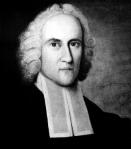
~Francis Turretin~


Institutes of Elenctic Theology – Volume 1 (Phillipsburg, NJ; P&R Publishing; 1992) p. 57.
Books by Francis Turretin

Kindle Books

Other Turretin Quotes at The Old Guys