Archive | God RSS feed for this section

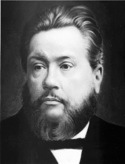
Charles Spurgeon – Where Are Your Hearts?

24 Oct

20120713-214637.jpg

Let me appeal personally to you in an interrogatory style, for this has weight with it. Sinner! why art thou at enmity with God? God is the God of love; he is kind to his creatures; he regards you with his love of benevolence; for this very day his sun hath shone upon you, this day you have had food and raiment, and you have come up here in health and strength. Do you hate God because he loves you? Is that the reason? Consider how many mercies you have received at his hands all your lives long! You are born with a body not deformed; you have had a tolerable share of health; you have been recovered many times from sickness; when lying at the gates of death; his arm has held back your soul from the last step to destruction. Do you hate God for all this? Do you hate him because he spared your life by his tender mercy? Behold his goodness that he hath spread before you! He might have sent you to hell; but you are here. Now, do you hate God for sparing you? Oh, wherefore art thou at enmity with him? My fellow creature, dost thou not know that God sent his Son from his bosom, hung him on the tree, and there suffered him to die for sinners, the just for the unjust? and dost thou hate God for that? Oh, sinner, is this the cause of thine enmity? Art thou so estranged that thou givest enmity for love? And when he surroundeth thee with favors, girdeth thee with mercies, encircleth thee with loving kindness, dost thou hate him for this? He might say as Jesus did to the Jews: “For which of these works do ye stone me?” For which of these works do ye hate God? Did an earthly benefactor feed you, would you hate him? Did he clothe you, would you abuse him to his face? Did he give you talents, would you turn those powers against him? Oh, speak! Would you forge the iron and strike the dagger into the heart of your best friend? Do you hate your mother who nursed you on her knee? Do you curse your father who so wisely watched over you? Nay, ye say, we have some little gratitude towards earthly relatives. Where are your hearts, then? Where are your hearts, that ye can still despise God, and be at enmity with him? Oh! diabolical crime! Oh! satanic enormity! Oh! iniquity for which words fail in description! to hate the all-lovely—to despise the essentially good—to abhor the constantly merciful—to spurn the ever-beneficent—to scorn the kind, the gracious one; above all, to hate the God who sent his Son to die for man! Ah! in that thought—“the carnal mind is enmity against God,”—there is something which may make us shake; for it is a terrible sin to be at enmity with God. I would I could speak more powerfully, but my Master alone can impress upon you the enormous evil of this horrid state of heart.


~Charles Spurgeon~


The New Park Street Pulpit Sermons, Vol. I (London: Passmore & Alabaster, 1855), 154-155. Vol. 1, Sermon No. 20; Titled: The Carnal Mind Enmity Against God; Delivered on Sabbath Morning, April 22nd, 1855.

Books by Charles Spurgeon

Kindle Books

Biography of Charles Spurgeon

Other Spurgeon Quotes

John Calvin – We Must Come to the Word

23 Oct

We must strive onward by this straight path if we seriously aspire to the pure contemplation of God. We must come, I say, to the Word, where God is truly and vividly described to us from his works, while these very works are appraised not by our depraved judgment but by the rule of eternal truth. If we turn aside from the Word, as I have just now said, though we may strive with strenuous haste, yet, since we have got off the track, we shall never reach the goal. For we should so reason that the splendor of the divine countenance, which even the apostle calls “unapproachable” [1 Tim. 6:16], is for us like an inexplicable labyrinth unless we are conducted into it by the thread of the Word; so that it is better to limp along this path than to dash with all speed outside it.

~John Calvin~


Institutes of the Christian Religion, Volumes 1 & 2, ed. John T. McNeill, trans. Ford Lewis Battles, The Library of Christian Classics (Louisville, KY: Westminster John Knox Press, 2011) Vol. 1.6.3. p. 72-73.

Books by John Calvin

Biography of John Calvin

Kindle Books

Online Books Available

Other Calvin Quotes

Charles Spurgeon – High Treason

22 Oct

20120713-214637.jpg

He [God] is the creator of the heavens and the earth; he bears up the pillars of the universe; his breath perfumes the flowers; his pencil paints them; he is the author of this fair creation; “we are the sheep of his pasture; he hath made us, and not we ourselves.” He stands to us in the relationship of a Maker and Creator; and from that fact he claims to be our King. He is our legislator, our law-maker; and then, to make our crime still worse and worse, he is the ruler of providence; for it is he who keeps us from day to day. He supplies our wants; he keeps the breath within our nostrils; he bids the blood still pursue its course through the veins; he holdeth us in life, and preventeth us from death; he standeth before us, our creator, our king, our sustainer, our benefactor; and I ask, is it not a sin of enormous magnitude—is it not high treason against the emperor of heaven—is it not an awful sin, the depth of which we cannot fathom with the line of all our judgment—that we, his creatures, dependent upon him, should be at enmity with God?


~Charles Spurgeon~


The New Park Street Pulpit Sermons, Vol. I (London: Passmore & Alabaster, 1855), 154. Vol. 1, Sermon No. 20; Titled: The Carnal Mind Enmity Against God; Delivered on Sabbath Morning, April 22nd, 1855.
Books by Charles Spurgeon

Kindle Books

Biography of Charles Spurgeon

Other Spurgeon Quotes

Herman Bavinck – It’s Hard Work to Be An Atheist

16 Oct

It therefore requires a certain effort not to believe in a personal God: “No one disbelieves the existence of God except the person to whom God’s existence is not convenient.” There are no atheists so thoroughly sure of their unbelief as to be willing to die a martyr’s death for it. Since atheism is abnormal and unnatural, based not on intuitions but on inferential proofs and fallible reasoning, it is never sure of its causes. The arguments for the existence of God may be weak, but in any case they are stronger than those advanced for its denial. It is even impossible to prove that there is no God. To accomplish that feat a person would have to be omniscient and omnipresent, that is, to be God!

~Herman Bavinck~


Reformed Dogmatics Vol. 2: God and Creation John Bolt and John Vriend (Grand Rapids, MI; Baker Academic; 2004) p. 59.

Books by Herman Bavinck

Kindle Books

Reformed Dogmatics on Logos Bible Software

Biography of Herman Bavinck

More Bavinck Quotes

John Calvin – The Turning Point in the Institutes and in Our Lives

10 Oct

The whole human race perished in the person of Adam. Consequently that original excellence and nobility which we have recounted would be of no profit to us but would rather redound to our greater shame, until God, who does not recognize as his handiwork men defiled and corrupted by sin, appeared as Redeemer in the person of his only-begotten Son. Therefore, since we have fallen from life into death, the whole knowledge of God the Creator that we have discussed would be useless unless faith also followed, setting forth for us God our Father in Christ. The natural order was that the frame of the universe4 should be the school in which we were to learn piety, and from it pass over to eternal life and perfect felicity. But after man’s rebellion, our eyes—wherever they turn—encounter God’s curse. This curse, while it seizes and envelops innocent creatures through our fault, must overwhelm our souls with despair. For even if God wills to manifest his fatherly favor to us in many ways, yet we cannot by contemplating the universe infer that he is Father. Rather, conscience presses us within and shows in our sin just cause for his disowning us and not regarding or recognizing us as his sons. Dullness and ingratitude follow, for our minds, as they have been blinded, do not perceive what is true. And as all our senses have become perverted, we wickedly defraud God of his glory.

We must, for this reason, come to Paul’s statement: “Since in the wisdom of God the world did not know God through wisdom, it pleased God through the folly of preaching to save those who believe” [1 Cor. 1:21]. This magnificent theater of heaven and earth, crammed with innumerable miracles, Paul calls the “wisdom of God.” Contemplating it, we ought in wisdom to have known God. But because we have profited so little by it, he calls us to the faith of Christ, which, because it appears foolish, the unbelievers despise.

Therefore, although the preaching of the cross does not agree with our human inclination, if we desire to return to God our Author and Maker, from whom we have been estranged, in order that he may again begin to be our Father, we ought nevertheless to embrace it humbly.

~John Calvin~


Institutes of the Christian Religion, Volumes 1 & 2, ed. John T. McNeill, trans. Ford Lewis Battles, The Library of Christian Classics (Louisville, KY: Westminster John Knox Press, 2011) Vol. 2.6.1. p. 340-341.

Books by John Calvin

Biography of John Calvin

Kindle Books

Online Books Available

Other Calvin Quotes

Francis Turretin – The Highest Art

3 Oct

turretin

Not only do the heavens declare the glory of God, but every blade of grass and flower in the field, every pebble on the shore and every shell in the ocean proclaim not only his power and goodness, but also his manifold wisdom, so near each one that even by feeling, God can be found. Augustine says, “The prophetic voices excepted, the world itself by its own most regular mutability and mobility and the exquisitely beautiful appearance of all visible things, silently as it were proclaims both that it was made and could be made only by a God unspeakably and invisibly great, and unspeakably and invisibly beautiful.”

You may say perhaps that these things were so arranged by chance and by a fortuitous concourse of atoms. But I know not whether such an impious and absurd opinion is worthy of refutation, since these things denote not chance, but the highest art.


~Francis Turretin~


Institutes of Elenctic Theology – Volume 1 (Phillipsburg, NJ; P&R Publishing; 1992) p. 172.

Books by Francis Turretin

Kindle Books

Other Turretin Quotes at The Old Guys

John Calvin – The Trinity: A Distinction, Not a Division

2 Oct

Scripture sets forth a distinction of the Father from the Word, and of the Word from the Spirit. Yet the greatness of the mystery warns us how much reverence and sobriety we ought to use in investigating this. And that passage in Gregory of Nazianzus vastly delights me:
“I cannot think on the one without quickly being encircled by the splendor of the three; nor can I discern the three without being straightway carried back to the one.” Let us not, then, be led to imagine a trinity of persons that keeps our thoughts distracted and does not at once lead them back to that unity. Indeed, the words “Father,” “Son,” and “Spirit” imply a real distinction—let no one think that these titles, whereby God is variously designated from his works, are empty—but a distinction, not a division.

~John Calvin~


Institutes of the Christian Religion, Volumes 1 & 2, ed. John T. McNeill, trans. Ford Lewis Battles, The Library of Christian Classics (Louisville, KY: Westminster John Knox Press, 2011) Vol. 1.8.17. p. 141-142.

Books by John Calvin

Biography of John Calvin

Kindle Books

Online Books Available

Other Calvin Quotes

B.B. Warfield – The Trinity: Revealed and Unique

1 Oct

The term “Trinity” is not a Biblical term, and we are not using Biblical language when we define what is expressed by it as the doctrine that there is one only and true God, but in the unity of the Godhead there are three coeternal and coequal Persons, the same in substance but distinct in subsistence. A doctrine so defined can be spoken of as a Biblical doctrine only on the principle that the sense of Scripture is Scripture. And the definition of a Biblical doctrine in such un-Biblical language can be justified only on the principle that it is better to preserve the truth of Scripture than the words of Scripture. The doctrine of the Trinity lies in Scripture in solution; when it is crystallized from its solvent it does not cease to be Scriptural, but only comes into clearer view. Or, to speak without figure, the doctrine of the Trinity is given to us in Scripture, not in formulated definition, but in fragmentary allusions; when we assembled the disjecta membra into their organic unity, we are not passing from Scripture, but entering more thoroughly into the meaning of Scripture. We may state the doctrine in technical terms, supplied by philosophical reflection; but the doctrine stated is a genuinely Scriptural doctrine.

In point of fact, the doctrine of the Trinity is purely a revealed doctrine. That is to say, it embodies a truth which has never been discovered, and is indiscoverable, by natural reason. With all his searching, man has not been able to find out for himself the deepest things of God. Accordingly, ethnic thought has never attained a Trinitarian conception of God, nor does any ethnic religion present in its representations of the Divine Being any analogy to the doctrine of the Trinity.

Triads of divinities, no doubt, occur in nearly all polytheistic religions, formed under very various influences. Sometimes, as in the Egyptian triad of Osiris, Isis and Horus, it is the analogy of the human family with its father, mother and son which lies at their basis. Sometimes they are the effect of mere syncretism, three deities worshipped in different localities being brought together in the common worship of all. Sometimes, as in the Hindu triad of Brahma, Vishnu and Shiva, they represent the cyclic movement of a pantheistic evolution, and symbolize the three stages of Being, Becoming and Dissolution. Sometimes they are the result apparently of nothing more than an odd human tendency to think in threes, which has given the number three widespread standing as a sacred number (so H. Usener). It is no more than was to be anticipated, that one or another of these triads should now and again be pointed to as the replica (or even the original) of the Christian doctrine of the Trinity. Gladstone found the Trinity in the Homeric mythology, the trident of Poseidon being its symbol. Hegel very naturally found it in the Hindu Trimurti, which indeed is very like his pantheizing notion of what the Trinity is. Others have perceived it in the Buddhist Triratna (Söderblom); or (despite their crass dualism) in some speculations of Parseeism; or, more frequently, in the notional triad of Platonism (e.g., Knapp); while Jules Martin is quite sure that it is present in Philo’s neo-Stoical doctrine of the “powers,” especially when applied to the explanation of Abraham’s three visitors. Of late years, eyes have been turned rather to Babylonia; and H. Zimmern finds a possible forerunner of the Trinity in a Father, Son, and Intercessor, which he discovers in its mythology. It should be needless to say that none of these triads has the slightest resemblance to the Christian doctrine of the Trinity. The Christian doctrine of the Trinity embodies much more than the notion of “threeness,” and beyond their “threeness” these triads have nothing in common with it.


~B.B. Warfield~


The Works of Benjamin B. Warfield, Volume 2: Biblical Doctrines (Edinburg, Scotland; Banner of Truth; 1988) p. 131-135.

Books by B.B. Warfield

Kindle Books

Other Warfield Quotes at The Old Guys

B.B. Warfield – The Revealed Religion of God

20 Sep

The religion of the Bible thus announces itself, not as the product of men’s search after God, if haply they may feel after Him and find Him, but as the creation in men of the gracious God, forming a people for Himself, that they may show forth His praise. In other words, the religion of the Bible presents itself as distinctively a revealed religion. Or rather, to speak more exactly, it announces itself as the revealed religion, as the only revealed religion; and sets itself as such over against all other religions, which are represented as all products, in a sense in which it is not, of the art and device of man.


~B.B. Warfield~


The Works of Benjamin B. Warfield, Volume 1: Revelation and Inspiration (Grand Rapids, MI; Baker Book House; 2000) p. 4.

Books by B.B. Warfield

John Calvin – God: Evident in His Works

26 Aug

We see that no long or toilsome proof is needed to elicit evidences that serve to illuminate and affirm the divine majesty; since from the few we have sampled at random, whithersoever you turn, it is clear that they are so very manifest and obvious that they can easily be observed with the eyes and pointed out with the finger. And here again we ought to observe that we are called to a knowledge of God: not that knowledge which, content with empty speculation, merely flits in the brain, but that which will be sound and fruitful if we duly perceive it, and if it takes root in the heart. For the Lord manifests himself by his powers, the force of which we feel within ourselves and the benefits of which we enjoy. We must therefore be much more profoundly affected by this knowledge than if we were to imagine a God of whom no perception came through to us. Consequently, we know the most perfect way of seeking God, and the most suitable order, is not for us to attempt with bold curiosity to penetrate to the investigation of his essence, which we ought more to adore than meticulously to search out, but for us to contemplate him in his works whereby he renders himself near and familiar to us, and in some manner communicates himself.

~John Calvin~


Institutes of the Christian Religion, Volumes 1 & 2, ed. John T. McNeill, trans. Ford Lewis Battles, The Library of Christian Classics (Louisville, KY: Westminster John Knox Press, 2011) Vol. 1.6.9. p. 61-62.

Books by John Calvin

Biography of John Calvin

Kindle Books

Online Books Available

Other Calvin Quotes