Archive | Gospel RSS feed for this section

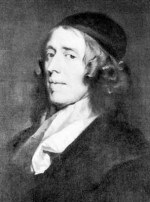
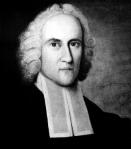
John Owen: Sanctification and the Gospel

20 Jan

1616 -1683. Preeminent English Puritan theologian, pastor, and independent.

This whole matter of sanctification and holiness is peculiarly joined with and limited unto the doctrine, truth, and grace of the gospel; for holiness is nothing but the implanting, writing, and realizing of the gospel in our souls.

~John Owen~


The Works of John Owen, ed. William H. Goold, vol. 3: Pneumatologia: A Discourse Concerning the Holy Spirit (Edinburgh: T&T Clark, n.d.), 370-371.

Books by John Owen

Kindle Books

Biography of John Owen

Other Owen Quotes

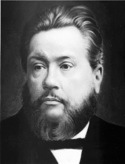
Charles Spurgeon – Look! Look! Look!

13 Jan

20120713-214637.jpg

And now, it may be, some of you are convinced of sin, by the Holy Spirit. I will now proclaim to you the way of salvation. “As Moses lifted up the serpent in the wilderness, even so must the Son of Man be lifted up; that whosoever believeth in him should not perish, but have eternal life.” Behold, O trembling penitent the means of thy deliverance. Turn thy tearful eye to yonder Mount of Calvary! see the victim of justice—the sacrifice of atonement for your transgression. View the Saviour in his agonies, with streams of blood purchasing thy soul, and with intensest agonies enduring thy punishment. He died for thee, if now thou dost confess they guilt. O come thou condemned one, self-condemned, and turn thine eye this way, for one look will save. Sinner, thou art bitten. Look! it is nought but “Look!” It is simply “Look!” If thou canst but look to Jesus thou art safe. Hear the voice of the Redeemer: “Look unto me, and be ye saved.” Look! Look! Look! O guilty souls.

“Venture on him, venture wholly,
Let no other trust intrude;
None but Jesus
Can do helpless sinners good,”

May my blessed Master help you to come to him, and draw you to his Son, for Jesu’s sake. Amen and Amen.


~Charles Spurgeon~


The New Park Street Pulpit Sermons, Vol. I (London: Passmore & Alabaster, 1855), 156. Vol. 1, Sermon No. 20; Titled: The Carnal Mind Enmity Against God; Delivered on Sabbath Morning, April 22nd, 1855.

Books by Charles Spurgeon

Kindle Books

Biography of Charles Spurgeon

Other Spurgeon Quotes

Charles Spurgeon – He Drank Damnation Dry

5 Dec

20120713-214637.jpg

The whole of the punishment of his people was distilled into one cup; no mortal lip might give it so much as a solitary sip. When he put it to his own lips, it was so bitter, he well nigh spurned it.—“Let this cup pass from me.” But his love for his people was so strong, that he took the cup in both his hands, and

“At one tremendous draught of love
He drank damnation dry,”

for all his people. He drank it all, he endured all, he suffered all; so that now for ever there are no flames of hell for them, no racks of torment; they have no eternal woes; Christ hath suffered all they ought to have suffered, and they must, they shall go free.


~Charles Spurgeon~


The New Park Street Pulpit Sermons, Vol. III (London: Passmore & Alabaster, 1855), 155. Sermon No. 126; Titled: Justification by Grace; Delivered on Sabbath Morning, April 5th, 1857.

Books by Charles Spurgeon

Kindle Books

Biography of Charles Spurgeon

Other Spurgeon Quotes

John Owen: Fresh Springs Of Grace

2 Dec

A steady spiritual view of the glory of Christ by faith, will give them [believers] a gracious revival from inward decays, and fresh springs of grace, even in their latter days. A truth this is, as we shall see, confirmed by Scripture, with the joyful experience of multitudes of believers, and is of great importance unto all that are so.

~John Owen~


The Works of John Owen, Vol. 1: The Glory of Christ (Edinburgh; T&T Clark; n.d.) p. 432-433.

Books by John Owen

Kindle Books

Biography of John Owen

Other Owen Quotes

Charles Spurgeon – Salvation Is Not By The Works Of The Law

19 Nov

20120713-214637.jpg

The whole Bible tells us, from beginning to end, that salvation is not by the works of the law, but by the deeds of grace. Martin Luther declared that he constantly preached justification by faith alone, “because,” said he, “the people would forget it; so that I was obliged almost to knock my Bible against their heads, to send it into their hearts.” So it is true, we constantly forget that salvation is by grace alone. We always want to be putting in some little scrap of our own virtue; we want to be doing something. I remember a saying of old Matthew Wilkes: “Saved by your works! you might as well try to go to America in a paper boat!” Saved by your works! It is impossible! Oh no; the poor legalist is like a blind horse going round and round the mill; or like the prisoner going up the treadmill, and finding himself no higher after all he has done; he has no solid confidence, no firm ground to rest upon. He has not done enough—“never enough.” Conscience always says, “this is not perfection; it ought to have been better.” Salvation for enemies must be by an ambassador—by an atonement—yea, by Christ.


~Charles Spurgeon~


The New Park Street Pulpit Sermons, Vol. I (London: Passmore & Alabaster, 1855), 155. Vol. 1, Sermon No. 20; Titled: The Carnal Mind Enmity Against God; Delivered on Sabbath Morning, April 22nd, 1855.

Books by Charles Spurgeon

Kindle Books

Biography of Charles Spurgeon

Other Spurgeon Quotes

Martin Luther – The Very Heel Of The Serpent-Opposing Seed

18 Nov

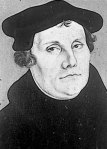
But the gift of God that I particularly love and revere in you above all the rest is that you emphasize the righteousness of faith so faithfully and purely in all your writings. For this article is the head and cornerstone that alone begets, nurtures, builds, preserves, and defends the Church of God. Without it, the Church cannot remain standing for a single hour, as you know and perceive. That is why you insist upon it as you do. For no one can teach correctly in the church or resist any adversary successfully, unless he has grasped this article or, as Paul calls it, “the sound doctrine” [Titus 2:1], one who, as the same Paul says, “holds fast to the doctrine” [cf. Titus 1:9 Vg]…

We see how those who do not do this are carried about by so many winds of uncertain doctrine [Eph. 4:14], driven up and down by opinions that are endlessly multiplied, always learning and never coming to a knowledge of the truth [2 Tim. 3:7]. And we not only see this but have also experienced it ourselves, when we were being spun about in the same whirlwinds of doctrines until the grace of God brought us to port and built us upon this solid rock [Matt. 7:24], so that we are certain of what we teach, learn, and hold, and we no longer vacillate as we did. Therefore, I beg you, most excellent Brenz, continue vigorously to press this article concerning righteousness by all means, wherever you are able, even until they are sick of it, just as you are doing. For otherwise the whole world is full enough of writers, shouters, and printers who very boldly neglect this article. Then, too, there are many who persecute it; most (since they are unable to do any other harm) obscure and corrupt it. But I am not surprised, for this article is the very heel of the Seed who opposes the ancient serpent, the heel that crushes its head. Therefore, Satan on his part can do nothing but lie in wait for it. But whatever harm he may do with his endless and tenacious snares, nevertheless he cannot conquer and crush it. As it is written: “He will crush your head.”

~Martin Luther~


Luther’s Works – Vol. 59 (St. Louis, MI; Concordia Publishing House, 2012) p. 288-289. Preface to Johann Brenz, Exposition of the Prophet Amos.

Books by Martin Luther

Luther’s Works on Logos Bible Software

Kindle Books

Biography

Other Luther Quotes

Geerhardus Vos – Jesus as the Center of God’s Work in the World

28 Mar

Most clearly of all the theological genius of Paul can be seen at work in the manner in which he subsumes the entire saving work of God under his conception of the person of Christ. It would be inaccurate to say that Paul’s theology is Christocentric, in as much as the work of Christ remains subordinate to the glory of the Father (1 Cor. 15:28). But it would be quite proper to say that Paul’s soteriological teaching amounts to a Christologizing of the gospel on the grandest of scales. From the beginning to the end man’s salvation appears to Paul not merely associated with Christ, but capable of description in terms of Christ. We are chosen in Him in the premundane eternity and shall share His glory in the eternity of the world to come. And in all that lies between the figure of Christ accompanies that of the believer through every stage of its progress in the grace of God. The determination with which the apostle has carried through this principle appears from the fact that even such subjective experiences as conversion and regeneration are described by him in Christological terms, viz., as a dying and rising with Christ, as steps in the reproduction of the life of Christ in us. And within the limits of the life of Christ in which all grace is thus concentrated, a still greater concentration is effected by Paul’s viewing everything from the standpoint of the living, glorified Christ, who sums up and carries in Himself all the saving energies and gifts acquired during His life in the flesh, so that the whole work of salvation has an eternally fixed personal center of unity in the exalted Lord. In this soteriological reduction of everything to terms of Christ, as well as in the reduction of everything to terms of God in the broader theological sense, we feel how perfectly the head and heart of Paul interacted and responded to each other. The recognition of the supremacy of both in his thought was but the highest form of homage and devotion which his love prompted him to lay at the feet of his Savior and his God.

~Geerhardus Vos~


Redemptive History and Biblical Interpretation – The Theology of Paul (Phillipsburg, NJ; P&R Publishing, 1980), 360.

Books by Geerhardus Vos

Kindle Books

Other Vos Quotes at The Old Guys

The Letter to Diognetus: O Sweet Exchange!

20 Mar

Diognetius

But when our wickedness had reached its height, and it had been clearly shown that its reward, punishment and death, was impending over us; and when the time had come which God had before appointed for manifesting His own kindness and power, how the one love of God, through exceeding regard for men, did not regard us with hatred, nor thrust us away, nor remember our iniquity against us, but showed great long-suffering, and bore with us, He Himself took on Him the burden of our iniquities, He gave His own Son as a ransom for us, the holy One for transgressors, the blameless One for the wicked, the righteous One for the unrighteous, the incorruptible One for the corruptible, the immortal One for them that are mortal. For what other thing was capable of covering our sins than His righteousness? By what other one was it possible that we, the wicked and ungodly, could be justified, than by the only Son of God? O sweet exchange! O unsearchable operation! O benefits surpassing all expectation! that the wickedness of many should be hid in a single righteous One, and that the righteousness of One should justify many transgressors! Having therefore convinced us in the former time that our nature was unable to attain to life, and having now revealed the Saviour who is able to save even those things which it was [formerly] impossible to save, by both these facts He desired to lead us to trust in His kindness, to esteem Him our Nourisher, Father, Teacher, Counsellor, Healer, our Wisdom, Light, Honour, Glory, Power, and Life.

~The Letter to Diognetus~


Ante-Nicene Fathers Vol. 01: The Apostolic Fathers with Justin Martyn and Irenaeus – The Letter to Diognetus (Grand Rapids, MI; Christian Classics Ethereal Library; 1885) p. 28

Kindle Version

Free Online Version

Other Letter to Diognetus Quotes

Jonathan Edwards – The Primary Inducement to Humble Love

20 Feb

The gospel yet further tends to lead us to humble exercises of love as it leads us to love Christ as one that was crucified for our sins. Christ’s being crucified is a great argument for the humility of us who are his followers; but his being crucified for our sins is a much further argument for it. For Christ’s being crucified for our sins is the greatest testimony of God against our sins that ever was. It shows more of God’s abhorrence of our sins than any other dispensation of God. God so abhorred our sins that he would have them so terribly punished, and his wrath so exerted against them, even when imputed to his own Son. So that this is the greatest inducement to our humility which can be, on these two accounts. First, it is the greatest manifestation of the vileness of that nature for which we should be humble. And second, it is the greatest argument to our love to this humble Savior whom the gospel holds forth. Because, the excellency of Christ and the love of Christ appear more in that act, his yielding himself to be crucified for us, than in any other act. So that these two things considered together tend above all things to draw forth the exercises of humble love.

~Jonathan Edwards~


Charity and Its Fruits: Living in the Light of God’s Love (Wheaton, IL; Crossway Books; 2012) p. 157-158

Books by Jonathan Edwards

Biography of Jonathan Edwards

Online Books Available

Other Edwards Quotes

Matthew Henry – Reason for Great Joy

5 Feb

20120407-223228.jpg

44 While Peter was still saying these things, the Holy Spirit fell on all who heard the word. 45 And the believers from among the circumcised who had come with Peter were amazed, because the gift of the Holy Spirit was poured out even on the Gentiles. – Acts 10:44-46

The preaching of the gospel to Cornelius was a thing which we poor sinners of the Gentiles have reason to reflect upon with a great deal of joy and thankfulness; for it was the bringing of light to us who sat in darkness.

~Matthew Henry~


Matthew Henry’s Commentary on the Whole Bible (Spokane, WA; Olive Tree Bible Software) Commentary on Acts 11

Books by Matthew Henry

Kindle Books

Other Matthew Henry Quotes at The Old Guys