Archive | Herman Bavinck RSS feed for this section

Herman Bavinck – Does Christianity Teach Asceticism?

28 Nov

We can even much less think of revelation and nature as opposites when we note the content and purpose of the revelation as given in Christ. For it proclaims to us that God loved the world, and that Christ came not to condemn but to save the world (John 3:16,17), to destroy not the works of the Father but only the works of the devil (1 John 3:8). And just as Christ himself assumed a full human nature, denied the natural life in an ethical sense but did not mutilate and mortify it physically, and in the end again raised his body from the dead, so his disciples, while indeed called to cross-bearing and self-denial and following their Master, are not called to asceticism and world flight.

On the contrary, Jesus prayed to the Father that his disciples would not be taken out of the world but kept in the world from the evil one (John 17:15). In line with this, Christians did not have to go out of the world (1 Cor. 5:10), but to remain in their occupations (1 Cor. 7:17-23); to obey the powers God had ordained (Rom. 13:1); to regard all things their own (1 Cor. 3:21-23); to enjoy every gift of God with thanksgiving (1 Tim. 4:3-5); and to consider godliness as of value in every way, as it hold promise for the present life and also for the life to come (1 Tim. 4:8). And that, too, was what the Reformation wanted: a Christianity that was hostile, not to nature but only to sin.

~Herman Bavinck~


Reformed Dogmatics Vol. 1: Prolegomena (Grand Rapids, Michigan; Baker Academic; 2003) p. 362.
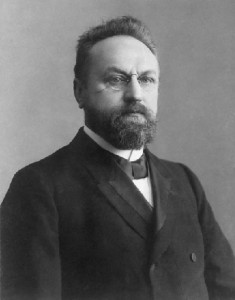
Books by Herman Bavinck

Biography of Herman Bavinck

More Bavinck Quotes

Herman Bavinck – The Organic Inspiration of Scripture

23 Nov

In the doctrine of Scripture, it is the working out and application of the central fact of revelation: the incarnation of the Word. The Word (logos) has become flesh (sarx), and the word has become Scripture; these two facts do not only run parallel but are most intimately connected. Christ became flesh, a servant, without form or comeliness, the most despised of human beings; he descended to the nethermost parts of the earth and became obedient even to the death of the cross. So also, the word, the revelation of God, entered the world of creatureliness, the life and history of humanity, in all the human forms of dream and vision, of investigation and reflection, right down into that which is humanly weak and despised and ignoble. The word became Scripture and as Scripture subjected itself to the fate of all Scripture. All this took place in order that the excellency of the power, also of the power of Scripture, may be God’s and not ours. Just as every human thought and action is the fruit of the action of God in whom we live and have our being, and is at the same time the fruit of the activity of human beings, so also Scripture is totally the product of the Spirit of God, who speaks through the prophets and apostles, and at the same time totally the product of the activity of the authors. “Everything is divine and everything is human”

~Herman Bavinck~


Reformed Dogmatics Vol. 1: Prolegomena (Grand Rapids, Michigan; Baker Academic; 2003) p. 434-435.

Books by Herman Bavinck

Biography of Herman Bavinck

More Bavinck Quotes

Herman Bavinck – The Unity Christians Have

9 Nov

Protestantism, on the other hand, associates the unity of the church first of all with the oneness of the head of the church (Eph. 1:10; 5:23), with the communion of all believers through one and the same Spirit (1 Cor. 6:17,19; 12:13; 2Cor. 12:18; Eph. 4:4), with Christ and with each other (John 10:16; 15:1; Rom. 12:5; 1 Cor. 12:12-13; Eph. 1:22), and further, with the unity of faith, hope, and love, and of baptism, and so forth (Eph. 4:3-5). This unity, though primarily spiritual in character, nevertheless exists objectively and really, and it does not remain completely invisible. It manifests itself outwardly—-albeit in a very imperfect way—-and at least to some degree comes to light in that which all Christian churches have in common. No Christianity exists above or beneath religious differences, but there is indeed a Christianity present amid religious differences. Because we tend to be most aware of the differences and schisms in Christianity, we constantly run the danger of disregarding this–nevertheless truly existing–unity. That which unites all true Christians is always more than that which separates them.

~Herman Bavinck~


Reformed Dogmatics Vol. 4: Holy Spirit, Church, and New Creation (Grand Rapids, Michigan; Baker Academic; 2003) p. 321.

Books by Herman Bavinck

Biography of Herman Bavinck

Other Bavinck Quotes

Herman Bavinck – Distinguishing Between General and Special Revelation

2 Nov

The distinction between general and special revelation does not consist primarily in the fact that the latter consistently and in all parts bears a strictly supernatural character; the difference is evinced fundamentally and primarily by the fact that special revelation is a revelation of special grace and thus brings into existence the salvific religion known as Christianity.

~Herman Bavinck~


Reformed Dogmatics Vol. 1: Prolegomena (Grand Rapids, Michigan; Baker Academic; 2003) p. 342.

Books by Herman Bavinck

Biography of Herman Bavinck

Other Bavinck Quotes

Herman Bavinck – God’s Revelation

24 Oct

The revelation that Scripture discloses to us does not just consist in a number of disconnected words and isolated facts but is one single historical and organic whole, a mighty world-controlling and world-renewing system of testimonies and acts of God.

~Herman Bavinck~


Reformed Dogmatics Vol. 1: Prolegomena (Grand Rapids, Michigan; Baker Academic; 2003) p. 340.

Read More By Bavinck

Read More About Bavinck

Other Bavinck Quotes

Herman Bavinck – Can We Comprehend the Mysteries of God?

3 Oct

Naturally it is also not the intent of Scripture to say that the believer grasps those mysteries [of God] in a scientific sense. We walk by faith, after all; we know in part and now see in a mirror dimly (Rom. 11:34; 1 Cor. 13:12; 2 Cor. 5:7). But believers do know those mysteries; they are no longer a folly and an offense to them; they do marvel at Gods wisdom and love manifest in them. “The secret of God ought to produce earnest people, not hostile ones” (Augustine). It does not even occur to them, therefore, that the mysteries surpass their reason, that they are above reason; they do not experience them as an oppressive burden but rather as intellectual liberation. Their faith turns into wonder; knowledge terminates in adoration; and their confession becomes a song of praise and thanksgiving. Of this kind, too, is the knowledge of God theology aims for. It is not just a knowing, much less a comprehending; it is better and more glorious than that: it is the knowledge which is life, “eternal life” (John 17:3).

~Herman Bavinck~


Reformed Dogmatics Vol. 1: Prolegomena (Grand Rapids, Michigan; Baker Academic; 2003) p. 261.

Read More By Bavinck

Read More About Bavinck

Other Bavinck Quotes

Herman Bavinck – The Doctrine of the Trinity

27 Sep

The doctrine of the Trinity is of incalculable importance for the Christian religion. The entire Christian belief system, all of special revelation, stands or falls with the confession of Gods Trinity. It is the core of the Christian faith, the root of all its dogmas, the basic content of the new covenant. It was this religious Christian interest, accordingly, that sparked the development of the church’s doctrine of the Trinity. At stake in this development—let it be said emphatically—was not a metaphysical theory or a philosophical speculation but the essence of the Christian religion itself. This is so strongly felt that all who value being called a Christian recognize and believe in a kind of Trinity. The profoundest question implicit in every Christian creed and system of theology is how God can be both one and yet three. Christian truth in all its parts comes into its own to a lesser or greater extent depending on how that question is answered. In the doctrine of the Trinity we feel the heartbeat of God’s entire revelation for the redemption of humanity. Though foreshadowed in the Old Testament, it only comes to light fully in Christ. Religion can be satisfied with nothing less than God himself. Now in Christ God himself comes out to us, and in the Holy Spirit he communicates himself to us. The work of re-crearion is trinitarian through and through. From God, through God, and in God are all things. Re-creation is one divine work from beginning to end, yet it can be described in terms of three agents: it is fully accomplished by the love of the Father, the grace of the Son, and the communion of the Holy Spirit. A Christian’s faith life, accordingly, points back to three generative principles… We know ourselves to be children of the Father, redeemed by the Son, and in communion with both through the Holy Spirit. Every blessing, both spiritual and material, comes to us from the triune God. In that name we are baptized; that name sums up our confession; that name is the source of all the blessings that come down to us; to that name we will forever bring thanksgiving and honor; in that name we find rest for our souls and peace for our conscience. Christians have a God above them, before them, and within them. Our salvation, both in this life and in the life to come, is bound up with the doctrine of the Trinity.

~Herman Bavinck~


Reformed Dogmatics Vol. 1: Prolegomena (Grand Rapids, Michigan; Baker Academic; 2003) p. 333-334.

Read More By Bavinck

Read More About Bavinck

Other Bavinck Quotes

Herman Bavinck – A Theologian’s Sole Responsibilty

23 Sep

The imperative task of the dogmatician is to think God’s thoughts after him and to trace their unity. His work is not finished until he has mentally absorbed this unity and set it forth in a dogmatics. Accordingly, he does not come to God’s revelation with a ready-made system in order, as best he can, to force its content into it. On the contrary, even in his system a theologian’s sole responsibility is to think God’s thoughts after him and to reproduce the unity that is objectively present in the thoughts of god and has been recorded for the eye of faith in Scripture.

~Herman Bavinck~


Reformed Dogmatics Vol. 1: Prolegomena (Grand Rapids, Michigan; Baker Academic; 2003) p. 44.

Read More By Bavinck

Read More About Bavinck

Other Bavinck Quotes

Herman Bavinck – The Local Church

16 Sep

Every local church is the people of God, the body of Christ, built upon the foundation of Christ (1 Cor. 3:11, 16; 12:27), because in that location it is the same as what the church is in its entirety, and Christ is for that local church what he is for the universal church.

In the various local gatherings of believers, it is the one church of Christ that comes to expression.

~Herman Bavinck~


Reformed Dogmatics Vol. 4: Prolegomena (Grand Rapids, Michigan; Baker Academic; 2008) p. 281.

Read More By Bavinck

Read More About Bavinck

Other Bavinck Quotes

Herman Bavinck – Vicarious Satisfaction

7 Sep

The mystical and moral interpretation of Jesus’ suffering and death cannot even be maintained if it is not acknowledged beforehand that in a legal sense he suffered and died in our place. Now this is what Scripture teaches in the clearest terms, even though it does not use the expression “vicarious satisfaction” any more than the words “Trinity,” “incarnation,” “God-man,” and so on. For when it says that Christ, though personally without sin, has been put forward as an expiation to show God’s righteousness [Rom. 3:25], has been made to be sin for us [2 Cor. 5:21], became a curse for us [Gal. 3:13], bore our sins in his body on the tree [1 Pet. 2:24]; that God condemned sin in his flesh [Rom. 8:3] and punished him with the accursed death on the cross and that through him we now receive reconciliation and forgiveness, righteousness and life, indeed total and complete salvation–then we can construe the interconnection between all these scriptural pronouncements in no other way than that Christ put himself in our place, has borne the punishment of our sin, satisfied God’s justice, and so secured salvation for us.

~Herman Bavinck~


Reformed Dogmatics Vol. 3: Sin and Salvation in Christ (Grand Rapids, Michigan; Baker Academic; 2006) p. 398.

Read More By Bavinck

Read More About Bavinck

Other Bavinck Quotes