Archive | Quotes RSS feed for this section

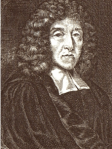
Richard Sibbes – Peace For God’s People

5 Nov

THERE be two sorts of people always in the visible church, one that Satan keeps under with false peace, whose life is nothing but a diversion to present contentments, and a running away from God and their own hearts, which they know can speak no good unto them; these speak peace to themselves, but God speaks none. Such have nothing to do with this Scripture, Ps. 42:11; the way for these men to enjoy comfort, is to be soundly troubled. True peace arises from knowing the worst first, and then our freedom from it. It is a miserable peace that riseth from ignorance of evil. The angel ‘troubled the waters,’ John 5:4, and then it* cured those that stepped in. It is Christ’s manner to trouble our souls first, and then to come with healing in his wings.

But there is another sort of people, who being drawn out of Satan’s kingdom and within the covenant of grace, whom Satan labours to unsettle and disquiet: being the ‘god of the world,’ 2 Cor. 4:4, he is vexed to see men in the world, walk above the world. Since he cannot hinder their estate, he will trouble their peace, and damp their spirits, and cut asunder the sinews of all their endeavours. These should take themselves to task as David doth here, and labour to maintain their portion and the glory of a Christian profession. For whatsoever is in God or comes from God, is for their comfort. Himself is the God of comfort, Rom. 15:5; his Spirit most known by that office, John 14:26. Our blessed Saviour was so careful that his disciples should not be too much dejected, that he forgat his own bitter passion to comfort them, whom yet he knew would all forsake him: ‘Let not your hearts be troubled,’ saith he, John 14:1, 27. And his own soul was troubled to death, that we should not be troubled: ‘whatsoever is written is written for this end,’ 2 Cor. 2:9; every article of faith hath a special influence in comforting a believing soul. They are not only food, but cordials; yea, he put himself to his oath, that we might not only have consolation, but strong consolation, Heb. 6:18. The sacraments seal unto us all the comforts we have by the death of Christ. The exercise of religion, as prayer, hearing, reading, &c., is, that ‘our joy may be full,’ 2 John 12. The communion of saints is chiefly ordained to comfort the feeble-minded and to strengthen the weak, 1 Thess. 5:14. God’s government of his church tends to this. Why doth he sweeten our pilgrimage, and let us see so many comfortable days in the world, but that we should serve him with cheerful and good hearts? As for crosses, he doth but cast us down, to raise us up, and empty us that he may fill us, and melt us that we may be ‘vessels of glory,’ Rom. 9:23, loving us as well in the furnace, as when we are out, and standing by us all the while. ‘We are troubled, but not distressed; perplexed, but not in despair; persecuted but not forsaken,’ 2 Cor. 4:8. If we consider from what fatherly love afflictions come, how they are not only moderated but sweetened and sanctified in the issue to us, how can it but minister matter of comfort in the greatest seeming discomforts? How then can we let the reins of our affections loose to sorrow without being injurious to God and his providence? as if we would teach him how to govern his church.

~Richard Sibbes~


The Complete Works of Richard Sibbes, Volume 1 (Edinburgh, London; Banner of Truth; 1862) p. 122-123. Sermon: The Soul’s Conflict With Itself, And Victory Over Itself By Faith

Books by Richard Sibbes

Kindle Books

Other Sibbes Quotes

Francis Turretin – God Has Bound Us To The Scriptures

1 Nov

turretin

SECOND QUESTION: THE NECESSITY OF SCRIPTURE
Was it necessary for the word of God to be committed to writing? We affirm.

1. As in the preceding question we have proved the necessity of the word, so in this we treat of the necessity of the Scriptures (or the written word) against the papists. For as they endeavor studiously to weaken the authority of Scripture in order the more easily to establish their unwritten (agraphous) traditions and the supreme tribunal of the pope himself; so, for the same reason, they are accustomed in many ways to impair its necessity in order to prove it useful indeed to to the church, but not necessary. Yea Cardinal Hosius does not hesitate blasphemously to say, “Better would it be for the interests of the church had no Scripture ever existed”; and Valentia, “It would be better had it not been written.”

2. As to the state of the question, keep in mind that the word “Scripture” is used in two senses: either materially, with regard to the doctrine delivered; or formally with regard to the writing and mode of delivery. In the former sense (as we said before), we hold it to be necessary with respect to God. For two thousand years before the time of Moses, he instructed his church by the spoken word alone; so he could (if he wished) have taught in the same manner afterwards, but only hypothetically (on account of the divine will) since God has seen fit for weighty reasons to commit his word to writing. Hence the divine ordination being established, it is made necessary to the church, so that it pertains not only to the well-being (bene esse) of the church, but also to its very existence (esse). Without it the church could not now stand. So God indeed was not bound to the Scriptures, but he has bound us to them.”

3. Therefore the question is not whether the writing of the word was absolutely and simply necessary, but relatively and hypothetically; not for every age, but now in this state of things; nor relatively to the power and liberty of God, but to his wisdom and economy as dealing with man.


~Francis Turretin~


Institutes of Elenctic Theology – Volume 1 (Phillipsburg, NJ; P&R Publishing; 1992) p. 57.

Books by Francis Turretin

Kindle Books

Other Turretin Quotes at The Old Guys

John Calvin – Scripture’s Authority Arises Not From the Church

26 Oct

A most pernicious error widely prevails that Scripture has only so much weight as is conceded to it by the consent of the church. As if the eternal and inviolable truth of God depended upon the decision of men! For they mock the Holy Spirit when they ask: Who can convince us that these writings came from God? Who can assure us that Scripture has come down whole and intact even to our very day? Who can persuade us to receive one book in reverence but to exclude another, unless the church prescribe a sure rule for all these matters? What reverence is due Scripture and what books ought to be reckoned within its canon depend, they say, upon the determination of the church. Thus these sacrilegious men, wishing to impose an unbridled tyranny under the cover of the church, do not care with what absurdities they ensnare themselves and others, provided they can force this one idea upon the simple-minded: that the church has authority in all things. Yet, if this is so, what will happen to miserable consciences seeking firm assurance of eternal life if all promises of it consist in and depend solely upon the judgment of men? Will they cease to vacillate and tremble when they receive such an answer? Again, to what mockeries of the impious is our faith subjected, into what suspicion has it fallen among all men, if we believe that it has a precarious authority dependent solely upon the good pleasure of men!

~John Calvin~


Institutes of the Christian Religion, Volumes 1 & 2, ed. John T. McNeill, trans. Ford Lewis Battles, The Library of Christian Classics (Louisville, KY: Westminster John Knox Press, 2011) Vol. 1.7.1. p. 75.

Books by John Calvin

Biography of John Calvin

Kindle Books

Online Books Available

Other Calvin Quotes

B.B. Warfield – We’ve Never Been Without a Canon

25 Oct

In order to obtain a correct understanding of what is called the formation of the Canon of the New Testament, it is necessary to begin by fixing very firmly in our minds one fact which is obvious enough when attention is once called to it. That is, that the Christian church did not require to form for itself the idea of a “canon,”—or, as we should more commonly call it, of a “Bible,”—that is, of a collection of books given of God to be the authoritative rule of faith and practice. It inherited this idea from the Jewish church, along with the thing itself, the Jewish Scriptures, or the “Canon of the Old Testament.” The church did not grow up by natural law: it was founded. And the authoritative teachers sent forth by Christ to found his church, carried with them, as their most precious possession, a body of divine Scriptures, which they imposed on the church that they founded as its code of law. No reader of the New Testament can need proof of this; on every page of that book is spread the evidence that from the very beginning the Old Testament was as cordially recognized as law by the Christian as by the Jew. The Christian church thus was never without a “Bible” or a “canon.”


~B.B. Warfield~


The Works of Benjamin B. Warfield: The Canon of the New Testament: How and When Formed (Philadelphia, PA; American Sunday-School Union; 1892) p. 3-4.

Books by B.B. Warfield

More Warfield Quotes at The Old Guys

Charles Spurgeon – Where Are Your Hearts?

24 Oct

20120713-214637.jpg

Let me appeal personally to you in an interrogatory style, for this has weight with it. Sinner! why art thou at enmity with God? God is the God of love; he is kind to his creatures; he regards you with his love of benevolence; for this very day his sun hath shone upon you, this day you have had food and raiment, and you have come up here in health and strength. Do you hate God because he loves you? Is that the reason? Consider how many mercies you have received at his hands all your lives long! You are born with a body not deformed; you have had a tolerable share of health; you have been recovered many times from sickness; when lying at the gates of death; his arm has held back your soul from the last step to destruction. Do you hate God for all this? Do you hate him because he spared your life by his tender mercy? Behold his goodness that he hath spread before you! He might have sent you to hell; but you are here. Now, do you hate God for sparing you? Oh, wherefore art thou at enmity with him? My fellow creature, dost thou not know that God sent his Son from his bosom, hung him on the tree, and there suffered him to die for sinners, the just for the unjust? and dost thou hate God for that? Oh, sinner, is this the cause of thine enmity? Art thou so estranged that thou givest enmity for love? And when he surroundeth thee with favors, girdeth thee with mercies, encircleth thee with loving kindness, dost thou hate him for this? He might say as Jesus did to the Jews: “For which of these works do ye stone me?” For which of these works do ye hate God? Did an earthly benefactor feed you, would you hate him? Did he clothe you, would you abuse him to his face? Did he give you talents, would you turn those powers against him? Oh, speak! Would you forge the iron and strike the dagger into the heart of your best friend? Do you hate your mother who nursed you on her knee? Do you curse your father who so wisely watched over you? Nay, ye say, we have some little gratitude towards earthly relatives. Where are your hearts, then? Where are your hearts, that ye can still despise God, and be at enmity with him? Oh! diabolical crime! Oh! satanic enormity! Oh! iniquity for which words fail in description! to hate the all-lovely—to despise the essentially good—to abhor the constantly merciful—to spurn the ever-beneficent—to scorn the kind, the gracious one; above all, to hate the God who sent his Son to die for man! Ah! in that thought—“the carnal mind is enmity against God,”—there is something which may make us shake; for it is a terrible sin to be at enmity with God. I would I could speak more powerfully, but my Master alone can impress upon you the enormous evil of this horrid state of heart.


~Charles Spurgeon~


The New Park Street Pulpit Sermons, Vol. I (London: Passmore & Alabaster, 1855), 154-155. Vol. 1, Sermon No. 20; Titled: The Carnal Mind Enmity Against God; Delivered on Sabbath Morning, April 22nd, 1855.

Books by Charles Spurgeon

Kindle Books

Biography of Charles Spurgeon

Other Spurgeon Quotes

John Calvin – We Must Come to the Word

23 Oct

We must strive onward by this straight path if we seriously aspire to the pure contemplation of God. We must come, I say, to the Word, where God is truly and vividly described to us from his works, while these very works are appraised not by our depraved judgment but by the rule of eternal truth. If we turn aside from the Word, as I have just now said, though we may strive with strenuous haste, yet, since we have got off the track, we shall never reach the goal. For we should so reason that the splendor of the divine countenance, which even the apostle calls “unapproachable” [1 Tim. 6:16], is for us like an inexplicable labyrinth unless we are conducted into it by the thread of the Word; so that it is better to limp along this path than to dash with all speed outside it.

~John Calvin~


Institutes of the Christian Religion, Volumes 1 & 2, ed. John T. McNeill, trans. Ford Lewis Battles, The Library of Christian Classics (Louisville, KY: Westminster John Knox Press, 2011) Vol. 1.6.3. p. 72-73.

Books by John Calvin

Biography of John Calvin

Kindle Books

Online Books Available

Other Calvin Quotes

Charles Spurgeon – High Treason

22 Oct

20120713-214637.jpg

He [God] is the creator of the heavens and the earth; he bears up the pillars of the universe; his breath perfumes the flowers; his pencil paints them; he is the author of this fair creation; “we are the sheep of his pasture; he hath made us, and not we ourselves.” He stands to us in the relationship of a Maker and Creator; and from that fact he claims to be our King. He is our legislator, our law-maker; and then, to make our crime still worse and worse, he is the ruler of providence; for it is he who keeps us from day to day. He supplies our wants; he keeps the breath within our nostrils; he bids the blood still pursue its course through the veins; he holdeth us in life, and preventeth us from death; he standeth before us, our creator, our king, our sustainer, our benefactor; and I ask, is it not a sin of enormous magnitude—is it not high treason against the emperor of heaven—is it not an awful sin, the depth of which we cannot fathom with the line of all our judgment—that we, his creatures, dependent upon him, should be at enmity with God?


~Charles Spurgeon~


The New Park Street Pulpit Sermons, Vol. I (London: Passmore & Alabaster, 1855), 154. Vol. 1, Sermon No. 20; Titled: The Carnal Mind Enmity Against God; Delivered on Sabbath Morning, April 22nd, 1855.

Books by Charles Spurgeon

Kindle Books

Biography of Charles Spurgeon

Other Spurgeon Quotes

Herman Bavinck – It’s Hard Work to Be An Atheist

16 Oct

It therefore requires a certain effort not to believe in a personal God: “No one disbelieves the existence of God except the person to whom God’s existence is not convenient.” There are no atheists so thoroughly sure of their unbelief as to be willing to die a martyr’s death for it. Since atheism is abnormal and unnatural, based not on intuitions but on inferential proofs and fallible reasoning, it is never sure of its causes. The arguments for the existence of God may be weak, but in any case they are stronger than those advanced for its denial. It is even impossible to prove that there is no God. To accomplish that feat a person would have to be omniscient and omnipresent, that is, to be God!

~Herman Bavinck~


Reformed Dogmatics Vol. 2: God and Creation John Bolt and John Vriend (Grand Rapids, MI; Baker Academic; 2004) p. 59.

Books by Herman Bavinck

Kindle Books

Reformed Dogmatics on Logos Bible Software

Biography of Herman Bavinck

More Bavinck Quotes

John Calvin – The Turning Point in the Institutes and in Our Lives

10 Oct

The whole human race perished in the person of Adam. Consequently that original excellence and nobility which we have recounted would be of no profit to us but would rather redound to our greater shame, until God, who does not recognize as his handiwork men defiled and corrupted by sin, appeared as Redeemer in the person of his only-begotten Son. Therefore, since we have fallen from life into death, the whole knowledge of God the Creator that we have discussed would be useless unless faith also followed, setting forth for us God our Father in Christ. The natural order was that the frame of the universe4 should be the school in which we were to learn piety, and from it pass over to eternal life and perfect felicity. But after man’s rebellion, our eyes—wherever they turn—encounter God’s curse. This curse, while it seizes and envelops innocent creatures through our fault, must overwhelm our souls with despair. For even if God wills to manifest his fatherly favor to us in many ways, yet we cannot by contemplating the universe infer that he is Father. Rather, conscience presses us within and shows in our sin just cause for his disowning us and not regarding or recognizing us as his sons. Dullness and ingratitude follow, for our minds, as they have been blinded, do not perceive what is true. And as all our senses have become perverted, we wickedly defraud God of his glory.

We must, for this reason, come to Paul’s statement: “Since in the wisdom of God the world did not know God through wisdom, it pleased God through the folly of preaching to save those who believe” [1 Cor. 1:21]. This magnificent theater of heaven and earth, crammed with innumerable miracles, Paul calls the “wisdom of God.” Contemplating it, we ought in wisdom to have known God. But because we have profited so little by it, he calls us to the faith of Christ, which, because it appears foolish, the unbelievers despise.

Therefore, although the preaching of the cross does not agree with our human inclination, if we desire to return to God our Author and Maker, from whom we have been estranged, in order that he may again begin to be our Father, we ought nevertheless to embrace it humbly.

~John Calvin~


Institutes of the Christian Religion, Volumes 1 & 2, ed. John T. McNeill, trans. Ford Lewis Battles, The Library of Christian Classics (Louisville, KY: Westminster John Knox Press, 2011) Vol. 2.6.1. p. 340-341.

Books by John Calvin

Biography of John Calvin

Kindle Books

Online Books Available

Other Calvin Quotes

Francis Turretin – The Highest Art

3 Oct

turretin

Not only do the heavens declare the glory of God, but every blade of grass and flower in the field, every pebble on the shore and every shell in the ocean proclaim not only his power and goodness, but also his manifold wisdom, so near each one that even by feeling, God can be found. Augustine says, “The prophetic voices excepted, the world itself by its own most regular mutability and mobility and the exquisitely beautiful appearance of all visible things, silently as it were proclaims both that it was made and could be made only by a God unspeakably and invisibly great, and unspeakably and invisibly beautiful.”

You may say perhaps that these things were so arranged by chance and by a fortuitous concourse of atoms. But I know not whether such an impious and absurd opinion is worthy of refutation, since these things denote not chance, but the highest art.


~Francis Turretin~


Institutes of Elenctic Theology – Volume 1 (Phillipsburg, NJ; P&R Publishing; 1992) p. 172.

Books by Francis Turretin

Kindle Books

Other Turretin Quotes at The Old Guys