Archive | Quotes RSS feed for this section

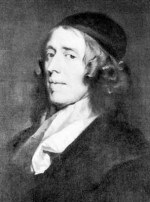
John Owen: Don’t Despise the Work of the Spirit

1 Apr

Take a view, then, of the state and condition of them who, professing to believe the gospel of Jesus Christ, do yet condemn and despise his Spirit, as to all its operations, gifts, graces, and dispensations to his churches and saints. While Christ was in the world with his disciples, he made them no greater promise, neither in respect of their own good nor of carrying on the work which he had committed to them, than this of giving them the Holy Ghost. Him he instructs them to pray for of the Father, as that which is needful for them, as bread for children (Luke 11:13). Him he promises them, as a well of water springing up in them, for their refreshment, strengthening, and consolation unto everlasting life (John 7:37–39); as also to carry on and accomplish the whole work of the ministry to them committed (John 16:8–11); with all those eminent works and privileges before mentioned. And upon his ascension, this is laid as the bottom of that glorious communication of gifts and graces in his plentiful effusion mentioned (Eph. 4:8, 11, 12)—namely, that he had received of the Father the promise of the Holy Ghost (Acts 2:33); and that in such an eminent manner as thereby to make the greatest and most glorious difference between the administration of the new covenant and old. Especially does the whole work of the ministry relate to the Holy Ghost; though that be not my present business to evince. He calls men to that work, and they are separated unto him (Acts 13:2); he furnishes them with gifts and abilities for that employment (1 Cor. 12:7–10). So that the whole religion we profess, without this administration of the Spirit, is nothing; nor is there any fruit without it of the resurrection of Christ from the dead.

This being the state of things—that in our worship of and obedience to God, in our own consolation, sanctification, and ministerial employment, the Spirit is the principle, the life, soul, the all of the whole; yet so desperate has been the malice of Satan, and wickedness of men, that their great endeavor has been to shut him quite out of all gospel administrations.

~John Owen~


Communion with the Triune God (Wheaton, IL; Crossway; 2007) p. 397-398.
Books by John Owen

Kindle Books

Biography of John Owen

Other Owen Quotes

Geerhardus Vos – How Important is the Resurrection of Jesus?

30 Mar

As a fact, and that not lacking doctrinal explanation, it is, next to the cross, the outstanding event of redemptive history. But Paul has first made it a focus of fundamental Christian teaching and built around it the entire conception of the faith advocated and propagated by him.

~Geerhardus Vos~


The Pauline Eschatology (Phillipsburg, NJ; P&R Publishing, 1994), 148.

Books by Geerhardus Vos

Kindle Books

Other Vos Quotes at The Old Guys

Jonathan Edwards – The Resurrection of Christ is the Most Joyful Event That Ever Came to Pass

29 Mar

This resurrection of Christ is the most joyful event that ever came to pass; because hereby Christ rested from the great and difficult work of purchasing redemption, and received God’s testimony, that it was finished. The death of Christ was the greatest and most wonderful event that ever came to pass; but that has a great deal in it that is sorrowful. But by the resurrection of Christ, that sorrow is turned into joy. The Head of the church, in that great event, enters on the possession of eternal life; and the whole church is, as it were, begotten again to a lively hope, 1 Pet. i. 3. Weeping had continued for a night, but now joy cometh in the morning. This is the day of his reigning, as the head of the church, and all the church reigns with him. This day was worthy to be commemorated with the greatest joy…

It is further to be observed, that the day of the gospel most properly begins with the resurrection of Christ. Till Christ rose from the dead, the Old-Testament dispensation remained: but now it ceases, all being fulfilled that was shadowed forth in the typical ordinances of that dispensation. Here most properly is the end of the Old-Testament night; and Christ rising from the grave with joy and glory, was like the sun rising after a long night of darkness, appearing in joyful light to enlighten the world. Now that joyful dispensation begins, that glorious dispensation, of which the prophets testified so much. Now the gospel-sun is risen in his glory, and with healing in his wings, that those who fear God s name, may go forth, and grow up as calves of the stall.

~Jonathan Edwards~


The Works of Jonathan Edwards Vol. 1 (Peabody, MA; Hendrickson Publishers, Inc; 2007) p. 586.

Books by Jonathan Edwards

Biography of Jonathan Edwards

Online Books Available

Other Edwards Quotes

Geerhardus Vos – Jesus as the Center of God’s Work in the World

28 Mar

Most clearly of all the theological genius of Paul can be seen at work in the manner in which he subsumes the entire saving work of God under his conception of the person of Christ. It would be inaccurate to say that Paul’s theology is Christocentric, in as much as the work of Christ remains subordinate to the glory of the Father (1 Cor. 15:28). But it would be quite proper to say that Paul’s soteriological teaching amounts to a Christologizing of the gospel on the grandest of scales. From the beginning to the end man’s salvation appears to Paul not merely associated with Christ, but capable of description in terms of Christ. We are chosen in Him in the premundane eternity and shall share His glory in the eternity of the world to come. And in all that lies between the figure of Christ accompanies that of the believer through every stage of its progress in the grace of God. The determination with which the apostle has carried through this principle appears from the fact that even such subjective experiences as conversion and regeneration are described by him in Christological terms, viz., as a dying and rising with Christ, as steps in the reproduction of the life of Christ in us. And within the limits of the life of Christ in which all grace is thus concentrated, a still greater concentration is effected by Paul’s viewing everything from the standpoint of the living, glorified Christ, who sums up and carries in Himself all the saving energies and gifts acquired during His life in the flesh, so that the whole work of salvation has an eternally fixed personal center of unity in the exalted Lord. In this soteriological reduction of everything to terms of Christ, as well as in the reduction of everything to terms of God in the broader theological sense, we feel how perfectly the head and heart of Paul interacted and responded to each other. The recognition of the supremacy of both in his thought was but the highest form of homage and devotion which his love prompted him to lay at the feet of his Savior and his God.

~Geerhardus Vos~


Redemptive History and Biblical Interpretation – The Theology of Paul (Phillipsburg, NJ; P&R Publishing, 1980), 360.

Books by Geerhardus Vos

Kindle Books

Other Vos Quotes at The Old Guys

Jonathan Edwards – How the Resurrection Was Part of the Success of Christ’s Sufferings

26 Mar

Indeed Christ’s resurrection (and so his ascension) was part of the success of what Christ did and suffered in his humiliation. For though Christ did not properly purchase redemption for himself, yet he purchased eternal life and glory for himself, as a reward of what he did and suffered: Phil. ii. 8, 9. “He humbled himself, and became obedient unto death, even the death of the cross. Wherefore God also hath highly exalted him.” And it may be looked upon as part of the success of Christ’s purchase, since he did not rise as a private person, but as the head of the elect church; so that they did, as it were, all rise with him. Christ was justified in his resurrection, i.e. God acquitted and discharged him hereby, as having done and suffered enough for the sins of all the elect: Rom. iv. 25. “Who was delivered for our offences, and raised again for our justification.” And God put him in possession of eternal life, as the head of the church, as a sure earnest that they should follow. For when Christ rose from the dead, that was the beginning of eternal life in him. His life before his death was a mortal life, a temporal life; but after his resurrection it was an eternal life: Rom. vi. 9. “Knowing that Christ being raised from the dead, dieth no more; death hath no more dominion over him.” Rev. i. 18. “I am he that liveth. and was dead; and behold, I am alive for evermore. Amen.”—But he was put in possession of this eternal life, as the head of the body; so that the whole church, as it were, rises in him. And now he who lately suffered so much, is to suffer no more for ever, but has entered into eternal glory.

~Jonathan Edwards~


The Works of Jonathan Edwards Vol. 1 (Peabody, MA; Hendrickson Publishers, Inc; 2007) p. 585.

Books by Jonathan Edwards

Biography of Jonathan Edwards

Online Books Available

Other Edwards Quotes

Charles Spurgeon – Jesus Himself Rejoices Over You

25 Mar

20120713-214637.jpg

[10] Now there was a disciple at Damascus named Ananias. The Lord said to him in a vision, “Ananias.” And he said, “Here I am, Lord.” [11] And the Lord said to him, “Rise and go to the street called Straight, and at the house of Judas look for a man of Tarsus named Saul, for behold, he is praying. – Acts 9:10-11 ESV

The shepherd of our souls rejoices in the vision of his sheep securely folded, he triumphs in spirit when he brings a wanderer home. I conceive that when he spoke these words to Ananias, one of the smiles of Paradise must have shone from his eyes. “Behold,” I have won the heart of my enemy, I have saved my persecutor, even now he is bending the knee at my footstool, “behold, he prayeth.” Jesus himself led the song, rejoicing over the new convert with singing. Jesus Christ was glad, and rejoiced more over that lost sheep than over ninety and nine that went not astray. And angels rejoiced too.

~Charles Spurgeon~


Spurgeon’s Sermons (Spokane, Washington; Olive Tree Bible Software; 2010) eBook. Vol. 1, Sermon No. 16; Titled: Paul’s First Prayer; Delivered on Sabbath Morning, March 25th, 1855.

Books by Charles Spurgeon

Kindle Books

Biography of Charles Spurgeon

Other Spurgeon Quotes

Geerhardus Vos – Election and God’s Affectionate Foreknowledge

23 Mar

Hosea, on the supposition that marriage and berith with Jehovah are to him identical, is the chief source of our information in regard to the nature of the union. We learn from him:

[1] The union originated on the part of Jehovah

Not Israel offered herself to Him, He sought out Israel. Theologically speaking, we would say that the berith had its source in the divine election. Election is spoken of by Isaiah [14.1; 43.20; 49.7]. With Amos and Hosea, however, a more characteristic and intimate term is chose to convey somewhat of the religious depths and value of this idea. This term yada’, ‘to know’, not in the intellectual sense of ‘to be informed about’, but in the pregnant, affectional sense of ‘to take loving knowledge of’ [Hos. 13.5; Amos 3.2]. This act is not yet represented as an eternal act on the part of Jehovah; in keeping with their standpoint in the midst of history, the prophets think of it as something emerging in time. The New Testament makes out of this ‘knowing’ a ‘fore-knowing’. But this is simply putting the act back into eternity. To cut it loose from its Old Testament antecedents and to intellectualize it in the interest of a Pelgianizing theology is an utterly unhistorical proceeding. The ‘pro’ in the Greek rendering does not serve to give God His standpoint in time, from which He then is able to look forward and base His decision on what the creature is foreseen to be about to do at a certain point in time; it serves the precisely opposite purpose of giving God His standpoint before, that is to say, in Old Testament language, above time.

~Geerhardus Vos~


Biblical Theology (Edinburgh, Scotland; Banner of Truth, 1975), 260.

Books by Geerhardus Vos

Kindle Books

Other Vos Quotes at The Old Guys

Jonathan Edwards – The Resurrection Power of Christ Exerted in Our Hearts

22 Mar

Gracious affections arise from those operations and influences which are spiritual, and that the inward principle from whence they flow, is something divine, a communication of God, a participation of the divine nature, Christ living in the heart, the Holy Spirit dwelling there, in union with the faculties of the soul, as an internal vital principle, exerting his own proper nature in the exercise of those faculties. This is sufficient to show us why true grace should have such activity, power, and efficacy. No wonder that what is divine, is powerful and effectual; for it has omnipotence on its side. If God dwells in the heart, and be vitally united to it, he will show that he is a God by the efficacy of his operation. Christ is not in the heart of a saint as in a sepulchre, as a dead saviour that does nothing; but as in his temple, one that is alive from the dead. For in the heart where Christ savingly is, there he lives, and exerts himself after the power of that endless life, that he received at his resurrection. Thus every saint who is the subject of the benefit of Christ’s sufferings, is made to know and experience the power, of his resurrection.

~Jonathan Edwards~


The Works of Jonathan Edwards Vol. 1 (Peabody, MA; Hendrickson Publishers, Inc; 2007) p. 316.

Books by Jonathan Edwards

Biography of Jonathan Edwards

Online Books Available

Other Edwards Quotes

Charles Spurgeon – Prayers Are Heard in Heaven

21 Mar

20120713-214637.jpg

Prayers are noticed in heaven. Oh! I know what is the case with many of you. You think, “If I turn to God, if I seek him, surely I am so inconsiderable a being, so guilty and vile, that it cannot be imagined he would take any notice of me.” My friends, harbor no such heathenish ideas. Our God is no god who sits in one perpetual dream; nor doth he clothe himself in such thick darkness that he cannot see; he is not like Baal who heareth not. True, he may not regard battles; he cares not for the pomp and pageantry of kings; he listens not to the swell of martial music; he regards not the triumph and the pride of man; but wherever there is a heart big with sorrow, wherever there is an eye suffused with tears, wherever there is a lip quivering with agony, wherever there is a deep groan, or a penitential sigh, the ear of Jehovah is wide open; he marks it down in the registry of his memory; he puts our prayers, like rose leaves, between the pages of his book of remembrance, and when the volume is opened at last there shall be a precious fragrance springing up therefrom. Oh! Poor sinner, of the blackest and vilest character, thy prayers are heard, and even now God hath said of thee, “Behold, he prayeth.” Where was it– in a barn? Where was it– in the closet? Was it at thy bedside this morning, or in this hall? Art thou now glancing thine eye to heaven? Speak, poor heart; did I hear thy lips just now mutter out, “God have mercy upon me, a sinner?” I tell thee, sinner, there is one thing which doth outstrip the telegraph. You know we can now send a message and receive an answer in a few moments; but I read of something in the Bible more swift than the electric fluid. “Before they call I will answer, and while they are speaking I will hear.” So, then, poor sinner, thou art noticed; yea, thou art heard by him that sitteth on the throne.

~Charles Spurgeon~


Spurgeon’s Sermons (Spokane, Washington; Olive Tree Bible Software; 2010) eBook. Vol. 1, Sermon No. 16; Titled: Paul’s First Prayer; Delivered on Sabbath Morning, March 25th, 1855.
Books by Charles Spurgeon

Kindle Books

Biography of Charles Spurgeon

Other Spurgeon Quotes

The Letter to Diognetus: O Sweet Exchange!

20 Mar

Diognetius

But when our wickedness had reached its height, and it had been clearly shown that its reward, punishment and death, was impending over us; and when the time had come which God had before appointed for manifesting His own kindness and power, how the one love of God, through exceeding regard for men, did not regard us with hatred, nor thrust us away, nor remember our iniquity against us, but showed great long-suffering, and bore with us, He Himself took on Him the burden of our iniquities, He gave His own Son as a ransom for us, the holy One for transgressors, the blameless One for the wicked, the righteous One for the unrighteous, the incorruptible One for the corruptible, the immortal One for them that are mortal. For what other thing was capable of covering our sins than His righteousness? By what other one was it possible that we, the wicked and ungodly, could be justified, than by the only Son of God? O sweet exchange! O unsearchable operation! O benefits surpassing all expectation! that the wickedness of many should be hid in a single righteous One, and that the righteousness of One should justify many transgressors! Having therefore convinced us in the former time that our nature was unable to attain to life, and having now revealed the Saviour who is able to save even those things which it was [formerly] impossible to save, by both these facts He desired to lead us to trust in His kindness, to esteem Him our Nourisher, Father, Teacher, Counsellor, Healer, our Wisdom, Light, Honour, Glory, Power, and Life.

~The Letter to Diognetus~


Ante-Nicene Fathers Vol. 01: The Apostolic Fathers with Justin Martyn and Irenaeus – The Letter to Diognetus (Grand Rapids, MI; Christian Classics Ethereal Library; 1885) p. 28

Kindle Version

Free Online Version

Other Letter to Diognetus Quotes