Archive | Quotes RSS feed for this section

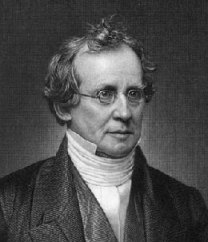
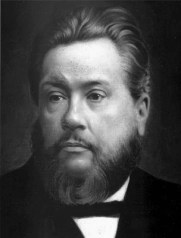
Charles Hodge – A Most Precious Gift

3 Dec

[Commenting on Ephesians 1:11-14]

Those influences of the Spirit which believers now enjoy are both a foretaste of future blessedness, the same in kind though immeasurably less in degree, and a pledge of the certain enjoyment of that blessedness, just as the firstfruits were a part of the harvest and a guarantee of its ingathering. It is because the Spirit is a guarantee of our inheritance that his indwelling is a seal. It assures those in whom he dwells of their salvation and renders that salvation certain. Hence he is a most precious gift, to be most religiously cherished.

~Charles Hodge~


Crossway Classic Commentaries – Ephesians (Wheaton, IL; Crossway Books; 1994)

Books by Charles Hodge

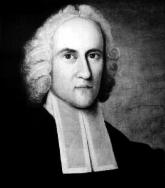
Jonathan Edwards – Our Need to Read Scripture

2 Dec

Saturday, May 23. How it comes about I know not, but I have remarked it hitherto, that at those times when I have read the Scriptures most, I have evermore been most lively and in the best frame.

~Jonathan Edwards~


The Works of Jonathan Edwards Vol. 1 (Peabody, MA; Hendrickson Publishers, Inc; 2007) p. lxxvii. Memoirs of Jonathan Edwards

Books by Jonathan Edwards

Biography of Jonathan Edwards

Online Books Available

Other Edwards Quotes

Herman Bavinck – No Revelation, No Religion

1 Dec

Now if the recognition of revelation were a philosophical proposition, it would be of relatively little weight. In fact, however, a profound religious interest is at stake here. Religion itself is inter-connected with, and dependent on, revelation. Those who abandon revelation also lose the religion based upon it. The revelation of Scripture and the religion of Scripture stand or fall together.

~Herman Bavinck~


Reformed Dogmatics Vol. 1: Prolegomena (Grand Rapids, Michigan; Baker Academic; 2003) p. 367.

Books by Herman Bavinck

Biography of Herman Bavinck

More Bavinck Quotes

Book of the Week

30 Nov


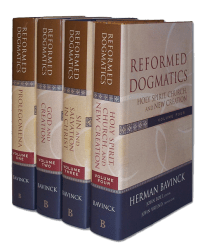
Herman Bavinck’s: Reformed Dogmatics


Arguably the most important systematic theology ever produced in the Reformed tradition – I have found it to be the most valuable. – Richard Gaffin

From the Publisher:

“In partnership with the Dutch Reformed Translation Society, Baker Academic is proud to offer in English for the very first time all four volumes of Herman Bavinck’s complete Reformed Dogmatics. This masterwork will appeal not only to scholars, students, pastors, and laity interested in Reformed theology but also to research and theological libraries.

Includes:
Volume 1: Prolegomena
Volume 2: God and Creation
Volume 3: Sin and Salvation in Christ
Volume 4: Holy Spirit, Church, and New Creation ”

From J.I. Packer:

“Bavinck’s Dutch masterwork was the Everest of which the textbooks by Louis Berkhof and Auguste Leoerf were foothills and Berkouwer’s studies in dogmatics were outliers. Like Augustine, Calvin, and Edwards, Bavinck was a man of giant mind, vast learning, ageless wisdom and great expository skill. Solid but lucid, demanding but satisfying, broad and deep and sharp and stabilizing, Bavinck’s magisterial Reformed Dogmatics remains after a century the supreme achievement of its kind.”


Get the 4 Volume set here.

Or, check out individual volumes:
Volume 1: Prolegomena
Volume 2: God and Creation
Volume 3: Sin and Salvation in Christ
Volume 4: Holy Spirit, Church, and New Creation

Also, there is a newly released abridged version: Reformed Dogmatics Abridged in One Volume

And, another popular digest of his 4 Vol. work written by Bavinck himself: Our Reasonable Faith


Charles Spurgeon – The Reality of the Holy Spirit

30 Nov

You tell the worldling, “I have the Holy Ghost within me.” He says, “I cannot see it.” He wants it to be something tangible–a thing he can recognize with his senses. Have you ever heard the argument used by a good old Christian against an infidel doctor? The doctor said there was no soul, and asked, “Did you ever see a soul?” “No,” said the Christian. “Did you ever hear a soul?” “No.” “Did you ever smell a soul?” “No.” “Did you ever taste a soul?” “No.” “Did you ever feel a soul?” “Yes,” said the man–“I feel I have one within me.” “Well,” said the doctor, “there are four senses against one; you only have one on your side.” “Very well,” said the Christian, “Did you ever see a pain?” “No.” “Did you ever hear a pain?” “No.” “Did you ever smell a pain?” “No.” “Did you ever taste a pain?” “No.” “Did you ever feel a pain?” “Yes.” “And that is quite enough, I suppose, to prove there is a pain?” “Yes.” So the worldling says there is no Holy Ghost, because he cannot see it. Well, but we feel it. You say that is fanaticism, and that we never felt it. Suppose you tell me that honey is bitter, I reply, “No, I am sure you cannot have tasted it; taste it and try.” So with the Holy Ghost; if you did but feel his influence, you would no longer say there is no Holy Spirit, because you cannot see it. Are there not many things, even in nature, which we cannot see? Did you ever see the wind? No; but ye know there is wind, when you behold the hurricane tossing the waves about, and rending down the habitations of men; or when, in the soft evening zephyr, it kisses the flowers, and maketh dew-drops hang in pearly coronets around the rose. Did ye ever see electricity? No; but ye know there is such a thing, for it travels along the wires for thousands of miles, and carries our messages; though you cannot see the thing itself, you know there is such a thing. So you must believe there is a Holy Ghost working in us, both to will and to do, even though it is beyond our senses.


~Charles Spurgeon~


Spurgeon’s Sermons Vol. 1 (Southwark, England; New Park Street Chapel, 1855) No. 4; A Sermon titled: The Personality of the Holy Ghost. Delivered on Sabbath Morning, January 21, 1855

Books by Charles Spurgeon

Biography of Charles Spurgeon

Other Spurgeon Quotes

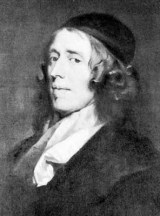
John Owen – God’s Glorious Attributes Revealed in Christ

29 Nov

God, by the work of the creation, by the creation itself, did reveal himself in many of his properties unto his creatures capable of his knowledge—his power, his goodness, his wisdom, his all-sufficiency are thereby known… But yet there are some properties of God which all the works of creation cannot in any measure reveal or make known—as his patience, longsuffering, and forbearance. For all things being made good (Gen. 1:31), there could be no place for the exercise of any of these properties, or manifestation of them. The whole fabric of heaven and earth considered in itself, as at first created, will not discover any such thing as patience and forbearance in God; which yet are eminent properties of his nature, as himself proclaims and declares (Ex. 34:6–7)….

There are some of the most eminent and glorious properties of God (I mean, in the manifestation whereof he will be most glorious; otherwise his properties are not to be compared) that there is not the least glimpse to be attained of out of the Lord Christ, but only by and in him; and some that comparatively we have no light of but in him; and of all the rest no true light but by him.

~John Owen~


Communion With The Triune God (Wheaton, IL; Crossway Books; 2007) p. 185-186

Books by John Owen

Biography of John Owen

Other Owen Quotes

Herman Bavinck – Does Christianity Teach Asceticism?

28 Nov

We can even much less think of revelation and nature as opposites when we note the content and purpose of the revelation as given in Christ. For it proclaims to us that God loved the world, and that Christ came not to condemn but to save the world (John 3:16,17), to destroy not the works of the Father but only the works of the devil (1 John 3:8). And just as Christ himself assumed a full human nature, denied the natural life in an ethical sense but did not mutilate and mortify it physically, and in the end again raised his body from the dead, so his disciples, while indeed called to cross-bearing and self-denial and following their Master, are not called to asceticism and world flight.

On the contrary, Jesus prayed to the Father that his disciples would not be taken out of the world but kept in the world from the evil one (John 17:15). In line with this, Christians did not have to go out of the world (1 Cor. 5:10), but to remain in their occupations (1 Cor. 7:17-23); to obey the powers God had ordained (Rom. 13:1); to regard all things their own (1 Cor. 3:21-23); to enjoy every gift of God with thanksgiving (1 Tim. 4:3-5); and to consider godliness as of value in every way, as it hold promise for the present life and also for the life to come (1 Tim. 4:8). And that, too, was what the Reformation wanted: a Christianity that was hostile, not to nature but only to sin.

~Herman Bavinck~


Reformed Dogmatics Vol. 1: Prolegomena (Grand Rapids, Michigan; Baker Academic; 2003) p. 362.

Books by Herman Bavinck

Biography of Herman Bavinck

More Bavinck Quotes

Old Guy Hymns: Psalm 1

27 Nov

Blest is the man who shuns the place
Where sinners love to meet:
Who fears to tread their wicked ways,
And hates the scoffer’s seat;

But in the statutes of the Lord
Has placed his chief delight;
By day he reads or hears the word,
And meditates by night.

He, like a plant of gen’rous kind,
By living waters set,
Safe from the storms and blasting wind,
Enjoys a peaceful state.

Green as the leaf, and ever fair,
Shall his profession shine;
While fruits of holiness appear
Like clusters on the vine.

Not so the impious and unjust;
What vain designs they form!
Their hopes are blown away like dust,
Or chaff before the storm.

Sinners in judgment shall not stand
Amongst the sons of grace,
When Christ, the Judge, at His right hand
Appoint His saints a place.

His eye beholds the path they tread;
His heart approves it well;
But crooked ways of sinners lead
Down to the gates of hell.


~Isaac Watts~


Our Own Hymn-Book (Pasadena, TX; Pilgrim Publications; 2002) p.1.

Charles Spurgeon – A Plea to Believe in Jesus

26 Nov

But no! it cannot be; it cannot be. And whilst you lie there, if there be one thing in hell worse than another, it will be seeing the saints in heaven. Oh, to think of seeing my mother in heaven while I am cast out! Oh, sinner, only think, to see thy brother in heaven–he who was rocked in the selfsame cradle, and played beneath the same roof-tree–yet thou art cast out. And, husband, there is thy wife in heaven, and thou art amongst the damned. And seest thou, father! thy child is before the throne; and thou! accursed of God and accursed of man, art in hell. Oh, the hell of hells will be to see our friends in heaven, and ourselves lost. I beseech you, my hearers, by the death of Christ–by his agony and bloody sweat–by his cross and passion–by all that is holy–by all that is sacred in heaven and earth–by all that is solemn in time or eternity–by all that is horrible in hell, or glorious in heaven–by that awful thought, “for ever,”–I beseech you lay these things to heart, and remember that if you are damned, it will be unbelief that damns you. If you are lost, it will be because ye believed not on Christ; and if you perish, this shall be the bitterest drop of gall–that ye did not trust in the Saviour.


~Charles Spurgeon~


Spurgeon’s Sermons Vol. 1 (Southwark, England; New Park Street Chapel, 1855) No. 3; A Sermon titled: The Sin of Unbelief. Delivered on Sabbath Morning, January 14, 1855

Books by Charles Spurgeon

Biography of Charles Spurgeon

Other Spurgeon Quotes

John Calvin – Let Us Drink Our Fill From This Fountain

25 Nov

If we seek salvation, we are taught by the very name of Jesus that it is “of him” [1 Cor. 1:30]. If we seek any other gifts of the Spirit, they will be found in his anointing. If we seek strength, it lies in his dominion; if purity, in his conception; if gentleness, it appears in his birth. For by his birth he was made like us in all respects [Heb. 2:17] that he might learn to feel our pain [cf. Heb. 5:2]. If we seek redemption, it lies in his passion; if acquittal, in his condemnation; if remission of the curse, in his cross [Gal. 3:13]; if satisfaction, in his sacrifice; if purification, in his blood, if reconciliation, in his descent into hell; if mortification of the flesh, in his tomb; if newness of life, in his resurrection; if immortality, in the same; if inheritance of the Heavenly Kingdom, in his entrance into heaven; if protection, if security, if abundant supply of all blessings, in his Kingdom; if untroubled expectation of judgment, in the power given him to judge. In short, since rich store of every kind of goods abounds in him, let us drink our fill from this fountain, and from no other.

~John Calvin~


The Institutes of the Christian Religion Vol. 1 (Louisville, Kentucky; Westminster John Knox Press; 1974) p. 527-528.

Books by John Calvin

Biography of John Calvin

Other Calvin Quotes