Archive | Sin RSS feed for this section

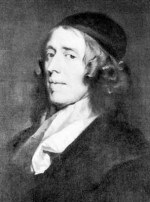
John Owen: How Do We Fight Sin?

18 Feb

[13] For if you live according to the flesh you will die, but if by the Spirit you put to death the deeds of the body, you will live. – Romans 8:13

The principal efficient cause of the performance of this duty is the Spirit: ei de pneumati—“if by the Spirit.” The Spirit here is the Spirit mentioned [in Rom. 8] verse 11, the Spirit of Christ, the Spirit of God, that “dwells in us” (v. 9), that “quickens us” (v. 11); “the Holy Ghost” (v. 14); the “Spirit of adoption” (v. 15); the Spirit “that makes intercession for us” (v. 26). All other ways of mortification are vain, all helps leave us helpless; it must be done by the Spirit. Men, as the apostle intimates (Rom. 9:30-32), may attempt this work on other principles, by means and advantages administered on other accounts, as they always have done, and do; but, says he, “This is the work of the Spirit; by him alone is it to be wrought, and by no other power is it to be brought about.” Mortification from a self-strength, carried on by ways of self-inven­tion, unto the end of a self-righteousness, is the soul and substance of all false religion in the world.

~John Owen~


Overcoming Sin & Temptation (Wheaton, IL; Crossway; 2006) p. 47.

Books by John Owen

Kindle Books

Biography of John Owen

Other Owen Quotes

John Owen: The Remedy For Sin-Sick Souls

21 Jan

Set faith at work on Christ for the killing of your sin. His blood is the great sovereign remedy for sin-sick souls. Live in this, and you will die a con­queror; yea, you will, through the good providence of God, live to see your lust dead at your feet.

~John Owen~


Overcoming Sin & Temptation (Wheaton, IL; Crossway; 2006) p. 131.

Books by John Owen

Kindle Books

Biography of John Owen

Other Owen Quotes

John Owen: The Battle Will Continue Until the End

7 Jan

To mortify a sin is not utterly to kill, root it out, and destroy it, that it should have no more hold at all nor residence in our hearts. It is true this is that which is aimed at; but this is not in this life to be accomplished. There is no man that truly sets himself to mortify any sin, but he aims at, intends, desires its utter destruction, that it should leave neither root nor fruit in the heart or life. He would so kill it that it should never move nor stir anymore, cry or call, seduce or tempt, to eternity. Its not-being is the thing aimed at. Now, though doubtless there may, by the Spirit and grace of Christ, a wonderful success and eminency of victory against any sin be attained, so that a man may have almost constant triumph over it, yet an utter killing and destruction of it, that it should not be, is not in this life to be expected.

~John Owen~


Overcoming Sin & Temptation (Wheaton, IL; Crossway; 2006) p. 70-71.

Books by John Owen

Biography of John Owen

Other Owen Quotes

Jonathan Edwards – Sin Is Infinite Evil

4 Jan

Our obligation to love, honor and obey any being is in proportion to his loveliness, honor and authority. Therefore, sin against God, being a violation of infinite obligations, must be a crime infinitely heinous and so deserving infinite punishment. If there is any evil in sin against God it is infinite evil.

~Jonathan Edwards~


The Works of Jonathan Edwards Vol. 1 (Peabody, MA; Hendrickson Publishers, Inc; 2007) p. 669.

Books by Jonathan Edwards

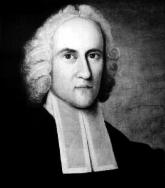
Biography of Jonathan Edwards

Online Books Available

Other Edwards Quotes

John Calvin – The Effect of the Majesty of God

28 Dec

What in us seems perfection itself corresponds ill to the purity of God.

Hence that dread and wonder with which Scripture commonly represents the saints as stricken and overcome whenever they felt the presence of God. Thus it comes about that we see men who in his absence normally remained firm and constant, but who, when he manifests his glory, are so shaken and struck dumb as to be laid low by the dread of death–are in fact overwhelmed by it and almost annihilated. As a consequence, we must infer that man is never sufficiently touched and affected by the awareness of his lowly state until he has compared himself with God’s majesty.

~John Calvin~


The Institutes of the Christian Religion (Louisville, KY; Westminster John Knox Press; 1974) Vol. 1.1.3. p. 38-39.

Books by John Calvin

Biography of John Calvin

Kindle Books

Online Books Available

Other Calvin Quotes

Herman Bavinck – Knowledge, Mystery, and Theology

26 Dec

The theological task also calls for humility. Full comprehension is impossible; wonder and mystery always remain. This must not be identified with the New Testament notion of mystery, which refers to that which was unknown but has now been revealed in the history of salvation culminating in Christ. Neither is it a secret gnosis available only to an elite, nor is it unknown because of the great divide between the natural and the supernatural. The divide is not so much metaphysical as it is spiritual–sin is the barrier. The wonder of God’s love may not be fully comprehended by believers in this age, but what is known in part and seen in part is known and seen. In faithful wonder the believer is not conscious of living in the face of mystery that surpasses reason and thus it is not an intellectual burden. Rather, in the joy of God’s grace there is intellectual liberation. Faith turns to wonder; knowledge terminates in adoration; and confession becomes a song of praise and thanksgiving. Faith is the knowledge which is life, “eternal life” (John 17:3).

~Herman Bavinck~


Reformed Dogmatics Vol. 1: Prolegomena (Grand Rapids, Michigan; Baker Academic; 2003) p. 602.

Books by Herman Bavinck

Kindle Books

Biography of Herman Bavinck

More Bavinck Quotes

John Calvin – The Masquerade’s End

20 Dec

It is certain that man never achieves a clear knowledge of himself unless he has first looked upon God’s face, and then descends from contemplating him to scrutinize himself. For we always seem to ourselves righteous and upright and wise and holy — this pride is innate in all of us — unless by clear proofs we stand convinced of our own unrighteousness, foulness, folly, and impurity. Moreover, we are not thus convinced if we look merely to ourselves and not also to the Lord, who is the sole standard by which this judgment must be measured. For, because all of us are inclined by nature to hypocrisy, a kind of empty image of righteousness in place of righteousness itself abundantly satisfies us. And because nothing appears within or around us that has not been contaminated by great immorality, what is a little less vile pleases us as a thing most pure — so long as we confine our minds within the limits of human corruption. Just so, an eye to which nothing is shown but black objects judges something dirty white or even rather darkly mottled to be whiteness itself. Indeed, we can discern still more clearly from the bodily senses how much we are deluded in estimating the powers of the soul. For if in broad daylight we either look down upon the ground or survey whatever meets our view round about, we seem to ourselves endowed with the strongest and keenest sight; yet when we look up to the sun and gaze straight at it, that power of sight which was particularly strong on earth is at once blunted and confused by a great brilliance, and thus we are compelled to admit that our keenness in looking upon things earthly is sheer dullness when it comes to the sun. So it happens in estimating our spiritual goods. As long as we do not look beyond the earth, being quite content with our own righteousness, wisdom, and virtue, we flatter ourselves most sweetly, and fancy ourselves all but demigods. Suppose we but once begin to raise our thoughts to God, and to ponder his nature, and how completely perfect are his righteousness, wisdom, and power — the straightedge to which we must be shaped. Then, what masquerading earlier as righteousness was pleasing in us will soon grow filthy in its consummate wickedness. What wonderfully impressed us under the name of wisdom will stink in its very foolishness. What wore the face of power will prove itself the most miserable weakness. That is, what in us seems perfection itself corresponds ill to the purity of God.

~John Calvin~


The Institutes of the Christian Religion (Louisville, KY; Westminster John Knox Press; 1974) Vol. 1.1.2. p. 37-38.

Books by John Calvin

Biography of John Calvin

Kindle Books

Online Books Available

Other Calvin Quotes

John Calvin – Knowledge of Self, Knowledge of God

17 Dec

Our very poverty better discloses the infinitude of benefits reposing in God. The miserable ruin, into which the rebellion of the first man cast us, especially compels us to look upward. Thus, not only will we, in fasting and hungering, seek thence what we lack; but, in being aroused by fear, we shall learn humility. For, as a veritable world of miseries is to be found in mankind, and we are thereby despoiled of divine raiment, our shameful nakedness exposes a teeming horde of infamies. Each of us must, then, be so stung by the consciousness of his own unhappiness as to attain at least some knowledge of God. Thus, from the feeling of our own ignorance, vanity, poverty, infirmity, and–what is more–depravity and corruption, we recognize that the true light of wisdom, sound virtue, full abundance of every good, and purity of righteousness rest in the Lord alone. To this extent we are prompted by our own ills to contemplate the good things of God; and we cannot seriously aspire to him before we begin to become displeased with ourselves. For what man in all the world would gladly remain as he is–what man does not remain as he is–so long as he does not know himself, that is, while content with his own gifts, and either ignorant or unmindful of his own misery? Accordingly, the knowledge of ourselves not only arouses us to seek God, but also, as it were, leads us by the hand to find him.

~John Calvin~


The Institutes of the Christian Religion (Louisville, KY; Westminster John Knox Press; 1974) Vol. 1.1.1. p. 36-37.

Books by John Calvin

Biography of John Calvin

Kindle Books

Online Books Available

Other Calvin Quotes

J.C Ryle – Where Does Sin Begin?

19 Sep

Let us, then, have it fixed down in our minds that the sinfulness of man does not begin from without, but from within. It is not the result of bad training in early years. It is not picked up from bad companions and bad examples, as some weak Christians are too fond of saying. No! it is a family disease, which we all inherit from our first parents, Adam and Eve, and with which we are born.

~J.C. Ryle~


Holiness (Darlington, England; Evangelical Press; 1979) p. 16.

Books by J.C. Ryle

Kindle Books by J.C. Ryle

Other Ryle Quotes

Herman Bavinck – The Gospel and Humanity’s Perceived Problems

7 Aug

The gospel is not to the liking of human nature, not a ready match for the needs of people as they themselves picture those needs. Outside of revelation human beings do not even know themselves.

~Herman Bavinck~


Reformed Dogmatics Vol. 1: Prolegomena (Grand Rapids, Michigan; Baker Academic; 2003) p. 552.

Books by Herman Bavinck

Biography of Herman Bavinck

More Bavinck Quotes