Archive | The Word of God RSS feed for this section

Herman Bavinck – Without It There is No Comfort in Life or Death

16 Feb

A historical, i.e., a human and fallible authority is not sufficient. Because religion pertains to our salvation and is related to our eternal interests, we can be satisfied with nothing less than divine authority. We must not only know that Scripture is the historical record of our knowledge of Christianity and that it most accurately contains and reproduces the original Christian ideas, but in religion we must know that Scripture is the word and truth of God. Without this certainty there is [for us] no comfort either in life or death. And not only does every Christian need this assurance, but the church itself as institution cannot dispense with this certainty either. For if a minister is not convinced of the divine truth of the word he preaches, his preaching loses all authority, influence, and power. If he is not able to bring a message from God, who then gives him the right to act on behalf of people of like nature with himself? Who gives him the freedom to put himself on a pulpit [a few feet] above them, to speak to them about the highest interests of their soul and life and even to procalim to them their eternal weal or woe? Who would dare, who would be able to do this, unless he has a word of God to proclaim? Both the Christian faith and Christian preaching require divine authority as their foundation. “Faith will totter if the authority of the divine Scriptures begins to waver.”

~Herman Bavinck~


Reformed Dogmatics Vol. 1: Prolegomena (Grand Rapids, Michigan; Baker Academic; 2003) p. 461.
Find more Bavinck resources here.

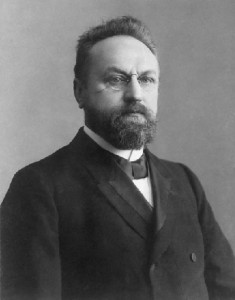
Biography of Herman Bavinck

Other Bavinck Quotes

Martyn Lloyd-Jones – The Spirit or the Bible?

10 Feb

The Bible suggests, therefore, that the Holy Spirit normally speaks to us through the Word. He takes his own Word, he illumines it, and takes our minds and enlightens them, and we are thus made receptive to the Word…. It is not right, therefore, to speak of the Spirit or the Word, but rather of the Spirit and the Word, and especially the Spirit through the Word.

~Martyn Lloyd-Jones~


Historical Theology (Grand Rapids, MI; Zondervan; 2011) p. 97. Excerpted from Authority (Chicago: InterVarsity, 1958), 63-64

Books by Martyn Lloyd-Jones

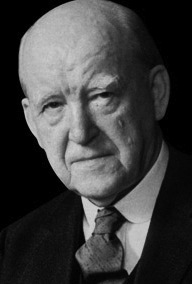
Other Lloyd-Jones Quotes

Herman Bavinck – Believingly Deriving the Doctrine of Scripture from Scripture

31 Dec

It is incorrect to say that the teaching of inspiration, as it is maintained by the Christian church, forms a contrast to what Scripture says about itself. For inspiration is a fact taught by that very Holy Scripture. Jesus and the apostles have given us their witness concerning Scripture. Scripture contains teachings also about itself. Aside from all the dogmatic or scholastic development of this teaching, the question is simply whether or not Scripture deserves credence at the point of this self-testimony. There may be disagreement about whether Scripture teaches this divine inspiration of itself; but if it does, then it must also be believed at this point just as much as in its pronouncements about God, Christ, salvation, etc. The so-called phenomena of Scripture cannot undo this self-testimony of Scripture and may not be summoned against it as a party in the discussion. For those who make their doctrine of Scripture dependent on historical research into its origination and structure have already begun to reject Scripture’s self-testimony and therefore no longer believe that Scripture. They think it is better to build up the doctrine of Scripture on the foundation of their own research than by believingly deriving it from Scripture itself. In this way, they substitute their own thoughts for, or elevate them above those of Scripture.

~Herman Bavinck~


Reformed Dogmatics Vol. 1: Prolegomena (Grand Rapids, Michigan; Baker Academic; 2003) p. 424.

Books by Herman Bavinck

Biography of Herman Bavinck

More Bavinck Quotes

Herman Bavinck – Why Read Scripture?

27 Dec

The all-perfect author, the Holy Spirit, could inspire nothing untrue, trivial, or degraded. Reading and studying Scripture is therefore an urgent necessity.

~Herman Bavinck~


Reformed Dogmatics Vol. 1: Prolegomena (Grand Rapids, Michigan; Baker Academic; 2003) p. 406-407.

Books by Herman Bavinck

Biography of Herman Bavinck

More Bavinck Quotes

Herman Bavinck – Approaching Scripture

12 Dec

While objections–e.g., from historical criticism–should not be ignored, we must not overlook the spiritual-ethical hostility to Scripture from the forces of unbelief. While not all questioning of Scripture reveals hostile unbelief, it is important to underscore the duty of every person to be humble before Scripture. Holy Scripture must judge us, not the reverse. The Holy Spirit opens our heart to trust, believe, and obey God’s Word in Scripture. Submission remains a struggle, also an intellectual one. We must acknowledge our limitations, the reality of mystery, our weakness of faith, without despairing of all knowledge and truth. Our hope is in Christ, the true man in whom human nature is restored. That is the purpose of Scripture: to make us wise unto salvation (2 Tim. 3:15)

~Herman Bavinck~


Reformed Dogmatics Vol. 1: Prolegomena (Grand Rapids, Michigan; Baker Academic; 2003) p. 389.

Books by Herman Bavinck

Biography of Herman Bavinck

More Bavinck Quotes

Martyn Lloyd-Jones – Avoiding Becoming Slaves to Our Own Theories

10 Dec

Well, I would lay it down as a principle at this point — and it is applicable not only to this question of prayer but to many other problems as well — that the one thing we have to do in a situation like this is to avoid becoming slaves to our own theories and ideas and to our own understanding of the truth. In avoiding that danger we should go to the Scriptures, and look at the Bible’s plain and obvious teaching with as dispassionate and open a mind as we are capable of. We should do that, I say, not only with regard to this problem of prayer, but with regard to any other problem that may arise in our spiritual experience. There are certain doctrines taught in Scripture quite clearly, but then we come up against something that we cannot quite fit into our doctrinal pattern, and the danger at that point is to stand on our own doctrine and to try to explain away the Scripture. If ever we find a point that seems to conflict with our clear grasp of doctrine, it seems to me that, for the time being, the essence of wisdom is to leave our doctrine where it is. It is not that we deny it, we just leave it for the moment, we come back to Scripture and we note what Scripture has to say everywhere about this particular matter. Then having done that, we again attempt to relate this obvious and clear teaching of Scripture with the doctrine of which we are equally sure.

~Martyn Lloyd-Jones~


The Assurance of Our Salvation (Wheaton, IL; Crossway Books; 2000) p. 27-28

Books by Martyn Lloyd-Jones

Other Lloyd-Jones Quotes

Herman Bavinck – The Organic Inspiration of Scripture

23 Nov

In the doctrine of Scripture, it is the working out and application of the central fact of revelation: the incarnation of the Word. The Word (logos) has become flesh (sarx), and the word has become Scripture; these two facts do not only run parallel but are most intimately connected. Christ became flesh, a servant, without form or comeliness, the most despised of human beings; he descended to the nethermost parts of the earth and became obedient even to the death of the cross. So also, the word, the revelation of God, entered the world of creatureliness, the life and history of humanity, in all the human forms of dream and vision, of investigation and reflection, right down into that which is humanly weak and despised and ignoble. The word became Scripture and as Scripture subjected itself to the fate of all Scripture. All this took place in order that the excellency of the power, also of the power of Scripture, may be God’s and not ours. Just as every human thought and action is the fruit of the action of God in whom we live and have our being, and is at the same time the fruit of the activity of human beings, so also Scripture is totally the product of the Spirit of God, who speaks through the prophets and apostles, and at the same time totally the product of the activity of the authors. “Everything is divine and everything is human”

~Herman Bavinck~


Reformed Dogmatics Vol. 1: Prolegomena (Grand Rapids, Michigan; Baker Academic; 2003) p. 434-435.

Books by Herman Bavinck

Biography of Herman Bavinck

More Bavinck Quotes

Herman Bavinck – Distinguishing Between General and Special Revelation

2 Nov

The distinction between general and special revelation does not consist primarily in the fact that the latter consistently and in all parts bears a strictly supernatural character; the difference is evinced fundamentally and primarily by the fact that special revelation is a revelation of special grace and thus brings into existence the salvific religion known as Christianity.

~Herman Bavinck~


Reformed Dogmatics Vol. 1: Prolegomena (Grand Rapids, Michigan; Baker Academic; 2003) p. 342.

Books by Herman Bavinck

Biography of Herman Bavinck

Other Bavinck Quotes

Herman Bavinck – God’s Revelation

24 Oct

The revelation that Scripture discloses to us does not just consist in a number of disconnected words and isolated facts but is one single historical and organic whole, a mighty world-controlling and world-renewing system of testimonies and acts of God.

~Herman Bavinck~


Reformed Dogmatics Vol. 1: Prolegomena (Grand Rapids, Michigan; Baker Academic; 2003) p. 340.

Read More By Bavinck

Read More About Bavinck

Other Bavinck Quotes

Herman Bavinck – Can We Comprehend the Mysteries of God?

3 Oct

Naturally it is also not the intent of Scripture to say that the believer grasps those mysteries [of God] in a scientific sense. We walk by faith, after all; we know in part and now see in a mirror dimly (Rom. 11:34; 1 Cor. 13:12; 2 Cor. 5:7). But believers do know those mysteries; they are no longer a folly and an offense to them; they do marvel at Gods wisdom and love manifest in them. “The secret of God ought to produce earnest people, not hostile ones” (Augustine). It does not even occur to them, therefore, that the mysteries surpass their reason, that they are above reason; they do not experience them as an oppressive burden but rather as intellectual liberation. Their faith turns into wonder; knowledge terminates in adoration; and their confession becomes a song of praise and thanksgiving. Of this kind, too, is the knowledge of God theology aims for. It is not just a knowing, much less a comprehending; it is better and more glorious than that: it is the knowledge which is life, “eternal life” (John 17:3).

~Herman Bavinck~


Reformed Dogmatics Vol. 1: Prolegomena (Grand Rapids, Michigan; Baker Academic; 2003) p. 261.

Read More By Bavinck

Read More About Bavinck

Other Bavinck Quotes