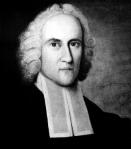
Geerhardus Vos – What Is Biblical Theology?

14 Jan

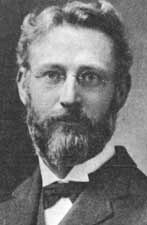
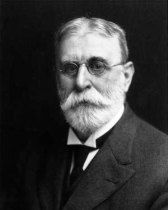
1862-1949. Dutch Reformed pastor who became professor of Biblical Theology at Princeton Seminary. Known as the father of Reformed Biblical Theology.

Biblical Theology occupies a position between Exegesis and Systematic Theology in the encyclopedia of theological disciplines. It differs from Systematic Theology, not in being more Biblical, or adhering more closely to the truths of the Scriptures, but in that its principle of organizing the Biblical material is historical rather than logical. Whereas Systematic Theology takes the Bible as a completed whole and endeavors to exhibit its total teaching in an orderly, systematic form, Biblical Theology deals with the material from the historical standpoint, seeking to exhibit the organic growth or development of the truths of Special Revelation from the primitive pre-redemptive Special Revelation given in Eden to the close of the New Testament canon.

~Geerhardus Vos~


Biblical Theology: Old and New Testaments (Edinburgh, Scotland; Banner of Truth, 1975), p. v-vi.

Books by Geerhardus Vos

Kindle Books

Other Vos Quotes at The Old Guys

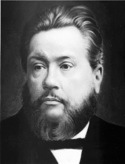
Charles Spurgeon – Look! Look! Look!

13 Jan

20120713-214637.jpg

And now, it may be, some of you are convinced of sin, by the Holy Spirit. I will now proclaim to you the way of salvation. “As Moses lifted up the serpent in the wilderness, even so must the Son of Man be lifted up; that whosoever believeth in him should not perish, but have eternal life.” Behold, O trembling penitent the means of thy deliverance. Turn thy tearful eye to yonder Mount of Calvary! see the victim of justice—the sacrifice of atonement for your transgression. View the Saviour in his agonies, with streams of blood purchasing thy soul, and with intensest agonies enduring thy punishment. He died for thee, if now thou dost confess they guilt. O come thou condemned one, self-condemned, and turn thine eye this way, for one look will save. Sinner, thou art bitten. Look! it is nought but “Look!” It is simply “Look!” If thou canst but look to Jesus thou art safe. Hear the voice of the Redeemer: “Look unto me, and be ye saved.” Look! Look! Look! O guilty souls.

“Venture on him, venture wholly,
Let no other trust intrude;
None but Jesus
Can do helpless sinners good,”

May my blessed Master help you to come to him, and draw you to his Son, for Jesu’s sake. Amen and Amen.


~Charles Spurgeon~


The New Park Street Pulpit Sermons, Vol. I (London: Passmore & Alabaster, 1855), 156. Vol. 1, Sermon No. 20; Titled: The Carnal Mind Enmity Against God; Delivered on Sabbath Morning, April 22nd, 1855.

Books by Charles Spurgeon

Kindle Books

Biography of Charles Spurgeon

Other Spurgeon Quotes

Louis Berkhof – The Great Presupposition of Theology

9 Jan
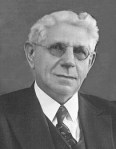
1873-1957. Reformed Systematic theologian. President of Calvin Seminary.

1873-1957. Reformed Systematic theologian. President of Calvin Seminary.

For us the existence of God is the great presupposition of theology. There is no sense in speaking of the knowledge of God, unless it may be assumed that God exists. The presupposition of Christian theology is of a very definite type. The assumption is not merely that there is something, some idea or ideal, some power or purposeful tendency, to which the name of God may be applied, but that there is a self-existent, self-conscious, personal Being, which is the origin of all things, and which transcends the entire creation, but is at the same time immanent in every part of it. The question may be raised, whether this is a reasonable assumption, and this question may be answered in the affirmative. This does not mean, however, that the existence of God is capable of a logical demonstration that leaves no room whatever for doubt; but it does mean that, while the truth of God’s existence is accepted by faith, this faith is based on reliable information. While Reformed theology regards the existence of God as an entirely reasonable assumption, it does not claim the ability to demonstrate this by rational argumentation. Dr. Kuyper speaks as follows of the attempt to do this: “The attempt to prove God’s existence is either useless or unsuccessful. It is useless if the searcher believes that God is a rewarder of those who seek Him. And it is unsuccessful if it is an attempt to force a person who does not have this pistis by means of argumentation to an acknowledgment in a logical sense.”

~Louis Berkhof~


Systematic Theology (Grand Rapids, MI: Wm. B. Eerdmans publishing co., 1938), 20–21.

Books by Louis Berkhof

Kindle Books

Louis Berkhof on Logos Bible Software

More Berkhof Quotes

Herman Bavinck – The Firmness of the Non-Material World

8 Jan

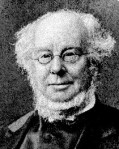
1854-1921. Dutch Reformed Theologian and Churchman. Professor at Free University in Amsterdam.

The natural, universal, and necessary character of religion and the knowledge of God already in ancient times led to the idea that it was increated in humans and innate by nature. It is simply a fact, certainly, that all persons from their earliest youth are conscious of a psychic, spiritual, invisible world as well as of a physical one. Though truth and falsehood, good and evil, right and wrong, and beauty and ugliness are not quantifiable entities and cannot be perceived by the five senses, they are things the reality of which is much more firmly fixed in our consciousness than that of matter and force. Materialism may only take into consideration gravity, temperature, and electricity, but faith, hope, and love, which are very different forces, have nevertheless governed humankind and kept it from sinking into bestiality. Augustine was right when he wrote that the truth of spiritual things is actually much more certain than that of visible things. “Nothing can be more absurd than to say that the objects we see with our eyes have being while the things we discern with our intellect do not, since only a fool would doubt the fact that the intellect is of incomparably higher rank than the eyes.” The truths of mathematics and logic and the principles of ethics, jurisprudence, and religion are indubitably established for everyone. Their natural, universal, and necessary character cannot be denied by anyone. As “innate ideas” they seem to be congenitally a part of human nature.

~Herman Bavinck~


Reformed Dogmatics Vol. 2: God and Creation John Bolt and John Vriend (Grand Rapids, MI; Baker Academic; 2004) p. 59-60.

Books by Herman Bavinck

Kindle Books

Reformed Dogmatics on Logos Bible Software

Biography of Herman Bavinck

More Bavinck Quotes

George Smeaton – The Incarnation as Foundational to the Atonement

3 Jan
SMEATON-George-210x263

1814-1889. Scottish minister and Professor of New Testament Exegesis at New College, Edinburgh.

Having noticed the provision to be made for sin, we come next to the great fact of the Incarnation as the foundation of the whole work of atonement. The Lord’s advent in flesh is uniformly set forth as a means for the accomplishment of a great result: not as in itself an end. Thus, in the Lord’s own teaching, He announces that He came down from heaven for the sake of a people given to Him (John 6:39); that He came to save that which was lost (Matt. 18:11); that He came to give His life for others (Mark 10:45). We may represent the relation between God and man in this way. Between the INFINITE GOD, possessed of all holiness and justice, and MAN, a rebel and infected with sin, there is the widest conceivable remove in a moral point of view. What can bring them together? Who can terminate the estrangement? The INCARNATION of the Eternal Son supplies the answer: this fills up the chasm and paves the way to the rectification of man’s relation. But it is equally necessary to meet the wants and cravings of the human spirit, which ever and anon exclaims: What would become of me if my Maker were not my Redeemer? (Is. 54:5).

~George Smeaton~


The Doctrine of the Atonement, as Taught by Christ Himself, Second Edition (Edinburgh: T&T Clark, 1871), 39–40.

Books by George Smeaton

The Smeaton Theology Collection on Logos Bible Software

Kindle Books

More Smeaton Quotes at The Old Guys

B.B. Warfield – The Deity of Jesus On Every Page

2 Jan

1851-1921. Reformed Theologian in America and Principle of Princeton Seminary in the line of Charles Hodge.

The proper subject of the New Testament is Christ. Every page of it, or perhaps we might better say every line of it, has its place in the portrait which is drawn of Him by the whole. In forming an estimate of the conception of His person entertained by its writers, and by those represented by them, we cannot neglect any part of its contents. We can scarcely avoid distinguishing in it, to be sure, between what we may call the primary and the subsidiary evidence it bears to the nature of His personality, or at least the more direct and the more incidental evidence. It may very well be, however, that what we call the subsidiary or incidental evidence may be quite as convincing, if not quite as important, as the primary and direct evidence. The late Dr. R. W. Dale found the most impressive proofs that the Apostles themselves and the primitive Churches believed that Jesus was one with God, rather in the way this seems everywhere taken for granted, than in the texts in which it is definitely asserted. “Such texts,” he remarks, “are but like the sparkling crystals which appear on the sand after the tide has retreated; these are not the strongest—though they may be the most apparent—proofs that the sea is salt: the salt is present in solution in every bucket of sea-water. And so,” he applies his parable, “the truth of our Lord’s divinity is present in solution in whole pages of the Epistles, from which not a single text could be quoted that explicitly declares it.”


~B.B. Warfield~


The Lord of Glory: a Study of the Designations of Our Lord in the New Testament with Especial Reference to His Deity (New York: American Tract Society, 1907), 1–2.w

Books by B.B. Warfield

More Warfield Quotes at The Old Guys

Jonathan Edwards – The Excellency of Christ in the Incarnation

31 Dec
jonathan-edwards

1703-1758. Reformed Preacher and Theologian in New England.

Having thus shown wherein there is an admirable conjunction of excellencies in Jesus Christ, I now proceed,
Secondly, To show how this admirable conjunction of excellencies appears in Christ’s acts.

1. It appears in what Christ did in taking on him our nature. In this act, his infinite condescension wonderfully appeared, that he who was God should become man; that the word should be made flesh, and should take on him a nature infinitely below his original nature! And it appears yet more remarkably in the low circumstances of his incarnation: he was conceived in the womb of a poor young woman, whose poverty appeared in this, when she came to offer sacrifices of her purification, she brought what was allowed of in the law only in case of poverty; as Luke 2:24. “According to what is said in the law of the Lord, a pair of turtle-doves, or two young pigeons.” This was allowed only in case the person was so poor that she was not able to offer a lamb. Lev. 12:8.

And though his infinite condescension thus appeared in the manner of his incarnation, yet his divine dignity also appeared in it; for though he was conceived in the womb of a poor virgin, yet he was conceived there by the power of the Holy Ghost. And his divine dignity also appeared in the holiness of his conception and birth. Though he was conceived in the womb of one of the corrupt race of mankind, yet he was conceived and born without sin; as the angel said to the blessed Virgin, Luke 1:35. “The Holy Ghost shall come upon thee, and the power of the Highest shall overshadow thee; therefore also that holy thing which shall be born of thee, shall be called the Son of God.”

His infinite condescension marvellously appeared in the manner of his birth. He was brought forth in a stable, because there was no room for them in the inn. The inn was taken up by others, that were looked upon as persons of greater account. The blessed Virgin, being poor and despised, was turned or shut out. Though she was in such necessitous circumstances, yet those that counted themselves her betters would not give place to her; and therefore, in the time of her travail, she was forced to betake herself to a stable; and when the child was born, it was wrapped in swaddling-clothes, and laid in a manger. There Christ lay a little infant; and there he eminently appeared as a lamb. But yet this feeble infant, born thus in a stable, and laid in a manger, was born to conquer and triumph over Satan, that roaring lion. He came to subdue the mighty powers of darkness, and make a show of them openly; and so to restore peace on earth, and to manifest God’s good-will towards men, and to bring glory to God in the highest; according as the end of his birth was declared by the joyful songs of the glorious hosts of angels appearing to the shepherds at the same time that the infant lay in the manger; whereby his divine dignity was manifested.

~Jonathan Edwards~


The Works of Jonathan Edwards Vol. 1 (Bellingham, WA: Logos Bible Software, 2008), 683. The Excellency of Christ
Books by Jonathan Edwards

Biography of Jonathan Edwards

Online Books Available

Other Edwards Quotes

Herman Bavinck – The Central Fact of the Entire History of the World

30 Dec

The doctrine of Christ is not the starting point, but it certainly is the central point of the whole system of dogmatics. All other dogmas either prepare for it or are inferred from it. In it, as the heart of dogmatics, pulses the whole of the religious-ethical life of Christianity. It is “the mystery of godliness” (1 Tim. 3:16). From this mystery all Christology has to proceed. If, however, Christ is the incarnate Word, then the incarnation is the central fact of the entire history of the world; then, too, it must have been prepared from before the ages and have its effects throughout eternity.

~Herman Bavinck~


Reformed Dogmatics Volume 3: Sin and Salvation in Christ (Grand Rapids, MI: Baker Academic, 2006), p. 274.

Books by Herman Bavinck

Kindle Books

Biography of Herman Bavinck

More Bavinck Quotes

John Owen: Christ is God and Man in One Person

28 Dec

1616 -1683. Preeminent English Puritan theologian, pastor, and independent.

QUESTION. It was queried by some, how we may make our application unto Christ; not in general, but under what notion and apprehension of the person of Christ?

ANSWER. Because some seem to apprehend there might be danger in terminating our worship upon the nature of Christ as a creature, I shall give you my thoughts and directions in it. And,—
First. You must observe we are to have no conceptions, in our acting of any duty, towards Christ or about him, but with respect unto his person as he is God and man in one person. It is not lawful for us to have any apprehensions of Christ, to make any application to him, as man only; nor is it lawful for us to have any apprehensions of him as God only: but all our apprehensions of Christ, and all our addresses unto him, must be as God and man in one person. So he is, and so he will be to all eternity. The union is inseparable and indissoluble; and for any man to make his application unto Christ either as God or as man, is to set up a false Christ. Christ is God and man in one person, and no other. So, in all our actings of faith upon him, and applications unto him, we ought to consider him as he was “the seed of David,” and as “God over all, blessed for ever,” in one person.

~John Owen~


The Works of John Owen, ed. William H. Goold, vol. 8: Sermons to the Nations (Edinburgh: T&T Clark, n.d.), 373.

Books by John Owen

Kindle Books

Biography of John Owen

Other Owen Quotes

Charles Wesley – Happy the Place, But Happier Still

26 Dec
Charles-Wesley

1707-1788. English leader of the Methodist movement along with brother John Wesley.

“Now after Jesus was born in Bethlehem of Judea” – Matthew 2:1

HAPPY the place, but happier still
The heart where Christ is born:
The heart which He vouchsafes to fill
Need neither sin nor mourn;
No city could with Bethlehem share
The honour of His birth,
But every soul by faith may bear
The Lord of heaven and earth.

~Charles Wesley~


The Poetical Works of John and Charles Wesley, ed. G. Osborn, vol. 10 (London: Wesleyan-Methodist Conference Office, 1871), 142.

Books by Charles Wesley

Kindle Books