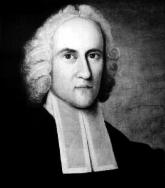
Jonathan Edwards – The Resurrection Power of Christ Exerted in Our Hearts

22 Mar

Gracious affections arise from those operations and influences which are spiritual, and that the inward principle from whence they flow, is something divine, a communication of God, a participation of the divine nature, Christ living in the heart, the Holy Spirit dwelling there, in union with the faculties of the soul, as an internal vital principle, exerting his own proper nature in the exercise of those faculties. This is sufficient to show us why true grace should have such activity, power, and efficacy. No wonder that what is divine, is powerful and effectual; for it has omnipotence on its side. If God dwells in the heart, and be vitally united to it, he will show that he is a God by the efficacy of his operation. Christ is not in the heart of a saint as in a sepulchre, as a dead saviour that does nothing; but as in his temple, one that is alive from the dead. For in the heart where Christ savingly is, there he lives, and exerts himself after the power of that endless life, that he received at his resurrection. Thus every saint who is the subject of the benefit of Christ’s sufferings, is made to know and experience the power, of his resurrection.

~Jonathan Edwards~


The Works of Jonathan Edwards Vol. 1 (Peabody, MA; Hendrickson Publishers, Inc; 2007) p. 316.
Books by Jonathan Edwards

Biography of Jonathan Edwards

Online Books Available

Other Edwards Quotes

Charles Spurgeon – Prayers Are Heard in Heaven

21 Mar

20120713-214637.jpg

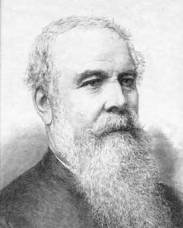
Prayers are noticed in heaven. Oh! I know what is the case with many of you. You think, “If I turn to God, if I seek him, surely I am so inconsiderable a being, so guilty and vile, that it cannot be imagined he would take any notice of me.” My friends, harbor no such heathenish ideas. Our God is no god who sits in one perpetual dream; nor doth he clothe himself in such thick darkness that he cannot see; he is not like Baal who heareth not. True, he may not regard battles; he cares not for the pomp and pageantry of kings; he listens not to the swell of martial music; he regards not the triumph and the pride of man; but wherever there is a heart big with sorrow, wherever there is an eye suffused with tears, wherever there is a lip quivering with agony, wherever there is a deep groan, or a penitential sigh, the ear of Jehovah is wide open; he marks it down in the registry of his memory; he puts our prayers, like rose leaves, between the pages of his book of remembrance, and when the volume is opened at last there shall be a precious fragrance springing up therefrom. Oh! Poor sinner, of the blackest and vilest character, thy prayers are heard, and even now God hath said of thee, “Behold, he prayeth.” Where was it– in a barn? Where was it– in the closet? Was it at thy bedside this morning, or in this hall? Art thou now glancing thine eye to heaven? Speak, poor heart; did I hear thy lips just now mutter out, “God have mercy upon me, a sinner?” I tell thee, sinner, there is one thing which doth outstrip the telegraph. You know we can now send a message and receive an answer in a few moments; but I read of something in the Bible more swift than the electric fluid. “Before they call I will answer, and while they are speaking I will hear.” So, then, poor sinner, thou art noticed; yea, thou art heard by him that sitteth on the throne.

~Charles Spurgeon~


Spurgeon’s Sermons (Spokane, Washington; Olive Tree Bible Software; 2010) eBook. Vol. 1, Sermon No. 16; Titled: Paul’s First Prayer; Delivered on Sabbath Morning, March 25th, 1855.

Books by Charles Spurgeon

Kindle Books

Biography of Charles Spurgeon

Other Spurgeon Quotes

The Letter to Diognetus: O Sweet Exchange!

20 Mar

Diognetius

But when our wickedness had reached its height, and it had been clearly shown that its reward, punishment and death, was impending over us; and when the time had come which God had before appointed for manifesting His own kindness and power, how the one love of God, through exceeding regard for men, did not regard us with hatred, nor thrust us away, nor remember our iniquity against us, but showed great long-suffering, and bore with us, He Himself took on Him the burden of our iniquities, He gave His own Son as a ransom for us, the holy One for transgressors, the blameless One for the wicked, the righteous One for the unrighteous, the incorruptible One for the corruptible, the immortal One for them that are mortal. For what other thing was capable of covering our sins than His righteousness? By what other one was it possible that we, the wicked and ungodly, could be justified, than by the only Son of God? O sweet exchange! O unsearchable operation! O benefits surpassing all expectation! that the wickedness of many should be hid in a single righteous One, and that the righteousness of One should justify many transgressors! Having therefore convinced us in the former time that our nature was unable to attain to life, and having now revealed the Saviour who is able to save even those things which it was [formerly] impossible to save, by both these facts He desired to lead us to trust in His kindness, to esteem Him our Nourisher, Father, Teacher, Counsellor, Healer, our Wisdom, Light, Honour, Glory, Power, and Life.

~The Letter to Diognetus~


Ante-Nicene Fathers Vol. 01: The Apostolic Fathers with Justin Martyn and Irenaeus – The Letter to Diognetus (Grand Rapids, MI; Christian Classics Ethereal Library; 1885) p. 28

Kindle Version

Free Online Version

Other Letter to Diognetus Quotes

Jonathan Edwards – A Report of Revival in New England (2)

19 Mar

Multitudes in New England have lately been brought to a new and great conviction of the truth and certainty of the things of the gospel; to a firm persuasion that Christ Jesus is the Son of God, and the great and only Saviour of the world; and that the great doctrines of the gospel touching reconciliation by his blood, and acceptance in his righteousness, and eternal life and salvation through him are matters of undoubted truth. They have had a most affecting sense of the excellency and sufficiency of this Saviour, and the glorious wisdom and grace of God shining in this way of salvation; and of the wonders of Christ’s dying love, and the sincerity of Christ in the invitations of the gospel. They have experienced a consequent affiance and sweet rest of soul in Christ, as a glorious Saviour, a strong rock and high tower; accompanied with an admiring and exalted apprehension of the glory of the divine perfections, God’s majesty, holiness, sovereign grace, &c.—-with a sensible, strong, and sweet love to God, and delight in him, far surpassing all temporal delights, or earthly pleasures; and a rest of soul in him, as a portion and the fountain of all good.

~Jonathan Edwards~


The Works of Jonathan Edwards Vol. 1 (Peabody, MA; Hendrickson Publishers, Inc; 2007) p. 158-159.

Books by Jonathan Edwards

Biography of Jonathan Edwards

Online Books Available

Other Edwards Quotes

John Calvin – Engraven on Human Hearts

18 Mar

From this, my present contention is brought out with greater certainty, that a sense of divinity is by nature engraven on human hearts. For necessity forces from the reprobate themselves a confession of it. In tranquil times they wittily joke about God, indeed are facetious and garrulous in belittling his power. If any occasion for despair presses upon them, it goads them to seek him and impels their perfunctory prayers. From this it is clear that they have not been utterly ignorant of God, but that what should have come forth sooner was held back by stubbornness.

~John Calvin~


The Institutes of the Christian Religion (Louisville, KY; Westminster John Knox Press; 1974) Vol. 1.4.4. p. 51

Books by John Calvin

Biography of John Calvin

Kindle Books

Online Books Available

Other Calvin Quotes

J.C. Ryle – God’s Elect Are Safe

16 Mar

Those whom God has chosen to salvation by Christ, are those whom God specially loves in this world. They are the jewels among mankind. He cares more for them than for kings on their thrones, if kings are not converted. He hears their prayers. He orders all the events of nations and the issues of wars for their good, and their sanctification. He keeps them by His Spirit. He allows neither man nor devil to pluck them out of His hand. Whatever tribulation comes on the world, God’s elect are safe. May we never rest until we know that we are of this blessed number! There breathes not the man or woman who can prove that he is not one. The promises of the Gospel are open to all. May we give diligence to make our calling and election sure! God’s elect are a people who cry unto Him night and day. When Paul saw the faith, and hope, and love of the Thessalonians, then he knew “their election of God.” (1 Thess. 1:4; Luke 18:7.)

~J.C. Ryle~


Expository Thoughts on the Gospels – Matthew (Edinburgh, Scotland; Banner of Truth; 1992) Commenting on Matthew 24:15-28. p. 320

Books by J.C. Ryle

Kindle Books

Other Ryle Quotes

Herman Bavinck – All Things Are From, Through, and To Him

15 Mar

Mystery is the lifeblood of dogmatics. To be sure, the term “mystery” (μυστεριον) in Scripture does not mean an abstract supernatural truth in the Roman Catholic sense. Yet Scripture is equally far removed from the idea that believers can grasp the revealed mysteries in a scientific sense. In truth, the knowledge that God has revealed of himself in nature and Scripture far surpasses human imagination and understanding. In that sense it is all mystery with which the science of dogmatics is concerned, for it does not deal with finite creatures, but from beginning to end looks past all creatures and focuses on the eternal and infinite One himself. From the very start of it labors, it faces the incomprehensible One. From him it derives its inception, for from him are all things. But also in the remaining loci, when it turns its attention to creatures, it views them only in relation to God as they exist from him and through him and for him [Rom. 11:36]. So then, the knowledge of God is the only dogma, the exclusive content, of the entire field of dogmatics. All the doctrines treated in dogmatics–whether they concern the universe, humanity, Christ, and so forth–are but the explication of the one central dogma of the knowledge of God. All things are considered in light of God, subsumed under him, traced back to him as the starting point. Dogmatics is always called upon to ponder and describe God and God alone, whose glory is in creation and re-creation, in nature and grace, in the world and in the church. It is the knowledge of him alone that dogmatics must put on display.

~Herman Bavinck~


Reformed Dogmatics Vol. 2: God and Creation (Grand Rapids, Michigan; Baker Academic; 2004) p. 29.

Books by Herman Bavinck

Kindle Books

Biography of Herman Bavinck

More Bavinck Quotes

Jonathan Edwards – A Report of Revival in New England

14 Mar

Many have been remarkably engaged to watch, and strive, and fight against sin; to cast out every idol, sell all for Christ, give up themselves entirely to God, and make a sacrifice of every worldly and carnal thing to the welfare and prosperity of their souls. And there has of late appeared in some places an unusual disposition to bind themselves to it in a solemn covenant with God. And now, instead of meetings at taverns and drinking-houses, and of young people in frolics and vain company, the country is full of meetings of all sorts and ages of persons—young and old, men, women, and little children—to read and pray, and sing praises, and to converse of the things of God and another world. In very many places the main of the conversation in all companies turns of religion, and things of a spiritual nature. Instead of vain mirth among young people, there is now either mourning under a sense of the guilt of sin, or holy rejoicing in Christ Jesus: and, instead of their lewd songs, there are now to be heard from them songs of praise to God, and the Lamb that was slain to redeem them by his blood. And there has been this alteration abiding on multitudes all over the land, for a year and a half, without any appearance of a disposition to return to former vice and vanity.

~Jonathan Edwards~


The Works of Jonathan Edwards Vol. 1 (Peabody, MA; Hendrickson Publishers, Inc; 2007) p. 158-159.

Books by Jonathan Edwards

Biography of Jonathan Edwards

Online Books Available

Other Edwards Quotes

John Owen: The Hardening Effect of Not Fighting Sin

13 Mar

There are two evils which certainly attend every unmortified professor— the first, in himself; the other, in respect of others…

To others. It has an evil influence on them on a twofold account: It hardens them, by begetting in them a persuasion that they are in as good condition as the best professors. Whatever they see in them is so stained for want of this mortification that it is of no value with them. They have a zeal for religion; but it is accompanied with want of forbearance and universal righteousness. They deny prodigality, but with worldliness; they separate from the world, but live wholly to themselves, taking no care to exercise lovingkindness in the earth; or they talk spiritually, and live vainly; mention communion with God, and are every way conformed to the world; boasting of forgiveness of sin, and never forgiving others. And with such considerations do poor creatures harden their hearts in their unregeneracy.

~John Owen~


Overcoming Sin & Temptation (Wheaton, IL; Crossway; 2006) p. 57.

Books by John Owen

Kindle Books

Biography of John Owen

Other Owen Quotes

Charles Spurgeon – A Prayer for When You Read Your Bible

12 Mar

20120713-214637.jpg

May God, in his infinite mercy, when you read your Bibles, pour into your souls the illuminating rays of the Sun of Righteousness, by the agency of the ever- adorable Spirit; then you will read to your profit and to your soul’s salvation.

~Charles Spurgeon~


Spurgeon’s Sermons (Spokane, Washington; Olive Tree Bible Software; 2010) eBook. Vol. 1, Sermon No. 15; Titled: The Bible; Delivered on Sabbath Morning, March 18th, 1855.

Books by Charles Spurgeon

Kindle Books

Biography of Charles Spurgeon

Other Spurgeon Quotes