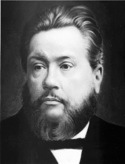
John Calvin – The Spirit and the Word Go Together

9 Jan

The Holy Spirit so inheres in his truth, which he expresses in Scripture, that only when its proper reverence and dignity are given to the Word does the Holy Spirit show forth his power…. For by a kind of mutual bond the Lord has joined together the certainty of his Word and of his Spirit so that the perfect religion of the Word may abide in our minds when the Spirit, who causes us to contemplate God’s face, shines; and that we in turn may embrace the Spirit with no fear of being deceived when we recognize him in his own image, namely, in the Word. So indeed it is. God did not bring forth his Word among men for the sake of a momentary display, intending at the coming of his Spirit to abolish it. Rather, he sent down the same Spirit by whose power he had dispensed the Word, to complete his work by the efficacious confirmation of the Word.

~John Calvin~


The Institutes of the Christian Religion (Louisville, KY; Westminster John Knox Press; 1974) Vol. 1.9.3.

Books by John Calvin

Biography of John Calvin

Kindle Books

Online Books Available

Other Calvin Quotes

John Calvin – Really Reverencing God

8 Jan

All men have a vague general veneration for God, but very few really reverence him; and wherever there is great ostentation in ceremonies, sincerity of heart is rare indeed.

~John Calvin~


The Institutes of the Christian Religion (Louisville, KY; Westminster John Knox Press; 1974) Vol. 1.2.2.

Books by John Calvin

Biography of John Calvin

Kindle Books

Online Books Available

Other Calvin Quotes

John Owen: The Battle Will Continue Until the End

7 Jan

To mortify a sin is not utterly to kill, root it out, and destroy it, that it should have no more hold at all nor residence in our hearts. It is true this is that which is aimed at; but this is not in this life to be accomplished. There is no man that truly sets himself to mortify any sin, but he aims at, intends, desires its utter destruction, that it should leave neither root nor fruit in the heart or life. He would so kill it that it should never move nor stir anymore, cry or call, seduce or tempt, to eternity. Its not-being is the thing aimed at. Now, though doubtless there may, by the Spirit and grace of Christ, a wonderful success and eminency of victory against any sin be attained, so that a man may have almost constant triumph over it, yet an utter killing and destruction of it, that it should not be, is not in this life to be expected.

~John Owen~


Overcoming Sin & Temptation (Wheaton, IL; Crossway; 2006) p. 70-71.

Books by John Owen

Biography of John Owen

Other Owen Quotes

Jonathan Edwards – Sin Is Infinite Evil

4 Jan

Our obligation to love, honor and obey any being is in proportion to his loveliness, honor and authority. Therefore, sin against God, being a violation of infinite obligations, must be a crime infinitely heinous and so deserving infinite punishment. If there is any evil in sin against God it is infinite evil.

~Jonathan Edwards~


The Works of Jonathan Edwards Vol. 1 (Peabody, MA; Hendrickson Publishers, Inc; 2007) p. 669.

Books by Jonathan Edwards

Biography of Jonathan Edwards

Online Books Available

Other Edwards Quotes

Thomas Watson – Lovers of God Love His People

3 Jan

9. If we are lovers of God, we love what God loves….

(b) We love a saint, though he has many personal failings. There is no perfection here. In some, rash anger prevails; in some, inconstancy; in some, too much love of the world. A saint in this life is like gold in the ore, much dross of infirmity cleaves to him, yet we love him for the grace that is in him. A saint is like a fair face with a scar: we love the beautiful face of holiness, though there be a scar in it. The best emerald has its blemishes, the brightest stars their twinklings, and the best of the saints have their failings. You that cannot love another because of his infirmities, how would you have God love you?

~Thomas Watson~


The All Things for Good (Edinburgh, Scotland; Banner of Truth Trust; 1986) Chapter 5: The Tests of Love to God; 9. If we are lovers of God, we love what God loves

Books by Thomas Watson

Biography of Thomas Watson

Other Watson Quotes

Jonathan Edwards – Resolutions and the Spirit of God

2 Jan

Wednesday, Jan. 2. Dull. I find, by experience, that, let me make resolutions, and do what I will, with never so many inventions, it is all nothing, and to no purpose at all, without the motions of the Spirit of God; for if the Spirit of God should be as much withdrawn from me always, as for the week past, notwithstanding all I do, I should not grow, but should languish, and miserably fade away. I perceive, if God should withdraw his Spirit a little more, I should not hesitate to break my resolutions, and should soon arrive at my old state. There is no dependence on myself. Our resolutions may be at the highest one day, and yet, the next day, we may be in a miserable dead condition, not at all like the same person who resolved. So that it is to no purpose to resolve, except we depend on the grace of God. For, if it were not for his mere grace, one might be a very good man one day, and a very wicked one the next. I find also by experience, that there is no guessing out the ends of Providence, in particular dispensations towards me—any otherwise than as afflictions come as corrections for sin, and God intends when we meet with them, to desire us to look back on our ways, and see wherein we have done amiss, and lament that particular sin, and all our sins, before him:—knowing this, also, that all things shall work together for our good; not knowing in what way, indeed, but trusting in God.

~Jonathan Edwards~


The Works of Jonathan Edwards Vol. 1 (Peabody, MA; Hendrickson Publishers, Inc; 2007) p. xxiv. Dairy

Books by Jonathan Edwards

Biography of Jonathan Edwards

Online Books Available

Other Edwards Quotes

Charles Spurgeon – An Invitation to Endless Happiness

1 Jan

20120713-214637.jpg

I come in God’s name to bring you a free gift which it shall be to your present and eternal joy to receive. Open the door and let my pleadings enter. “Come now, and let us reason together” (Isaiah 1:18). The Lord Himself invites you to a conference concerning your immediate and endless happiness, and He would not have done this if He did not mean well toward you. Do not refuse the Lord Jesus who knocks at your door, for He knocks with a hand which was nailed to the tree for such as you are. Since His only and sole object is your good, incline your ear and come to Him. Hearken diligently, and let the good word sink into your soul. It may be that the hour is come in which you shall enter upon that new life which is the beginning of heaven. “Faith cometh by hearing” (Romans 10:17), and reading is a type of hearing; faith may come to you while you are reading this book. Why not? O blessed Spirit of all grace, make it so!

~Charles Spurgeon~


All of Grace (Chicago, IL; Moody Publishers; 2010) p. 23

Books by Charles Spurgeon

Kindle Books

Biography of Charles Spurgeon

Other Spurgeon Quotes

Herman Bavinck – In Defense of Theology

31 Dec

After all, if revelation consisted only in the communication of life and religion, only in emotional states, there would be no room for real theology. But revelation is systematic disclosure of the words and deeds of God; it encompasses a world of thoughts and has its center in the incarnation of the Logos. And religion is not feeling and sensation alone but also belief, living for and serving of God with both heart and head. And that revelation of God can therefore be intellectually penetrated in order that it may all the better enter into the human consciousness. In that connection one cannot even take it ill of theology if it aims at clarity in thought, at making lucid distinctions and at precision in articulation. Such precision is pursued and valued in all the sciences; it is equally appropriate in theology. The danger of its degenerating into hairsplitting exists equally in other sciences, say, in jurisprudence and the study of literature. But no one would for that reason deny to these other sciences the right to exist. Also theology has its periods of florescence and decay. But it is misguided to condemn theology itself on account of the bad use that has been made of it. The abuse of it does not cancel out the use of it (Abusus non tollit usum).

~Herman Bavinck~


Reformed Dogmatics Vol. 1: Prolegomena (Grand Rapids, Michigan; Baker Academic; 2003) p. 605.

Books by Herman Bavinck

Kindle Books

Biography of Herman Bavinck

More Bavinck Quotes

Charles Spurgeon – The Sound of War

29 Dec

20120713-214637.jpg

4 For everyone who has been born of God overcomes the world. And this is the victory that has overcome the world — our faith. – 1 John 5:4

The epistles of John are perfumed with love. The word is continually occurring, while the Spirit enters into every sentence. Each letter is thoroughly soaked and impregnated with this heavenly honey. If he speaks of God, his name must be love; are the brethren mentioned, he loves them; and even of the world itself, he writes, “God so loved the world, that he gave his only begotten Son.” From the opening to the conclusion, love is the manner, love the matter, love the motive, and love the aim. We stand, therefore, not a little astonished, to find such martial words in so peaceful a writing; for I hear a sound of war. It is not the voice of love, surely, that says, “He that is born of God overcometh the world.” Lo, here are strife and battle. The word “overcometh” seems to have in it something of the sword and warfare; of strife and contention; of agony and wrestling; so unlike the love which is smooth and gentle, which hath no harsh words within its lips; whose mouth is lined with velvet; whose words are softer than butter; whose utterances are more easily flowing than oil. Here we have war–war to the knife; for I read “Whatsoever is born of God overcometh the world;” strife until death; battle throughout life; fighting with a certainty of victory. How is it that the same gospel which always speaks of peace, here proclaims a warfare? How can it be? Simply because there is something in the world which is antagonistic to love; there are principles abroad which cannot bear light, and, therefore, before light can come, it must chase the darkness. Ere summer reigns, you know, it has to do battle with old winter, and to send it howling away in the winds of March, and shedding its tears in April showers. So also, before any great or good thing can have the mastery of this world, it must do battle for it. Satan has seated himself on his blood-stained throne, and who shall get him down, except by main force, and fight and war? Darkness broods o’er the nations; nor can the sun establish his empire of light until he has pierced night with the arrowy sunbeams, and made it flee away. Hence we read in the Bible that Christ did not come to send peace on earth, but a sword; he came to set “the father against the son, and the son against the father; the mother against the daughter, and the daughter against the mother; the mother-in-law against her daughter-in-law, and the daughter-in-law against her mother-in-law;” not intentionally, but as a means to an end; because there must always be a struggle ere truth and righteousness can reign. Alas! for that earth is the battle-field where good must combat with evil Angels look on and hold their breath, burning to mingle in the conflict, but the troops of the Captain of Salvation may be none but the soldiers of the cross; and that slender band must fight alone, and yet shall triumph gloriously. Enough shall they be for conquest, and the motto of their standard is ENOUGH. Enough by the arm of the helping Trinity.

~Charles Spurgeon~


Spurgeon’s Sermons (Spokane, Washington; Olive Tree Bible Software; 2010) eBook. Vol. 4, Sermon No. 223; Titled: The Evil and Its Remedy; Delivered on Sabbath Morning, November 14th, 1858.

Books by Charles Spurgeon

Kindle Books

Biography of Charles Spurgeon

Other Spurgeon Quotes

John Calvin – The Effect of the Majesty of God

28 Dec

What in us seems perfection itself corresponds ill to the purity of God.

Hence that dread and wonder with which Scripture commonly represents the saints as stricken and overcome whenever they felt the presence of God. Thus it comes about that we see men who in his absence normally remained firm and constant, but who, when he manifests his glory, are so shaken and struck dumb as to be laid low by the dread of death–are in fact overwhelmed by it and almost annihilated. As a consequence, we must infer that man is never sufficiently touched and affected by the awareness of his lowly state until he has compared himself with God’s majesty.

~John Calvin~


The Institutes of the Christian Religion (Louisville, KY; Westminster John Knox Press; 1974) Vol. 1.1.3. p. 38-39.

Books by John Calvin

Biography of John Calvin

Kindle Books

Online Books Available

Other Calvin Quotes