Herman Bavinck: Listen to God!

21 Mar

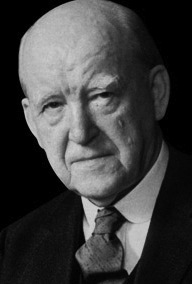
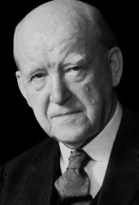
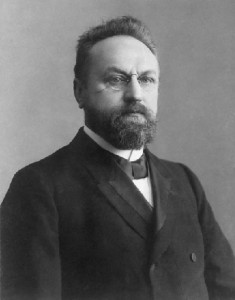
Over against all human beings, Scripture occupies a position so high that, instead of subjecting itself to their criticism, it judges them in all their thoughts and desires.

And this has been the Christian church’s position toward Scripture at all times. According to Chrysostom, humility is the foundation of philosophy. Augustine [once] said: “When a certain rhetorician was asked what was the chief rule in eloquence, he replied, Delivery’; what was the second rule, ‘Delivery’; what was the third rule, ‘Delivery’; so if you ask me concerning the precepts of the Christian religion, first, second, third, and always I would answer, ‘Humility.'” Calvin cites this statement with approval. And Pascal cries out to humanity: “Humble yourself, powerless reason! Be silent, stupid nature!… Listen to God!”

~Herman Bavinck~


Reformed Dogmatics Vol. 1: Prolegomena (Grand Rapids, Michigan; Baker Academic; 2003) p. 441.

Books by Herman Bavinck

Biography of Herman Bavinck

Other Bavinck Quotes

Martyn Lloyd-Jones – The Biblical Doctrine of Justification

20 Mar

But this is the amazing message, and this is what is meant by justification – that God tells us that, as the result of the work of the Lord Jesus Christ, because of his life, his death and his resurrection, if we believe on him and trust ourselves solely and entirely to him, God pardons and forgives our sins. Not only that, he declares that we are free from guilt: more than that, justification includes this. He not only declares that we are pardoned and forgiven and that we are guiltless, he also declares that we are positively righteous. He imputes to us, that is, he puts to our account, the righteousness of the Lord Jesus Christ himself, who was entirely without sin, who never failed his Father in any way, and who never broke a Commandment or transgressed any law. God gives to us – puts upon us – the righteousness of the Lord Jesus Christ himself, and then looks upon us and pronounces that we are righteous in his holy sight. That is the biblical doctrine of justification.

~Martyn Lloyd-Jones~


The Assurance of Our Salvation (Wheaton, IL; Crossway Books; 2000) p. 35

Books by Martyn Lloyd-Jones

Other Lloyd-Jones Quotes

Herman Bavinck: Scripture Stands Over Us

19 Mar

It remains the duty of every person, therefore, first of all to put aside his or her hostilitiy against the word of God and “to take every thought captive to obey Christ” [2 Cor. 10:5]. Scripture itself everywhere presses this demand. Only the pure of heart will see God. Rebirth will see the kingdom of God. Self-denial is the condition for being a disciple of Jesus. The wisdom of the world is folly to God. Over against all human beings, Scripture occupies a position so high that, instead of subjecting itself to their criticism, it judges them in all their thoughts and desires.

~Herman Bavinck~


Reformed Dogmatics Vol. 1: Prolegomena (Grand Rapids, Michigan; Baker Academic; 2003) p. 440-441.

Books by Herman Bavinck

Biography of Herman Bavinck

Other Bavinck Quotes

Herman Bavinck: Don’t Wait to Believe Until All the Objections Are Cleared Up!

17 Mar

There are intellectual problems (cruces) in Scripture that cannot be ignored and that will probably never be resolved. But these difficulties, which Scripture itself presents against its own inspiration, are in large part not recent discoveries of our century. They have been known at all times. Nevertheless, Jesus and the apostles, Athanasius and Augustine, Thomas and Bonaventure, Luther and Calvin, and Christians of all churches have down the centuries confessed and recognized Scripture as the word of God. Those who want to delay belief in Scripture till all the objections have been cleared up and all the contradictions have been resolved will never arrive at faith. “For who hopes for what he sees?” [Rom. 8:24]. Jesus calls blessed those who have not seen and yet believe [John 20:29].

In any case, there are objections and conundrums in every science. Those who do not want to start in faith will never arrive at knowledge. Epistemology, the theory of knowledge, is the first principle of philosophy, but it is riddled with mystery from start to finish. Those who do not want to embark on scientific investigation until they see the road by which we arrive at knowledge fully cleared will never start. Those who do not want to eat before they understand the entire process by which food arrives at their table will starve to death. And those who do not want to believe the Word of God before they see all problems resolved will die of spiritual starvation.

~Herman Bavinck~


Reformed Dogmatics Vol. 1: Prolegomena (Grand Rapids, Michigan; Baker Academic; 2003) p. 442.

Books by Herman Bavinck

Biography of Herman Bavinck

Other Bavinck Quotes

Martyn Lloyd-Jones – The Primary Task of the Church

17 Mar

The primary task of the Church and of the Christian minister is the preaching of the Word of God.

~Martyn Lloyd-Jones~


Preaching & Preachers (Grand Rapids, MI; Zondervan; 2011) p. 26

Books by Martyn Lloyd-Jones

Other Lloyd-Jones Quotes

Herman Bavinck: Confidence in Christ and the Scriptures Go Hand in Hand

16 Mar

The believer’s confidence in Christ increases along with their confidence in Scripture and, conversely, ignorance of the Scriptures is automatically and proportionately ignorance of Christ

~Herman Bavinck~


Reformed Dogmatics Vol. 1: Prolegomena (Grand Rapids, Michigan; Baker Academic; 2003) p. 440.

Books by Herman Bavinck

Biography of Herman Bavinck

Other Bavinck Quotes

John Calvin – The Inner Teacher

15 Mar

As we cannot come to Christ unless we are drawn by the Spirit, so when we are drawn we are lifted up in mind and heart above our understanding. For the soul, illumined by him, takes on a new keenness, as it were, to contemplate the heavenly mysteries, whose splendor had previously blinded it. And man’s understanding, thus beamed by the light of the Holy Spirit, then at last begins to taste those things which belong to the kingdom of God, having formerly been quite foolish and dull in tasting them…. Indeed, the Word of God is like the sun, shining upon all those to whom it is proclaimed, but with no effect among the blind. Now, all of us are blind by nature in this respect. Accordingly, it cannot penetrate into our minds unless the Spirit, as the inner teacher, through his illumination makes entry for it.

~John Calvin~


The Institutes of the Christian Religion Vol. 1 (Louisville, Kentucky; Westminster John Knox Press; 1974) p. 582.

Books by John Calvin

Biography of John Calvin

Online Books Available

Other Calvin Quotes at the Old Guys

Martin Luther – The Justice of God?

14 Mar

I had conceived a burning desire to understand what Paul meant in his Letter to the Romans, but thus far there had stood in my way, not the cold blood around my heart, but that one word which is in chapter one: “The justice of God is revealed in it.” I hated that word, “justice of God,” which, by the use and custom of all my teachers, I had been taught to understand philosophically as referring to formal or active justice, as they call it, i.e., that justice by which God is just and by which he punishes sinners and the unjust.

But I, blameless monk that I was, felt that before God I was a sinner with an extremely troubled conscience. I couldn’t be sure that God was appeased by my satisfaction. I did not love, no, rather I hated the just God who punishes sinners. In silence, if I did not blaspheme, then certainly I grumbled vehemently and got angry at God. I said, “Isn’t it enough that we miserable sinners, lost for all eternity because of original sin, are oppressed by every kind of calamity through the Ten Commandments? Why does God heap sorrow upon sorrow through the Gospel and through the Gospel threaten us with his justice and his wrath?” This was how I was raging with wild and disturbed conscience. I constantly badgered St. Paul about that spot in Romans 1 and anxiously wanted to know what he meant.

I meditated night and day on those words until at last, by the mercy of God, I paid attention to their context: “The justice of God is revealed in it, as it is written: ‘The just person lives by faith.'” I began to understand that in this verse the justice of God is that by which the just person lives by a gift of God, that is by faith. I began to understand that this verse means that the justice of God is revealed through the Gospel, but it is a passive justice, i.e. that by which the merciful God justifies us by faith, as it is written: “The just person lives by faith.” All at once I felt that I had been born again and entered into paradise itself through open gates. Immediately I saw the whole of Scripture in a different light. I ran through the Scriptures from memory and found that other terms had analogous meanings, e.g., the work of God, that is, what God works in us; the power of God, by which he makes us powerful; the wisdom of God, by which he makes us wise; the strength of God, the salvation of God, the glory of God.

I exalted this sweetest word of mine, “the justice of God,” with as much love as before I had hated it with hate. This phrase of Paul was for me the very gate of paradise.

~Martin Luther~


Here I Stand: A Life of Martin Luther (Peabody, Massachusetts; Hendrickson Publishers; 2009) p.49-50

Books by Martin Luther

Biography of Martin Luther

Other Luther Quotes

John Calvin – Against the Fear of Death!

13 Mar

Let us, however, consider this settled: that no one has made progress in the school of Christ who does not joyfully await the day of death and final resurrection. Paul, too, distinguishes all believers by this mark [Titus 2:13; cf. 2 Tim. 4:8], and Scripture habitually recalls us to it whenever it would set forth proof of perfect happiness. “Rejoice,” says the Lord, “and raise your heads; for your redemption is drawing near.” [Luke 21:28 p.] Is it reasonable, I ask you, that what our Lord meant to be sufficient to arouse us to rejoicing and good cheer should engender nothing but sorrow and dismay? If this is so, why do we still boast of him as our Master? Let us, then, take hold of a sounder view, and even though the blind and stupid desire of the flesh resists, let us not hesitate to await the Lord’s coming, not only with longing, but also with groaning and sighs, as the happiest thing of all. He will come to us as Redeemer, and rescuing us from this boundless abyss of all evils and miseries, he will lead us into that blessed inheritance of his life and glory.

~John Calvin~


The Institutes of the Christian Religion Vol. 1 (Louisville, Kentucky; Westminster John Knox Press; 1974) p. 718.

Books by John Calvin

Biography of John Calvin

Online Books Available

Other Calvin Quotes at the Old Guys

Herman Bavinck: The Opposition Against Scripture and Christ

12 Mar

If Scripture is the account of the revelation of God in Christ, it is bound to arouse the same opposition as Christ himself who came into the world for judgement and is “set for the fall and rising of man” [Luke 2:34]. He brings separation between light and darkness and reveals the thoughts of many hearts. Similarly Scripture is a living and active word, a “discerner” of the thoughts and intentions of the heart [cf. Heb. 4:12]. It not only was inspired but is still “God-breathed” and “God-breathing.” Just as there is much that precedes the act of inspiration (all the activity of the Holy Spirit in nature, history, revelation, regeneration), so there is much that follows it as well. Inspiration is not an isolated event. The Holy Spirit does not, after the act of inspiration, withdraw from Holy Scripture and abandon it to its fate but sustains and animates it and in many ways brings its content to humanity, to its heart and conscience. By means of Scripture as the word of God, the Holy Spirit continually wars against the thoughts and intentions of the “unspiritual” person. By itself, therefore, it need not surprise us in the least that Scripture has at all times encountered contradiction and opposition. Christ bore a cross, and the servant [Scripture] is not greater than its master. Scripture is the handmaiden of Christ. It shares in his defamation and arouses the hostility of sinful humanity.

~Herman Bavinck~


Reformed Dogmatics Vol. 1: Prolegomena (Grand Rapids, Michigan; Baker Academic; 2003) p. 439-440.

Books by Herman Bavinck

Biography of Herman Bavinck

Other Bavinck Quotes