Archive by Author

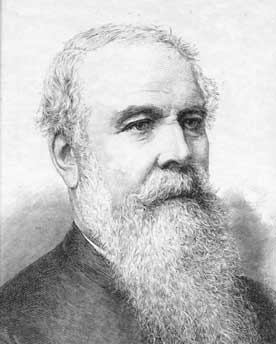
J.C Ryle – Parenting Wisely

28 Oct

If, then, you would deal wisely with your child, you must not leave him to the guidance of his own will. Think for him, judge for him, act for him, just as you would for one weak and blind; but for pity’s sake, give him not up to his own wayward tastes and inclinations. It must not be his likings and wishes that are consulted. He knows not yet what is good for his mind and soul, any more than what is good for his body. You do not let him decide what he shall eat, and what he shall drink, and how he shall be clothed. Be consistent, and deal with his mind in like manner. Train him in the way that is scriptural and right, and not in the way that he fancies.

~J.C. Ryle~


The Duties of Parents (eBook) Section 1.

Find more Ryle resources here.

Other Ryle Quotes

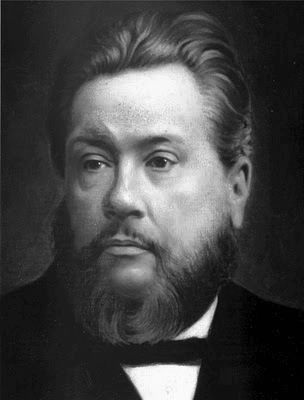
Charles Spurgeon – Pastors, Drive the Gospel Plough

27 Oct

We [pastors] depend entirely upon the Spirit of God to produce actual effect from the gospel, and at this effect we must always aim. We do not stand up in our pulpits to display our skill in spiritual sword play, but We come to actual fighting: our object is to drive the sword of the Spirit through men’s hearts. If preaching can ever in any sense be viewed as a public exhibition, it should be like the exhibition of a ploughing match, which consists in actual ploughing. The competition does not lie in the appearance of the ploughs, but in the work done; so let ministers be judged by the way in which they drive the gospel plough, and cut the furrow from end to end of the field.

~Charles Spurgeon~


Lectures to My Students (Edinburgh, Scotland; The Banner of Truth Trust; 2008) Vol. 3. Lecture 1: The Holy Spirit in Connection With Our Ministry.

Read More By Spurgeon

Read More About Spurgeon

Other Spurgeon Quotes

John Newton – The Inexhaustible Theme of Redeeming Love

26 Oct

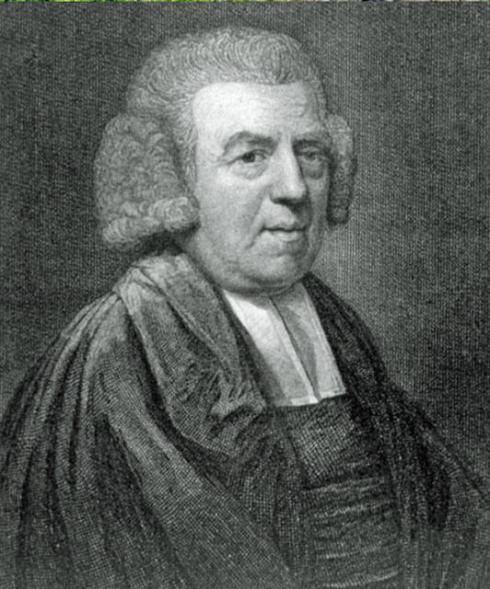
And now, how shall I fill up the rest of my paper? It is a shame for a Christian and a minister to say he has no subject at hand, when the inexhaustible theme of redeeming love is ever pressing upon our attention. I will tell you then, though you know it, that the Lord reigns.

He who once bore our sins, and carried our sorrows, is seated upon a throne of glory, and exercises all power in heaven and on earth. Thrones, principalities, and powers, bow before him. Every event in the kingdoms of providence and of grace is under his rule. His providence pervades and manages the whole, and is as minutely attentive to every part, as if there were only that single object in his view. From the tallest archangel to the meanest ant or fly, all depend on him for their being, their preservation, and their powers. He directs the sparrows where to build their nests, and to find their food. He overrules the rise and fall of nations, and bends, with an invincible energy and unerring wisdom, all events; so that, while many intend nothing less, in the issue, their designs all concur and coincide in the accomplishment of his holy will. He restrains with a mighty hand the still more formidable efforts of the powers of darkness; and Satan, with all his hosts, cannot exert their malice a hair’s breadth beyond the limits of his permission.

This is He who is the head and husband of his believing people. How happy are they who it is his good pleasure to bless! How safe are they whom He has engaged to protect! How honoured and privileged are they to whom He is pleased to manifest himself, and whom He enables and warrants to claim him as their friend and their portion! Having redeemed them by his own blood, He sets a high value upon them; He esteems them his treasure, his jewels, and keeps them as the pupil of his eye. They shall not want; they need not fear; his eye is upon them in every situation, his ear is open to their prayers, and his everlasting arms are under them for their sure support. On earth He guides their steps, controls their enemies, and directs all his dispensations for their good; while, in heaven, He is pleading their cause, preparing them a place, and communicating down to them reviving foretastes of the glory that shall be shortly revealed.

Oh how is this mystery hidden from an unbelieving world! Who can believe it, till it is made known by experience, what an intercouse is maintained in this land of shadows between the Lord of glory and sinful worms? How should we praise him that He has visited us! for we were once blind to his beauty, and insensible to his love, and should have remained so to the last, had He not prevented us with his goodness, and been found of us when we sought him not.

~John Newton~


The Letters of John Newton – To Mrs. Place (Edinburgh, Scotland; The Banner of Truth Trust; 2007) p. 237-239.

Find more Newton resources here.

Other Newton Quotes

Book of the Week

25 Oct


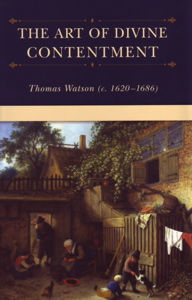
Thomas Watson’s: The Art of Divine Contentment


An incredible resource from a beloved puritan.

From the Publisher:

“Based on Philippians 4:11, “I have learned, in whatever state I am therewith to be content,” Watson considers the great dishonor done to almighty God by the sin of discontent. The doctrine of Christian contentment is clearly illustrated and profitably applied. The special cases where, through changes in providences, discontentment most commonly arises are examined and preservatives are applied to the soul.”

From CCEL.org:

” The Apostle Paul, in Phil. 4:11, says “I am not saying this because I am in need, for I have learned to be content whatever the circumstances.” Thomas Watson, an English Puritan preacher, wants to teach readers how to gain the same contentment as Paul. Living in the 16th century, Watson believed that discontentment was a sin, and so wrote the book The Art of Divine Contentment: An Exposition of Philippians 4:11. Watson spends the entire book on this one verse, and in doing so, presents Christians with a comprehensive method for becoming content. Centered on the idea that “A gracious spirit is a contented spirit,” Watson believes that Christians can be and should be content because of God’s wonderful promises to his people. “The way for a man to be contented,” Watson says, “is not by raising his estate higher, but by bringing his heart lower.” In our contemporary society where discontent is the norm, disillusioned readers will benefit from The Art of Divine Contentment. Watson’s content is God-centered rather than focused on material possessions as so many Christians are today, so it is sure to bring comfort to those who strive to be happy in Christ.”


Get the hardback volume at WTSBooks here.

View it on the web here.

Download a PDF Copy here.

Buy a Kindle copy here

Buy an ePub copy here

Buy The Works of Thomas Watson eBook here.


Thomas Watson – A Most Precious Compound

25 Oct

Contentment, though it be not properly a grace (it is rather a disposition of mind,) yet in it there is a happy mixture of all the graces: it is a most precious compound, which is made up of faith, patience, meekness, humility, etc. which are the ingredients put into it.

~Thomas Watson~


The Art of Divine Contentment (Portland, Oregon; MonergismBooks.com; 2010) eBook: The Works of Thomas Watson. Section: Divine MOTIVES to Contentment. I. Consider the EXCELLENCY of contentment.

Books by Thomas Watson

Biography of Thomas Watson

Other Watson Quotes

Herman Bavinck – God’s Revelation

24 Oct

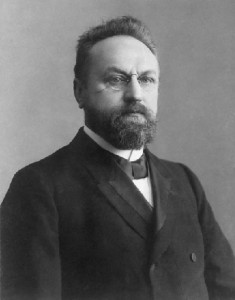
The revelation that Scripture discloses to us does not just consist in a number of disconnected words and isolated facts but is one single historical and organic whole, a mighty world-controlling and world-renewing system of testimonies and acts of God.

~Herman Bavinck~


Reformed Dogmatics Vol. 1: Prolegomena (Grand Rapids, Michigan; Baker Academic; 2003) p. 340.

Read More By Bavinck

Read More About Bavinck

Other Bavinck Quotes

Charles Spurgeon – Learning to Spell ‘Free Grace’

22 Oct

I have known some that, at first conversion, have not been very clear in the gospel, who have been made evangelical by their discoveries of their own need of mercy. They could not spell the word ‘grace.’ They began with a G, but they very soon went on with an F, till it spelt very like ‘freewill’ before they had done with it.

But after they have learned their weakness, after they have fallen into serious fault, and God has restored them, or after they have passed through deep depression of mind, they have sung a new song. In the school of repentance they have learned to spell. They began to write the word ‘free,’ but they went on from free, not to ‘will’ but to ‘grace.’ And there it stood in capitals, ‘FREE GRACE’. . . . They became clearer in their divinity, and truer in their faith than ever they were before.

~Charles Spurgeon~


The Forgotten Spurgeon (Edinburgh, Scotland; Banner of Truth Trust; 1966) p. 69-70. (HT: Dane Ortlund)

Read More By Spurgeon

Read More About Spurgeon

Other Spurgeon Quotes

Thomas Watson – Walking With God (Part 5)

21 Oct

QUESTION: What may we do to walk with God?

ANSWER 5: If you desire to walk with God, take hold of His arm. Those who walk in their own strength will soon grow weary and tire. ‘I will go in the strength of the Lord God’ (Psa. 71:16). We cannot walk with God without God. Let us press Him with His promise: ‘I will cause you to walk in my statutes’ (Ezek. 36:27). If God takes us by the hand, then we shall ‘walk, and not faint’ (Isa. 40:31).

~Thomas Watson~


The Godly Man’s Picture (Edinburgh, Scotland; The Banner of Truth Trust; 1992) p. 183.

Read More By Watson

Read More About Watson

Other Watson Quotes

Thomas Watson – Walking With God (Part 4)

20 Oct

QUESTION: What may we do to walk with God?

ANSWER 4: If you desire to walk with God, get a liking for the ways of God. They are adorned with beauty (Prov. 4:18); they are sweetened with pleasure (Prov. 3:17); they are fenced with truth (Rev. 15:3); they are accompanied with life (Acts 2:28); they are lengthened with eternity (Hab. 3:6). Be enamored with the way of religion and you will soon walk in it.

~Thomas Watson~


The Godly Man’s Picture (Edinburgh, Scotland; The Banner of Truth Trust; 1992) p. 183.

Read More By Watson

Read More About Watson

Other Watson Quotes

Thomas Watson – Walking With God (Part 3)

19 Oct

QUESTION: What may we do to walk with God?

ANSWER 3: Get all differences removed. ‘Can two walk together, except they are agreed?’ (Amos 3:3). This agreement and reconciliation is made by faith: ‘Whom God hath set forth to be a propitiation through faith in his blood’ (Rom. 3:25). When once we are friends, then we shall be called up the mount like Moses, and have this dignity conferred on us, to be the favorites of heaven and to walk with God.

~Thomas Watson~


The Godly Man’s Picture (Edinburgh, Scotland; The Banner of Truth Trust; 1992) p. 183.

Read More By Watson

Read More About Watson

Other Watson Quotes