

A Christian believes, not because everything in life reveals the love of God, but rather despite everything that raises doubt. In Scripture too there is much that raises doubt. All believers know from experience that this is true. Those who engage in biblical criticism frequently talk as if simple church people know nothing about the objections that are advanced against Scripture and are insensitive to the difficulty of continuing to believe in Scripture. But that is a false picture. Certainly, simple Christians do not know all the obstacles that science raises to belief in Scripture. But they do to a greater or lesser degree know the hard struggle fought both in head and heart against Scripture. There is not a single Christian who has not in his or her own way learned to know the antithesis between the “wisdom of the world” and “the foolishness of God.” It is one and the same battle, an ever-continuing battle, which has to be waged by all Christians, learned or unlearned, to “take every thought captive to the obedience of Christ” (2 Cor. 10:5)
Here on earth no one ever rises above that battle. Throughout the whole domain of faith, there remain “crosses” (cruces) that have to be overcome. There is no faith without struggle. To believe is to struggle, to struggle against the appearance of things.As long as people still believe in anything, their belief is challenged from all directions.
~Herman Bavinck~
Reformed Dogmatics Vol. 1: Prolegomena (Grand Rapids, Michigan; Baker Academic; 2003) p. 441.


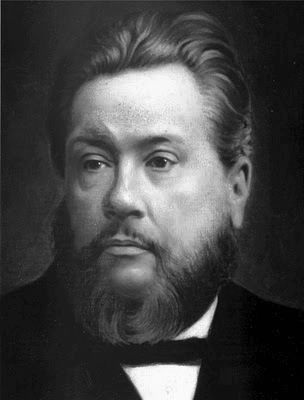
 (Spokane, Washington; Olive Tree Bible Software; 2010) eBook. Vol. 1, Sermon No. 3; Titled: The Sin of Unbelief; Delivered on Sabbath Morning, January 14, 1855.



 The Old Guys
John Calvin – Follow God, Not Your Heart
21 Feb[3 Set a guard, O Lord, over my mouth; keep watch over the door of my lips!
4 Do not let my heart incline to any evil, to busy myself with wicked deeds – Psalm 141:3-4]
For the two things stand connected the being silent, and the being free from the charge of evil thoughts. It is very possible that although he observed silence, he had many ungodly thoughts, and these are worse than vain words. We have simply alluded in passing to this foolish notion, as what may convince the reader of the possibility of persons running away with a word torn from its connection, and overlooking the scope of the writer. In committing himself to the guidance of God, both as to thoughts and words, David acknowledges the need of the influence of the Spirit for the regulation of his tongue and of his mind, particularly when tempted to be exasperated by the insolence of opposition. If, on the one hand, the tongue be liable to slip and too fast of utterance, unless continually watched and guarded by God; on the other, there are disorderly affections of an inward kind which require to be restrained. What a busy workshop is the heart of man, and what a host of devices is there manufactured every moment! If God do not watch over our heart and tongue, there will confessedly be no bounds to words and thoughts of a sinful kind, — so rare a gift of the Spirit is moderation in language.
~John Calvin~
Calvin’s Commentaries – Psalms (Spokane, WA; Olive Tree Bible Software; http://www.olivetree.com) Commentary on Psalm 141:3-4.
Books by John Calvin
Biography of John Calvin
Online Books Available
Other Calvin Quotes at the Old Guys
Tags: Calvin's Commentaries, John Calvin