Archive | Quotes RSS feed for this section

John Murray – Why Justification by faith?

27 Feb

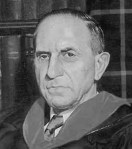
John Murray

The differentiating quality of faith is that the nature and function of faith is to rest completely upon another. It is this resting, confiding, entrusting quality of faith that makes it appropriate to and indeed exhibitive of the nature of justification. It is consonant with its source as the free grace of God, with its nature as a forensic act, and with its ground as the righteousness of Christ. Faith terminates upon Christ and his righteousness and it makes mention of his righteousness and of his only. This is the Savior’s specific identity in the matter of justification-he is the Lord our righteousness. And in resting upon him alone for salvation it is faith that perfectly dovetails justification in him and in his righteousness. Other graces or fruits of the Spirit have their own specific functions in the application of redemption, but only faith has as its specific quality the receiving and resting of self-abandonment and totality of self-commitment.

This is both the stumbling-block and the irresistible appeal of the gospel. It is the stumbling-block to self-righteousness and self-righteousness is the arch-demon of antithesis to grace. It is the glory of the gospel for the contrite and brokenhearted-if we put any other exercise of the human spirit in the place of faith, then we cut the throat of the only confidence a sinner conscious of his lost and helpless condition can entertain. Justification by faith is the jubilee trumpet of the gospel because it proclaims the gospel to the poor and destitute whose only door of hope is to roll themselves in total helplessness upon the grace and power and righteousness of the Redeemer of the lost. In the words of one, ‘cast out your anchor into the ocean of the Redeemer’s merits’.

~John Murray~


Collected Writings of John Murray – Volume 2: Systematic Theology (Edinburgh, Scotland: The Banner of Truth Trust, 2009), 216-217.
Books by John Murray

Other Murray Quotes at The Old Guys

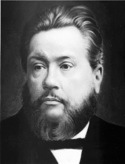
Charles Spurgeon – Why Your Present Condition?

26 Feb

20120713-214637.jpg

Remember this, had any other condition been better for you than the one in which you are, God would have put you there. You are put by him in the most suitable place, and if you had had the picking of your lot half-an-hour afterwards, you would have come back and said, “Lord, choose for me, for I have not chosen the best after all.” You have heard, perhaps, the old fable in Aesop, of the men that complained to Jupiter, of their burdens, and the god in anger bade them every one get rid of his burden, and take the one he would like best. They all came and proposed to do so. There was a man who had a lame leg, and he thought he could do better if he had a blind eye; the man who had a blind eye thought he could do better if he had to bear poverty and not blindness, while the man who was poor thought poverty the worst of ills; he would not mind taking the sickness of the rich man if he could but have his riches. So they all made a change. But the fable saith that within an hour they were all back again, asking that they might have their own burdens, they found the original burden so much lighter than the one that was taken by their own selection. So would you find it. Then be content; you cannot better your lot. Take up your cross; you could not have a better trial than you have got; it is the best for you; it sifts you the most; it will do you the most good, and prove the most effective means of making you perfect in every good word and work to the glory of God.


~Charles Spurgeon~


The New Park Street Pulpit Sermons, vol. 6 (London: Passmore & Alabaster, 1860), 274–275. Vol. 6, Sermon No. 320; Titled: Contentment; Delivered on Sabbath Evening, March 25th, 1860.

Books by Charles Spurgeon

Kindle Books

Biography of Charles Spurgeon

Other Spurgeon Quotes

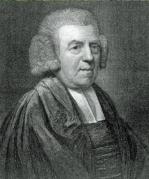
John Newton – Why Weakness?

24 Feb

The Lord permits us to feel our weakness, that we may be sensible of it; for though we are ready in words to confess that we are weak, we do not so properly know it, till that secret, though unallowed, dependence we have upon some strength in ourselves is brought to the trial, and fails us. To be humble, and, like a little child, afraid of taking a step alone, and so conscious of snares and dangers around us, as to cry to him continually to hold us up that we may be safe, is the sure, the infallible, the only secret of walking closely with him.

~John Newton~


John Newton, Richard Cecil, The Works of the John Newton, vol. 1: Two Letters to Mrs. F**** (London: Hamilton, Adams & Co., 1824), 693.

Books by John Newton

Kindle Books

Other Newton Quotes

John Calvin – Eager To Be Flattered

15 Feb

There is, indeed, nothing that man’s nature seeks more eagerly than to be flattered. Accordingly, when his nature becomes aware that its gifts are highly esteemed, it tends to be unduly credulous about them.

~John Calvin~


Institutes of the Christian Religion, Volumes 1 & 2, – ed. John T. McNeill, trans. Ford Lewis Battles, The Library of Christian Classics (Louisville, KY: Westminster John Knox Press, 2011), 242-243.

Books by John Calvin

Biography of John Calvin

Kindle Books

Online Books Available

Other Calvin Quotes

John Calvin – From Blindness to Sight to Humility

12 Feb

With good reason the ancient proverb strongly recommended knowledge of self to man. For if it is considered disgraceful for us not to know all that pertains to the business of human life, even more detestable is our ignorance of ourselves, by which, when making decisions in necessary matters, we miserably deceive and even blind ourselves!

But since this precept is so valuable, we ought more diligently to avoid applying it perversely. This, we observe, has happened to certain philosophers, who, while urging man to know himself, propose the goal of recognizing his own worth and excellence. And they would have him contemplate in himself nothing but what swells him with empty assurance and puffs him up with pride [Gen. 1:27].

But knowledge of ourselves lies first in considering what we were given at creation and how generously God continues his favor toward us, in order to know how great our natural excellence would be if only it had remained unblemished; yet at the same time to bear in mind that there is in us nothing of our own, but that we hold on sufferance whatever God has bestowed upon us. Hence we are ever dependent on him. Secondly, to call to mind our miserable condition after Adam’s fall; the awareness of which, when all our boasting and self-assurance are laid low, should truly humble us and overwhelm us with shame. In the beginning God fashioned us after his image [Gen. 1:27] that he might arouse our minds both to zeal for virtue and to meditation upon eternal life. Thus, in order that the great nobility of our race (which distinguishes us from brute beasts) may not be buried beneath our own dullness of wit, it behooves us to recognize that we have been endowed with reason and understanding so that, by leading a holy and upright life, we may press on to the appointed goal of blessed immortality.

(b)But that primal worthiness cannot come to mind without the sorry spectacle of our foulness and dishonor presenting itself by way of contrast, since in the person of the first man we have fallen from our original condition. From this source arise abhorrence and displeasure with ourselves, as well as true humility; and thence is kindled a new zeal to seek God, in whom each of us may recover those good things which we have utterly and completely lost.

~John Calvin~


Institutes of the Christian Religion, Volumes 1 & 2, – ed. John T. McNeill, trans. Ford Lewis Battles, The Library of Christian Classics (Louisville, KY: Westminster John Knox Press, 2011), 241-242.

Books by John Calvin

Biography of John Calvin

Kindle Books

Online Books Available

Other Calvin Quotes

John Owen: The Primary Purpose of the Gospel

10 Feb

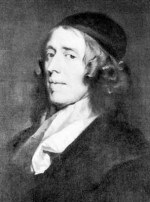
1616 -1683. Preeminent English Puritan theologian, pastor, and independent.

God’s great and first design, in and by the gospel, is eternally to glorify himself, his wisdom, goodness, love, grace, righteousness, and holiness, by Jesus Christ, Eph. 1:5,6.

~John Owen~


The Works of John Owen, ed. William H. Goold, vol. 3: Pneumatologia: A Discourse Concerning the Holy Spirit (Edinburgh: T&T Clark, n.d.), 377.

Books by John Owen

Kindle Books

Biography of John Owen

Other Owen Quotes

John Newton – Our Great High Priest

6 Feb

It is a comfortable consideration, that he with whom we have to do, our great High Priest, who once put away our sins by the sacrifice of himself, and now for ever appears in the presence of God for us, is not only possessed of sovereign authority and infinite power, but wears our very nature, and feels and exercises in the highest degree those tendernesses and commiserations, which I conceive are essential to humanity in its perfect state. The whole history of his wonderful life is full of inimitable instances of this kind. His bowels were moved before his arm was exerted: he condescended to mingle tears with mourners, and wept over distresses which he intended to relieve. He is still the same in his exalted state; compassions dwell within his heart. In a way inconceivable to us, but consistent with his supreme dignity and perfection of happiness and glory, he still feels for his people. When Saul persecuted the members upon earth, the Head complained from heaven; and sooner shall the most tender mother sit insensible and inattentive to the cries and wants of her infant, than the Lord Jesus be an unconcerned spectator of his suffering children. No, with the eye, and the ear, and the heart of a friend, he attends to their sorrows; he counts their sighs, puts their tears in his bottle; and when our spirits are overwhelmed within us, he knows our path, and adjusts the time, the measure of our trials, and every thing that is necessary for our present support and seasonable deliverance, with the same unerring wisdom and accuracy as he weighed the mountains in scales and hills in a balance, and meted out the heavens with a span. Still more, besides his benevolent, he has an experimental, sympathy. He knows our sorrows, not merely as he knows all things, but as one who has been in our situation, and who, though without sin himself, endured when upon earth inexpressibly more for us than he will ever lay upon us. He has sanctified poverty, pain, disgrace, temptation, and death, by passing through these states: and in whatever states his people are, they may by faith have fellowship with him in their sufferings, and he will by sympathy and love have fellowship and interest with them in theirs. What then shall we fear, or of what shall we complain; when all our concerns are written upon his heart, and their management, to the very hairs of our head, are under his care and providence; when he pities us more than we can do ourselves, and has engaged his almighty power to sustain and relieve us? However, as he is tender, he is wise also: he loves us, but especially with regard to our best interests. If there were not something in our hearts and our situation that required discipline and medicine, he so delights in our prosperity, that we should never be in heaviness. The innumerable comforts and mercies with which he enriches even those we call darker days, are sufficient proofs that he does not willingly grieve us: but when he sees a need-be for chastisement, he will not withhold it because he loves us; on the contrary, that is the very reason why he afflicts. He will put his silver into the fire to purify it; but he sits by the furnace as a refiner, to direct the process, and to secure the end he has in view, that we may neither suffer too much nor suffer in vain.

~John Newton~


John Newton and Richard Cecil, The Works of John Newton, Vol. 2: Letter IV to Mrs. **** (London: Hamilton, Adams & Co., 1824) p. 20-21.

Books by John Newton

Kindle Books

Other Newton Quotes

John Owen: Gospel Holiness vs. Mere Morality

3 Feb

1616 -1683. Preeminent English Puritan theologian, pastor, and independent.

There neither is, nor ever was, in the world, nor ever shall be, the least dram of holiness, but what, flowing from Jesus Christ, is communicated by the Spirit, according to the truth and promise of the gospel. There may be something like it as to its outward acts and effects (at least some of them), something that may wear its livery in the world, that is but the fruit of men’s own endeavours in compliance with their convictions; but holiness it is not, nor of the same kind or nature with it.

~John Owen~


The Works of John Owen, ed. William H. Goold, vol. 3: Pneumatologia: A Discourse Concerning the Holy Spirit (Edinburgh: T&T Clark, n.d.), 371.

Books by John Owen

Kindle Books

Biography of John Owen

Other Owen Quotes

John Owen: From War To Immutable Habits

1 Feb

1616 -1683. Preeminent English Puritan theologian, pastor, and independent.

The love wherewith we now adhere to God, and by which we act the obedience of faith towards the saints, faileth not; it ends not when glory comes on, but is a part of it, 1 Cor. 13:8. It is true, some gifts shall be done away, as useless in a state of perfection and glory, as the apostle there discourseth; and some graces shall cease, as to some especial acts and peculiar exercise, as faith and hope, so far as they respect things unseen and future;—but all those graces whereby holiness is constituted, and wherein it doth consist, for the substance of them, as they contain the image of God, as by them we are united and do adhere unto God in Christ, shall in their present nature, improved into perfection, abide for ever. In our knowledge of them, therefore, have we our principal insight into our eternal condition in glory; and this is, as a firm foundation of consolation, so a part of our chiefest joy in this world. Is it not a matter of unspeakable joy and refreshment, that these poor bodies we carry about us, after they have been made a prey unto death, dust, worms, and corruption, shall be raised and restored to life and immortality, freed from pain, sickness, weakness, weariness, and vested with those qualities, in conformity to Christ’s glorious body, which yet we understand not? It is so, also, that these souls, which now animate and rule in us, shall be delivered from all their darkness, ignorance, vanity, instability, and alienation from things spiritual and heavenly. But this is not all. Those poor low graces, which now live and are acting in us, shall be continued, preserved, purified, and perfected; but in their nature be the same as now they are, as our souls and bodies shall be. That love whereby we now adhere to God as our chiefest good; that faith whereby we are united to Christ, our everlasting head; that delight in any of the ways or ordinances of God wherein he is enjoyed, according as he hath promised his presence in them; that love and good-will which we have for all those in whom is the Spirit, and on whom is the image of Christ; with the entire principle of spiritual life and holiness, which is now begun in any of us,—shall be all purified, enhanced, perfected, and pass into glory. That very holiness which we here attain, those inclinations and dispositions, those frames of mind, those powers and abilities in obedience and adherence unto God, which here contend with the weight of their own weakness and imperfection, and with the opposition that is continually made against them by the body of death that is utterly to be abolished, shall be gloriously perfected into immutable habits, unchangeably acting our souls in the enjoyment of God. And this also manifesteth of how much concernment it is unto us to be acquainted with the doctrine of it, and of how much more to be really interested in it.

~John Owen~


The Works of John Owen, ed. William H. Goold, vol. 3: Pneumatologia: A Discourse Concerning the Holy Spirit (Edinburgh: T&T Clark, n.d.), 375-376.

Books by John Owen

Kindle Books

Biography of John Owen

Other Owen Quotes

John Calvin – Our Only Comfort In Light Of The Law

31 Jan

But just because the iniquity and condemnation of us all is sealed by the law’s testimony, this is no reason for us to fall into despair and with despondent heart to dash to destruction. That we have indeed been condemned by the law’ judgment the apostle testifies, “that every mouth may be stopped and the whole world may be subject to God.” He teaches the same thing elsewhere: “god has consigned all to unbelief,” not to lose them or even to let them perish, “but that he might have mercy on all.” The Lord, therefore, with the faithfulness of his power and mercy consoles us, having warned us through the law both of our weakness and our impurity. And this is in his Christ, through whom he shows himself a kindly and propitious Father to us. For in the law he is recompensed of perfect righteousness alone, of which we are all destitute. On the other hand, he appears as a severe judge of crimes. But in Christ his countenance shines full of grace and kindness even toward poor and unworthy sinners. For he has given this wonderful example of his boundless love, by showing us his own Son, and in him has disclosed all the treasures of his mercy and goodness.

~John Calvin~


Calvin’s Catechism (1538) – Reformed Confessions of the 16th and 17th Centuries in English Translation, Vol. 1: 1523-1552 (Grand Rapids, MI: Reformation Heritage Books, 2008), 418-419.

Books by John Calvin

Biography of John Calvin

Kindle Books

Online Books Available

Other Calvin Quotes