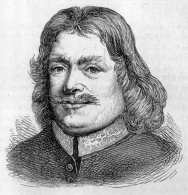
That this righteousness [the imputed righteousness of Christ] still resides in and with the person of Christ, even then when we stand just before God thereby, is clear, for that we are said, when justified, to be justified ‘in him.’ ‘In the Lord shall all the seed of Israel be justified.’ And again, ‘Surely, shall one say, In the Lord have I righteousness,’ &c. (Isa 45:24,25). And again, ‘But of him are ye in Christ Jesus, who of God is made unto us – righteousness’ (1 Cor 1:30). Mark, the righteousness is still ‘in him,’ not ‘in us,’ even then when we are made partakers of the benefit of it; even as the wing and feathers still abide in the hen when the chickens are covered, kept, and warmed thereby. For as my doings, though my children are fed and clothed thereby, are still my doings, not theirs; so the righteousness wherewith we stand just before God from the curse, still resides in Christ, not in us. Our sins, when laid upon Christ, were yet personally ours, not his; so his righteousness, when put upon us, is yet personally his, not ours. What is it, then? Why, ‘he was made to be sin for us, who knew no sin; that we might be made the righteousness of 3 God in him’ (2 Cor 5:21).
~John Bunyan~
The Works of John Bunyan Vol. 1: Justification by An Imputed Righteousness (Edinburgh, Scotland; Banner of Truth Trust, 1991)
Books by John Bunyan
Online Books Available
Tags: John Bunyan, The Works of John Bunyan

 (Grand Rapids, Michigan; Baker Books; 2000) p.163-164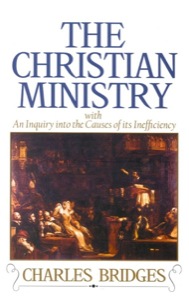




 The Old Guys
John Calvin – Follow God, Not Your Heart
21 Feb[3 Set a guard, O Lord, over my mouth; keep watch over the door of my lips!
4 Do not let my heart incline to any evil, to busy myself with wicked deeds – Psalm 141:3-4]
For the two things stand connected the being silent, and the being free from the charge of evil thoughts. It is very possible that although he observed silence, he had many ungodly thoughts, and these are worse than vain words. We have simply alluded in passing to this foolish notion, as what may convince the reader of the possibility of persons running away with a word torn from its connection, and overlooking the scope of the writer. In committing himself to the guidance of God, both as to thoughts and words, David acknowledges the need of the influence of the Spirit for the regulation of his tongue and of his mind, particularly when tempted to be exasperated by the insolence of opposition. If, on the one hand, the tongue be liable to slip and too fast of utterance, unless continually watched and guarded by God; on the other, there are disorderly affections of an inward kind which require to be restrained. What a busy workshop is the heart of man, and what a host of devices is there manufactured every moment! If God do not watch over our heart and tongue, there will confessedly be no bounds to words and thoughts of a sinful kind, — so rare a gift of the Spirit is moderation in language.
~John Calvin~
Calvin’s Commentaries – Psalms (Spokane, WA; Olive Tree Bible Software; http://www.olivetree.com) Commentary on Psalm 141:3-4.
Books by John Calvin
Biography of John Calvin
Online Books Available
Other Calvin Quotes at the Old Guys
Tags: Calvin's Commentaries, John Calvin