Archive | Quotes RSS feed for this section

John Calvin – True Satisfaction

4 Oct

The ungodly may be at their ease, and have abundance of good things, even to bursting, but as their desire is insatiable, or as they feed upon wind, in other words, upon earthly things, without tasting spiritual things, in which there is substance, or being so stupified through the pungent remorse of conscience with which they are tormented, as not to enjoy the good things which they possess, they never have composed and tranquil minds, but are kept unhappy by the inward passions with which they are perplexed and agitated. It is therefore the grace of God alone which can give us contentment, and prevent us from being distracted by irregular desires. David, then, I have no doubt, has here an allusion to the empty joys of the world, which only famish the soul, while they sharpen and increase the appetite the more, in order to show that those only are partakers of true and substantial happiness who seek their felicity in the enjoyment of God alone.

~John Calvin~


Calvin’s Commentaries (Spokane, Washington; Olive Tree Bible Software; 2010) eBook. Excerpted from his commentary on Psalm 17:15.

Read More By Calvin

Read More About Calvin

Other Calvin Quotes

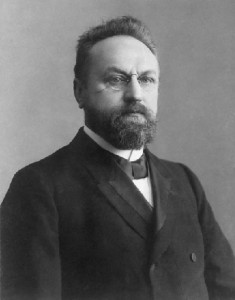
Herman Bavinck – Can We Comprehend the Mysteries of God?

3 Oct

Naturally it is also not the intent of Scripture to say that the believer grasps those mysteries [of God] in a scientific sense. We walk by faith, after all; we know in part and now see in a mirror dimly (Rom. 11:34; 1 Cor. 13:12; 2 Cor. 5:7). But believers do know those mysteries; they are no longer a folly and an offense to them; they do marvel at Gods wisdom and love manifest in them. “The secret of God ought to produce earnest people, not hostile ones” (Augustine). It does not even occur to them, therefore, that the mysteries surpass their reason, that they are above reason; they do not experience them as an oppressive burden but rather as intellectual liberation. Their faith turns into wonder; knowledge terminates in adoration; and their confession becomes a song of praise and thanksgiving. Of this kind, too, is the knowledge of God theology aims for. It is not just a knowing, much less a comprehending; it is better and more glorious than that: it is the knowledge which is life, “eternal life” (John 17:3).

~Herman Bavinck~


Reformed Dogmatics Vol. 1: Prolegomena (Grand Rapids, Michigan; Baker Academic; 2003) p. 261.

Read More By Bavinck

Read More About Bavinck

Other Bavinck Quotes

John Owen – Struggle Gives Evidence of Life

1 Oct

Believers have experience of the power and efficacy of indwelling sin. They find it in themselves; they find it as a law. It has a self-evidencing efficacy to them that are alive to discern it. They that find not its power are under its dominion. Whosoever [would] contend against it shall know and find that it is present with them, that it is powerful in them. He shall find the stream to be strong who swims against it, though he who rolls along with it be insensible of it.

~John Owen~


Overcoming Sin & Temptation – Indwelling Sin (Wheaton, IL; Crossway Books; 2006) p.235. Part 1, Chapter 1: The Nature of Indwelling Sin. http://www.crosswaybooks.com. eBook.

Read More By Owen

Read More About Owen

Other Owen Quotes

Thomas Watson – Our Father

30 Sep

Princes on earth give themselves titles expressing their greatness, as “High and Mighty.” God might have done so—and expressed himself thus, “Our King of glory, our Judge:” but he gives himself another title, “Our Father,” an expression of love and condescension. That he might encourage us to pray! to him—he represents himself under the sweet notion of a Father. “Our Father.” [Sweet is the name of Father.] The name Jehovah carries majesty in it—the name Father carries mercy in it!

~Thomas Watson~


The Lord’s Prayer (Portland, Oregan; MonergismBooks.com; 2010) eBook. Excerpted from “The Works of Thomas Watson” – The Lord’s Prayer; The Preface to the Lord’s Prayer: “Our Father in Heaven”

Read More By Watson

Read More About Watson

Other Watson Quotes

John Flavel – The Regenerated Heart

29 Sep

Man, by the apostasy, has become a most disordered and rebellious creature, opposing his Maker, as the First Cause—by self-dependence; as the Chief Good—by self- love; as the Highest Lord—by self-will; and as the Last End—by self-seeking. Thus he is quite disordered, and all his actions are irregular. But by regeneration the disordered soul is set right; this great change being, as the Scripture expresses it, the renovation of the soul after the image of God—in which self-dependence is removed by faith; self-love is removed by the love of God; self-will is removed by subjection and obedience to the will of God; and self-seeking is removed by self-denial. The darkened understanding is illuminated, the refractory will sweetly subdued, the rebellious appetite gradually conquered. Thus the soul which sin had universally depraved, is by grace restored.

~John Flavel~


Keeping the Heart (Portland, Oregon; MonergismBooks.com; 2010) eBook. Section: What is Keeping the Heart?

Read More by Flavel

More Flavel Quotes

Charles Spurgeon – The King Who Reigns in Righteousness

28 Sep

Spurgeon Bio

“The sceptre of thy kingdom is a right sceptre.” He is the lawful monarch of all things that be. His rule is founded in right, its law is right, its result is right. Our King is no usurper and no oppressor. Even when he shall break his enemies with a rod of iron, he will do no man wrong ; his vengeance and his grace are both in conformity with justice. Hence we trust him without suspicion ; he cannot err ; no affliction is too severe, for he sends it ; no judgment too harsh, for he ordains it. O blessed hands of Jesus! The reigning power is safe with you. All the just rejoice in the government of the King who reigns in righteousness.

~Charles Spurgeon~


The Treasury of David Vol. 1 (Peabody, Maryland; The Hendrikson Publisher; 1988) p. 318 – Commentary on Psalm 45:6.

Read More By Spurgeon

Read More About Spurgeon

Other Spurgeon Quotes

Herman Bavinck – The Doctrine of the Trinity

27 Sep

The doctrine of the Trinity is of incalculable importance for the Christian religion. The entire Christian belief system, all of special revelation, stands or falls with the confession of Gods Trinity. It is the core of the Christian faith, the root of all its dogmas, the basic content of the new covenant. It was this religious Christian interest, accordingly, that sparked the development of the church’s doctrine of the Trinity. At stake in this development—let it be said emphatically—was not a metaphysical theory or a philosophical speculation but the essence of the Christian religion itself. This is so strongly felt that all who value being called a Christian recognize and believe in a kind of Trinity. The profoundest question implicit in every Christian creed and system of theology is how God can be both one and yet three. Christian truth in all its parts comes into its own to a lesser or greater extent depending on how that question is answered. In the doctrine of the Trinity we feel the heartbeat of God’s entire revelation for the redemption of humanity. Though foreshadowed in the Old Testament, it only comes to light fully in Christ. Religion can be satisfied with nothing less than God himself. Now in Christ God himself comes out to us, and in the Holy Spirit he communicates himself to us. The work of re-crearion is trinitarian through and through. From God, through God, and in God are all things. Re-creation is one divine work from beginning to end, yet it can be described in terms of three agents: it is fully accomplished by the love of the Father, the grace of the Son, and the communion of the Holy Spirit. A Christian’s faith life, accordingly, points back to three generative principles… We know ourselves to be children of the Father, redeemed by the Son, and in communion with both through the Holy Spirit. Every blessing, both spiritual and material, comes to us from the triune God. In that name we are baptized; that name sums up our confession; that name is the source of all the blessings that come down to us; to that name we will forever bring thanksgiving and honor; in that name we find rest for our souls and peace for our conscience. Christians have a God above them, before them, and within them. Our salvation, both in this life and in the life to come, is bound up with the doctrine of the Trinity.

~Herman Bavinck~


Reformed Dogmatics Vol. 1: Prolegomena (Grand Rapids, Michigan; Baker Academic; 2003) p. 333-334.

Read More By Bavinck

Read More About Bavinck

Other Bavinck Quotes

Charles Spurgeon – God on His Throne

26 Sep

Spurgeon Bio

6. “Thy throne, O God, is for ever and ever.” To whom can this be spoken but our Lord ? The Psalmist cannot restrain his adoration. His enlightened eye sees in the royal Husband of the church. God, God to be adored, God reigning, God reigning everlastingly. Blessed sight! Blind are the eyes that cannot see God in Christ Jesus! We never appreciate the tender condescension of our King in becoming one flesh with his church, and placing her at his right hand, until we have fully rejoiced in his essential glory and deity. What a mercy for us that our Saviour is God, for who but a God could execute the work of salvation? What a glad thing it is that he reigns on a throne which will never pass away, for we need both sovereign grace and eternal love to secure our happiness. Could Jesus cease to reign we should cease to be blessed, and were he not God, and therefore eternal, this must be the case. No throne can endure for ever, but that on which God himself sitteth.

~Charles Spurgeon~


The Treasury of David Vol. 1 (Peabody, Maryland; The Hendrikson Publisher; 1988) p. 315 – Commentary on Psalm 45:6.

Read More By Spurgeon

Read More About Spurgeon

Other Spurgeon Quotes

Charles Spurgeon – The Holy Spirit

24 Sep

We are so much accustomed to talk about the influence of the Holy Ghost and his sacred operations and graces, that we are apt to forget that the Holy Spirit is truly and actually a person–that he is a subsistence–an existence; or, as we Trinitarians usually say, one person in the essence of the Godhead. I am afraid that, though we do not know it, we have acquired the habit of regarding the Holy Ghost as an emanation flowing from the Father and the Son, but not as being actually a person himself. I know it is not easy to carry about in our mind the idea of the Holy Spirit as a person. I can think of the Father as a person, because his acts are such as I can understand. I see him hang the world in ether; I behold him swaddling a new-born sea in bands of darkness; I know it is he who formed the drops of hail, who leadeth forth the stars by their hosts, and calleth them by their name; I can conceive of Him as a person, because I behold his operations. I can realize Jesus, the Son of Man, as a real person, because he is bone of my bone and flesh of my flesh. It takes no great stretch of my imagination to picture the babe in Bethlehem, or to behold the “Man of sorrows and acquainted with grief,” of the king of martyrs, as he was persecuted in Pilate’s hall, or nailed to the accursed tree for our sins. Nor do I find it difficult at times to realize the person of my Jesus sitting on his throne in heaven; or girt with clouds and wearing the diadem of all creation, calling the earth to judgment, and summoning us to hear our final sentence. But when I come to deal with the Holy Ghost, his operations are so mysterious, his doings are so secret, his acts are so removed from everything that is of sense, and of the body, that I cannot so easily get the idea of his being a person; but a person he is. God the Holy Ghost is not an influence, an emanation, a stream of something flowing from the Father; but he is as much an actual person as either God the Son, or God the Father.

~Charles Spurgeon~


Spurgeon’s Sermons (Spokane, Washington; Olive Tree Bible Software; 2010) eBook. Vol. 1, Sermon No. 4; Titled: The Personality of the Holy Spirit; Delivered on Sabbath Morning, January 21, 1855.

Read More By Spurgeon

Read More About Spurgeon

Other Spurgeon Quotes

Herman Bavinck – A Theologian’s Sole Responsibilty

23 Sep

The imperative task of the dogmatician is to think God’s thoughts after him and to trace their unity. His work is not finished until he has mentally absorbed this unity and set it forth in a dogmatics. Accordingly, he does not come to God’s revelation with a ready-made system in order, as best he can, to force its content into it. On the contrary, even in his system a theologian’s sole responsibility is to think God’s thoughts after him and to reproduce the unity that is objectively present in the thoughts of god and has been recorded for the eye of faith in Scripture.

~Herman Bavinck~


Reformed Dogmatics Vol. 1: Prolegomena (Grand Rapids, Michigan; Baker Academic; 2003) p. 44.

Read More By Bavinck

Read More About Bavinck

Other Bavinck Quotes