Archive | Quotes RSS feed for this section

Thomas Boston – Three Unions In Our Religion

5 Apr
Thomas Boston2-719007

1676-1732. A Scottish Church Leader. One of the twelve Marrow Men.

There are three mysterious unions in our religion. (1.) The substantial union of the three persons in one Godhead. (2.) The personal union of the divine and human natures in Jesus Christ. (3.) The mystical union betwixt Christ and believers, which is that wherein Christ and believers, are so joined, that they are one Spirit, and one mystical body, 1 Cor. 6:17 and 12:13.


~Thomas Boston~


The Whole Works of Thomas Boston: An Illustration of the Doctrines of the Christian Religion, Part 1, ed. Samuel M‘Millan, vol. 1 (Aberdeen: George and Robert King, 1848), 546.

Books by Thomas Boston

Kindle Books

Thomas Boston on Logos Bible Software

Other Thomas Boston Quotes at the Old Guys.

Thomas Boston – Redemption Comes Through Union

3 Apr
Thomas Boston2-719007

1676-1732. A Scottish Church Leader. One of the twelve Marrow Men.

Let us consider how Christ’s redemption is applied to a sinner. It is done by way of uniting the sinner to Christ, as a plaister is applied to a sore, by laying the one upon the other. A sinner is interested in, and put in possession of Christ’s redemption through union with him, 1 Cor. 1:30. ‘Of him are ye in Christ Jesus.’ Men must not think to stand afar from Christ, and partake of the benefits of his death, upon their praying to him for it, as the beggar on his crying gets of the rich man’s money thrown to him; which I observe is the soul ruining notion many have of this matter. But he must unite with Christ, and so partake of the redemption purchased by Christ, as the poor widow drowned in debt, by marrying the rich man, is interested in his substance. It is with Christ himself that all saving benefits are given, Rom. 8:32; and without him none such are received. Believe it, Sirs, that as Adam’s sin could never have hurt you, unless ye had been in him, so Christ’s redemption shall never savingly profit you, unless ye be in him, Eph. 1:7. ‘In whom we have redemption through his blood.’


~Thomas Boston~


The Whole Works of Thomas Boston: An Illustration of the Doctrines of the Christian Religion, Part 1, ed. Samuel M‘Millan, vol. 1 (Aberdeen: George and Robert King, 1848), 545-546.

Books by Thomas Boston

Kindle Books

Thomas Boston on Logos Bible Software

Other Thomas Boston Quotes at the Old Guys.

Herman Bavinck – Where Proofs For God’s Existence Fit In

1 Apr

1854-1921. Dutch Reformed Theologian and Churchman. Professor at Free University in Amsterdam.

It is important, however, to make some distinction between implanted and acquired knowledge of God. In the former God’s revelation acts upon human consciousness, creating impressions and intuitions. In the case of the acquired knowledge of God, human beings reflect upon that revelation of God and seek by reasoning and proof to rise above impressions and intuitions to clearer ideas. This is the natural human desire to explain the how and why of our knowledge. This distinction must not be restricted to so-called natural theology in opposition to revealed theology. God reveals himself to us in his handiwork of creation, but even Christian believers depend on Scripture and the illumination of the Holy Spirit to truly know God the Creator. We are indebted to Scripture for both implanted and acquired knowledge.


This insight helps us to consider aright the so-called proofs for God’s existence, neither overestimating nor disdaining them. Christian theology accepts the support given to its convictions about God by pagan philosophy but judges these proofs within the doctrine of faith, not as preambles to it. Christian conviction about what can be known about God apart from special revelation is a valid natural theology. However, when this natural theology stands on its own and in a self-sufficient and rationalistic fashion sets aside the need for special revelation, it is an invalid and impious activity.


~Herman Bavinck~


Reformed Dogmatics Vol. 2: God and Creation John Bolt and John Vriend (Grand Rapids, MI; Baker Academic; 2004) p. 54-55.

Books by Herman Bavinck

Kindle Books

The Works of Herman Bavinck on Logos Bible Software.

Biography of Herman Bavinck

More Bavinck Quotes

John Owen: Absolute Free Pardon

31 Mar

1616 -1683. Preeminent English Puritan theologian, pastor, and independent.

[God] requires nothing of us (which we had all the reason in the world to expect that he would) to make atonement or satisfaction for our sins, that might compensate the injuries we have done him by our apostasy and rebellion; for whereas we had multiplied sins against him, lived in an enmity and opposition to him, and had contracted insupportable and immeasurable debts upon our own souls, terms of peace being now proposed, who could think but that the first thing required of us would be, that we should make some kind of satisfaction to divine justice for all our enormous and heinous provocations? yea, who is there that indeed doth naturally think otherwise?

But quite otherwise; in the gospel there is declared and tendered unto sinners an absolute free pardon of all their sins, without any satisfaction or compensation made or to be made on their part, that is, by themselves,—namely, on the account of the atonement made for them by Jesus Christ. And all attempts or endeavours after works or duties of obedience in any respect satisfactory to God for sin or meritorious of pardon do subvert and overthrow the whole gospel.

~John Owen~


The Works of John Owen, ed. William H. Goold, vol. 3: Pneumatologia: A Discourse Concerning the Holy Spirit (Edinburgh: T&T Clark, n.d.), 377-378.

Books by John Owen

Kindle Books

The Works of John Owen on Logos Bible Software

Biography of John Owen

Other Owen Quotes

Martin Luther – The Law Needs The Gospel

29 Mar

Ancient teachers said that there are four things a preacher should keep in mind in all his sermons; he should give consideration to vices and virtues, to punishments and rewards. And they did well to give this advice, provided that they retained Christ. For the Law concerns itself with these four things: vices contrary to the Law, virtues in accordance with the Law, punishments in accordance with the Law, and rewards in accordance with the Law. But this doctrine does not produce Christians. It is the doctrine of the Law, which does not bring about perfection. The Gospel of grace must be joined to this doctrine of the Law! Then at last the Christian is made complete.

~Martin Luther~


Luther’s Works, Vol. 3: Lectures on Genesis: Chapters 15-20, ed. Jaroslav Jan Pelikan, Hilton C. Oswald, and Helmut T. Lehmann, vol. 3 (Saint Louis: Concordia Publishing House, 1999), 132–133.

Books by Martin Luther

Luther’s Works on Logos Bible Software

Kindle Books

Biography

Other Luther Quotes The Old Guys

John Calvin – Conviction of Scripture’s Superiority

28 Mar

1. Scripture is superior to all human wisdom
Unless this certainty, higher and stronger than any human judgment, be present, it will be vain to fortify the authority of Scripture by arguments, to establish it by common agreement of the church, or to confirm it with other helps. For unless this foundation is laid, its authority will always remain in doubt. Conversely, once we have embraced it devoutly as its dignity deserves, and have recognized it to be above the common sort of things, those arguments—not strong enough before to engraft and fix the certainty of Scripture in our minds—become very useful aids. What wonderful confirmation ensues when, with keener study, we ponder the economy of the divine wisdom, so well ordered and disposed; the completely heavenly character of its doctrine, savoring of nothing earthly; the beautiful agreement of all the parts with one another—as well as such other qualities as can gain majesty for the writings.

~John Calvin~


Institutes of the Christian Religion, Volumes 1 & 2, ed. John T. McNeill, trans. Ford Lewis Battles, The Library of Christian Classics (Louisville, KY: Westminster John Knox Press, 2011) Vol. 1.8.1. p. 81-82.

Books by John Calvin

Biography of John Calvin

Calvin’s Works on Logos Bible Software

Kindle Books

Online Books Available

Other Calvin Quotes

Herman Bavinck – The Effort Involved In Unbelief

25 Mar

1854-1921. Dutch Reformed Theologian and Churchman. Professor at Free University in Amsterdam.

Belief in a personal God is both natural and normal; it arises in human consciousness spontaneously and universally. Unbelief requires enormous effort. There is no proof available to it.


~Herman Bavinck~


Reformed Dogmatics Vol. 2: God and Creation John Bolt and John Vriend (Grand Rapids, MI; Baker Academic; 2004) p. 53.

Books by Herman Bavinck

Kindle Books

Reformed Dogmatics on Logos Bible Software

Biography of Herman Bavinck

More Bavinck Quotes

Charles Spurgeon – Behold Christ and Be Conformed

21 Mar

charles-spurgeon2“Well,” say some, “we have proceeded so far, what next shall we do? We know we have an interest in him, but we are still sensible of manifold deficiencies. Next then, let me entreat you to study Christ’s character. This poor Bible is become an almost obsolete book, even with some Christians. There are so many magazines, periodicals, and such like ephemeral productions, that we are in danger of neglecting to search the Scriptures. Christian, wouldst thou know thy Master? Look at him. There is a wondrous power about the character of Christ, for the more you regard it the more you will be conformed to it. I view myself in the glass, I go away, and forget what I was. I behold Christ, and I become like Christ.


Charles Spurgeon


The New Park Street Pulpit Sermons, vol. 1 (London: Passmore & Alabaster, 1855), 164. Vol. 1, Sermon No. 20; Titled: Christ’s People – Imitators of Him; Delivered on Sabbath. Click here for a free PDF of this sermon.

Books by Charles Spurgeon

Kindle Books

Spurgeon’s Works on Logos Bible Software

Biography of Charles Spurgeon

Herman Bavinck – The Theater of His Glory

19 Mar

1854-1921. Dutch Reformed Theologian and Churchman. Professor at Free University in Amsterdam.

All knowledge of God rests on revelation. Though we can never know God in the full richness of his being, he is known to all people through his revelation in creation, the theater of his glory. The world is never godless. In the end there are no atheists; there is only argument about the nature of God. The recognition is universal of a power greater than human beings themselves, to whom they owe piety.

~Herman Bavinck~


Reformed Dogmatics Vol. 2: God and Creation John Bolt and John Vriend (Grand Rapids, MI; Baker Academic; 2004) p. 53.

Books by Herman Bavinck

Kindle Books

Reformed Dogmatics on Logos Bible Software

Biography of Herman Bavinck

More Bavinck Quotes

Richard Baxter – Men, Maintain Your Marital Love

18 Mar

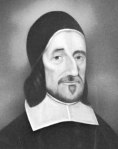
Richard Baxter

4. Remember that justice commandeth you to love one that hath, as it were, forsaken all the world for you, and is contented to be the companion of your labours and sufferings, and be an equal sharer in all conditions with you, and that must be your companion until death. It is worse than barbarous inhumanity to entice such a one into a bond of love, and society with you, and then to say, you cannot love her. This was by perfidiousness to draw her into a snare to her undoing. What comfort can she have in her converse with you, and care, and labour, and necessary sufferings, if you deny her conjugal love? Especially, if she deny not love to you, the inhumanity is the greater.

5. Remember that women are ordinarily affectionate, passionate creatures, and as they love much themselves, so they expect much love from you. And when you joined yourself to such a nature, you obliged yourself to answerable duty: and if love cause not love, it is ungrateful and unjust contempt.

6. Remember that you are under God’s command; and to deny conjugal love to your wives, is to deny a duty which God hath urgently imposed on you. Obedience therefore should command your love.

7. Remember that you are relatively, as it were, one flesh; you have drawn her to forsake father and mother, to cleave to you; you are conjoined for procreation of such children as must bear the image and nature of you both; your possessions and interests are in a manner the same. And therefore such nearness should command affection; they that are as yourselves, should be most easily loved as yourselves.

8. Take more notice of the good, that is in your wives, than of the evil. Let not the observation of their faults make you forget or overlook their virtues. Love is kindled by the sight of love or goodness.

9. Make not infirmities to seem odious faults, but excuse them as far as lawfully you may, by considering the frailty of the sex, and of their tempers, and considering also your own infirmities, and how much your wives must bear with you.

10. Stir up that most in them into exercise which is best, and stir not up that which is evil; and then the good will most appear, and the evil will be as buried, and you will more easily maintain your love. There is some uncleanness in the best on earth; and if you will be daily stirring in the filth, no wonder if you have the annoyance; and for that you may thank yourselves: draw out the fragrancy of that which is good and delectable in them, and do not by your own imprudence or peevishness stir up the worst, and then you shall find that even your faulty wives will appear more amiable to you.

11. Overcome them with love; and then whatever they are in themselves, they will be loving to you, and consequently lovely. Love will cause love, as fire kindleth fire. A good husband is the best means to make a good and loving wife. Make them not forward by your froward carriage, and then say, we cannot love them.

12. Give them examples of amiableness in yourselves; set them the pattern of a prudent, lowly, loving, meek, self-denying, patient, harmless, holy, heavenly life. Try this a while, and see whether it will not shame them from their faults, and make them walk more amiably themselves.

~Richard Baxter~


The Practical Works of the Rev. Richard Baxter, vol. 4 (London: James Duncan, 1830), 118–119.

Books by Richard Baxter

Other Baxter Quotes at The Old Guys