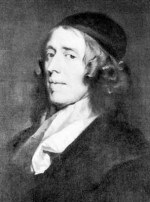
John Owen: The Promised Seed

23 Nov

God having from the foundation of the world promised to bring forth the ‘Seed of the woman,’ to work out the redemption of his elect in the conquest of Satan, did, in the separation of Abraham from the rest of the world, begin to make provision of a peculiar stock, from whence the Seed of the woman should spring. That this was the cause and end of his call and separation is evident from hence, that immediately thereupon God assures him that ‘in his seed all the kindreds of the earth should be blessed,’ Gen. 12:1–3, 22:18; which is all one as if he had expressly said to him, ‘For this cause have I chosen and called thee, that in thee I might lay a foundation of bringing forth the promised Seed, by whom the curse is to be taken away, and the blessing of everlasting life procured,’ as Gal. 3:13, 14. For this cause was his posterity continued in a state of separation from the rest of the world, that He might seek a godly seed to himself, Num. 23:9; Mal. 2:15: for this cause did he raise them into a civil, regal, and church state, that he might in them typify and prefigure the offices and benefits of the promised Messiah, who was to gather to himself the nations that were to be blessed in the seed of Abraham, Gen. 49:10; Ps. 45; Hos. 3:5; Ezek. 34:23. And all their sacrifices did but shadow out that great expiation of sin which he was to make in his own person.

~John Owen~


An Exposition of the Epistle to the Hebrews, Vol. 3 (Edinburgh; Johnstone and Hunter; 1854) p. 12-13.

Books by John Owen

Kindle Books

Biography of John Owen

Other Owen Quotes

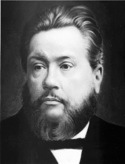
Charles Spurgeon – Salvation Is Not By The Works Of The Law

19 Nov

20120713-214637.jpg

The whole Bible tells us, from beginning to end, that salvation is not by the works of the law, but by the deeds of grace. Martin Luther declared that he constantly preached justification by faith alone, “because,” said he, “the people would forget it; so that I was obliged almost to knock my Bible against their heads, to send it into their hearts.” So it is true, we constantly forget that salvation is by grace alone. We always want to be putting in some little scrap of our own virtue; we want to be doing something. I remember a saying of old Matthew Wilkes: “Saved by your works! you might as well try to go to America in a paper boat!” Saved by your works! It is impossible! Oh no; the poor legalist is like a blind horse going round and round the mill; or like the prisoner going up the treadmill, and finding himself no higher after all he has done; he has no solid confidence, no firm ground to rest upon. He has not done enough—“never enough.” Conscience always says, “this is not perfection; it ought to have been better.” Salvation for enemies must be by an ambassador—by an atonement—yea, by Christ.


~Charles Spurgeon~


The New Park Street Pulpit Sermons, Vol. I (London: Passmore & Alabaster, 1855), 155. Vol. 1, Sermon No. 20; Titled: The Carnal Mind Enmity Against God; Delivered on Sabbath Morning, April 22nd, 1855.

Books by Charles Spurgeon

Kindle Books

Biography of Charles Spurgeon

Other Spurgeon Quotes

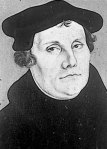
Martin Luther – The Very Heel Of The Serpent-Opposing Seed

18 Nov

But the gift of God that I particularly love and revere in you above all the rest is that you emphasize the righteousness of faith so faithfully and purely in all your writings. For this article is the head and cornerstone that alone begets, nurtures, builds, preserves, and defends the Church of God. Without it, the Church cannot remain standing for a single hour, as you know and perceive. That is why you insist upon it as you do. For no one can teach correctly in the church or resist any adversary successfully, unless he has grasped this article or, as Paul calls it, “the sound doctrine” [Titus 2:1], one who, as the same Paul says, “holds fast to the doctrine” [cf. Titus 1:9 Vg]…

We see how those who do not do this are carried about by so many winds of uncertain doctrine [Eph. 4:14], driven up and down by opinions that are endlessly multiplied, always learning and never coming to a knowledge of the truth [2 Tim. 3:7]. And we not only see this but have also experienced it ourselves, when we were being spun about in the same whirlwinds of doctrines until the grace of God brought us to port and built us upon this solid rock [Matt. 7:24], so that we are certain of what we teach, learn, and hold, and we no longer vacillate as we did. Therefore, I beg you, most excellent Brenz, continue vigorously to press this article concerning righteousness by all means, wherever you are able, even until they are sick of it, just as you are doing. For otherwise the whole world is full enough of writers, shouters, and printers who very boldly neglect this article. Then, too, there are many who persecute it; most (since they are unable to do any other harm) obscure and corrupt it. But I am not surprised, for this article is the very heel of the Seed who opposes the ancient serpent, the heel that crushes its head. Therefore, Satan on his part can do nothing but lie in wait for it. But whatever harm he may do with his endless and tenacious snares, nevertheless he cannot conquer and crush it. As it is written: “He will crush your head.”

~Martin Luther~


Luther’s Works – Vol. 59 (St. Louis, MI; Concordia Publishing House, 2012) p. 288-289. Preface to Johann Brenz, Exposition of the Prophet Amos.

Books by Martin Luther

Luther’s Works on Logos Bible Software

Kindle Books

Biography

Other Luther Quotes

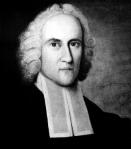
Jonathan Edwards – God Communicates His Own Happiness To Us

15 Nov

jonathan-edwards

Another part of God’s fulness which he communicates, is his happiness. This happiness consists in enjoying and rejoicing in himself; and so does also the creature’s happiness. It is a participation of what is in God; and God and his glory are the objective ground of it. The happiness of the creature consists in rejoicing in God; by which also God is magnified and exalted. Joy, or the exulting of the heart in God’s glory, is one thing that belongs to praise. So that God is all in all, with respect to each part of that communication of the divine fulness which is made to the creature. What is communicated is divine, or something of God; and each communication is of that nature, that the creature to whom it is made, is thereby conformed to God, and united to him: and that in proportion as the communication is greater or less. And the communication itself is no other, in the very nature of it, than that wherein the very honour, exaltation, and praise of God consists.

~Jonathan Edwards~


The Works of Jonathan Edwards Vol. 1 (Peabody, MA; Hendrickson Publishers, Inc; 2007) p. 101. The End For Which God Created The World

Books by Jonathan Edwards

Biography of Jonathan Edwards

Online Books Available

Other Edwards Quotes

John Calvin – Who Gave The Bible Its Authority?

14 Nov

It is utterly vain, then, to pretend that the power of judging Scripture so lies with the church that its certainty depends upon churchly assent. Thus, while the church receives and gives its seal of approval to the Scriptures, it does not thereby render authentic what is otherwise doubtful or controversial. But because the church recognizes Scripture to be the truth of its own God, as a pious duty it unhesitatingly venerates Scripture. As to their question—How can we be assured that this has sprung from God unless we have recourse to the decree of the church?—it is as if someone asked: Whence will we learn to distinguish light from darkness, white from black, sweet from bitter? Indeed, Scripture exhibits fully as clear evidence of its own truth as white and black things do of their color, or sweet and bitter things do of their taste.

~John Calvin~


Institutes of the Christian Religion, Volumes 1 & 2, ed. John T. McNeill, trans. Ford Lewis Battles, The Library of Christian Classics (Louisville, KY: Westminster John Knox Press, 2011) Vol. 1.7.2. p. 76.

Books by John Calvin

Biography of John Calvin

Kindle Books

Online Books Available

Other Calvin Quotes

Richard Baxter – Narrow Is The Way

13 Nov

Richard BaxterIf you go into twenty families, and ask them all, Whether any of them are in an unsanctified state, unrenewed and unpardoned, and under the wrath and curse of God? you will meet with few that will not tell you, they hope it is better with them than so; and though they are sinners, as all are, yet that they are repenting, pardoned sinners. Nay, there is scarce one of many of the most wicked and notoriously ungodly, but hope they are in a penitent, pardoned state. Even the haters of God will say they love him; and the scorners at godliness will say that they are not ungodly; and that it is but hypocrisy and singularity that they deride: and it were well for them, if saying so would go for proof, and he that will be their judge would take their words. But God will not be deceived, though foolish men are wise enough to deceive themselves. Wickedness will be wickedness when it hath clothed itself with the fairest names: God will condemn it when it hath found out the most plausible pretences and excuses. Though the ungodly think to bear it out in pride and scorn, and think to be saved by their hypocritical lip-service, as soon as the most holy worshippers of the Lord, yet “shall they be like chaff which the wind driveth away: they shall not be able to stand in judgment, nor sinners in the congregation of the righteous.” And if God know better than foolish men, then certainly the flock is little to whom the “Father will give the kingdom.” And “wide is the gate, and broad is the way that leadeth to destruction, and many there be that go in thereat: because strait is the gate, and narrow is the way which leadeth unto life, and few there be that find it.” When Christ was asked, “Lord, are there few that be saved?” he answered, “Strive to enter in at the strait gate; for many I say unto you, will seek to enter in, and shall not be able.”

~Richard Baxter~


The Practical Works of Richard Baxter, Vol. 2 (London, England; James Duncan; 1830) p. 5-6

Books by Richard Baxter

Other Baxter Quotes at The Old Guys

Cornelius Van Til – Natural Revelation, Special Revelation, and the Holy Spirit

11 Nov

Van Till

In paradise [Eden], supernatural revelation, that is, thought-communication on the part of God, accompanied God’s revelation in the created universe. Natural revelation therefore required supernatural revelation as its supplement even apart from the fact of sin. Even in paradise Adam had to regard all the facts of his natural environment in the light of the goal that God set for man in his supernatural revelation.

After the entrance of sin God in his grace revealed his plan of redemption for man and the universe. And it is this supernatural-redemptive revelation that we find inscripturated in the Bible. It is therefore not to depreciate natural revelation to say that it must, to be understood aright, be seen in terms of the system of truth revealed in Scripture.

And Scripture in turn cannot be seen for what it is except it be by the testimony of the Holy Spirit enabling man to see the Bible, and therewith natural revelation, in their true light.

~Cornelius Van Till~


The Defense of the Faith (Phillipsburg, NJ; P&R Publishing; 2008) p. 205.

Books by Cornelius Van Till

Kindle Books

More Van Til Quotes

Listen to a Readout

Reading and Studying John Calvin’s “Institutes of the Christian Religion”

9 Nov

I recently came across a helpful post regarding the different translations of Calvin’s Institutes and how one might dive into further study and thought I would expand upon it for the benefit of any who are looking to read and study further:

Translations:

Thomas Norton (1561)

John Allen (1813)

Henry Beveridge (1845)

Ford Lewis Battles (1960)

JI Packer on the Translations:

No English translation fully matches Calvin’s Latin; that of the Elizabethan, Thomas Norton, perhaps gets closest; Beveridge gives us Calvin’s feistiness but not always his precision; Battles gives us the precision but not always the punchiness, and fleetness of foot; Allen is smooth and clear, but low-key.

Some would disagree and say that Beveridge is more accurate than Battles…. Battles has notes and you can see what was added in which edition thru the lettering system he introduced. It is the one normally quoted by scholars.

Packer on Further Study:

You may desire to get Tony Lane’s “A Reader’s Guide to the Institutes” and if doing a group study then you may desire to consider Douglas Wilson’s “A Study Guide to Calvin’s Institutes.” If you desire to explore certain sections of the Institutes in greater depth, a collection of essays can be found in “A Theological Guide to Calvin’s Institutes: Essays and Analysis”, edited by David Hall and Peter Lillaback.

Read the Institutes in a Year:

http://www.chapellibrary.org/files/archive/pdf-english/rcii.pdf

Justin Taylor’s Write-Up on the Why and How:

http://thegospelcoalition.org/blogs/justintaylor/2011/12/28/why-and-how-to-read-calvins-institutes/

All Things Calvin and Logos Bible Discount:

Visit the Calvin500 Blog: http://www.calvin500.com
Works by Calvin
Calvin500 Collection ($600 off Logos Bible Coupon)

Richard Sibbes – Peace For God’s People

5 Nov

THERE be two sorts of people always in the visible church, one that Satan keeps under with false peace, whose life is nothing but a diversion to present contentments, and a running away from God and their own hearts, which they know can speak no good unto them; these speak peace to themselves, but God speaks none. Such have nothing to do with this Scripture, Ps. 42:11; the way for these men to enjoy comfort, is to be soundly troubled. True peace arises from knowing the worst first, and then our freedom from it. It is a miserable peace that riseth from ignorance of evil. The angel ‘troubled the waters,’ John 5:4, and then it* cured those that stepped in. It is Christ’s manner to trouble our souls first, and then to come with healing in his wings.

But there is another sort of people, who being drawn out of Satan’s kingdom and within the covenant of grace, whom Satan labours to unsettle and disquiet: being the ‘god of the world,’ 2 Cor. 4:4, he is vexed to see men in the world, walk above the world. Since he cannot hinder their estate, he will trouble their peace, and damp their spirits, and cut asunder the sinews of all their endeavours. These should take themselves to task as David doth here, and labour to maintain their portion and the glory of a Christian profession. For whatsoever is in God or comes from God, is for their comfort. Himself is the God of comfort, Rom. 15:5; his Spirit most known by that office, John 14:26. Our blessed Saviour was so careful that his disciples should not be too much dejected, that he forgat his own bitter passion to comfort them, whom yet he knew would all forsake him: ‘Let not your hearts be troubled,’ saith he, John 14:1, 27. And his own soul was troubled to death, that we should not be troubled: ‘whatsoever is written is written for this end,’ 2 Cor. 2:9; every article of faith hath a special influence in comforting a believing soul. They are not only food, but cordials; yea, he put himself to his oath, that we might not only have consolation, but strong consolation, Heb. 6:18. The sacraments seal unto us all the comforts we have by the death of Christ. The exercise of religion, as prayer, hearing, reading, &c., is, that ‘our joy may be full,’ 2 John 12. The communion of saints is chiefly ordained to comfort the feeble-minded and to strengthen the weak, 1 Thess. 5:14. God’s government of his church tends to this. Why doth he sweeten our pilgrimage, and let us see so many comfortable days in the world, but that we should serve him with cheerful and good hearts? As for crosses, he doth but cast us down, to raise us up, and empty us that he may fill us, and melt us that we may be ‘vessels of glory,’ Rom. 9:23, loving us as well in the furnace, as when we are out, and standing by us all the while. ‘We are troubled, but not distressed; perplexed, but not in despair; persecuted but not forsaken,’ 2 Cor. 4:8. If we consider from what fatherly love afflictions come, how they are not only moderated but sweetened and sanctified in the issue to us, how can it but minister matter of comfort in the greatest seeming discomforts? How then can we let the reins of our affections loose to sorrow without being injurious to God and his providence? as if we would teach him how to govern his church.

~Richard Sibbes~


The Complete Works of Richard Sibbes, Volume 1 (Edinburgh, London; Banner of Truth; 1862) p. 122-123. Sermon: The Soul’s Conflict With Itself, And Victory Over Itself By Faith

Books by Richard Sibbes

Kindle Books

Other Sibbes Quotes

Francis Turretin – God Has Bound Us To The Scriptures

1 Nov

turretin

SECOND QUESTION: THE NECESSITY OF SCRIPTURE
Was it necessary for the word of God to be committed to writing? We affirm.

1. As in the preceding question we have proved the necessity of the word, so in this we treat of the necessity of the Scriptures (or the written word) against the papists. For as they endeavor studiously to weaken the authority of Scripture in order the more easily to establish their unwritten (agraphous) traditions and the supreme tribunal of the pope himself; so, for the same reason, they are accustomed in many ways to impair its necessity in order to prove it useful indeed to to the church, but not necessary. Yea Cardinal Hosius does not hesitate blasphemously to say, “Better would it be for the interests of the church had no Scripture ever existed”; and Valentia, “It would be better had it not been written.”

2. As to the state of the question, keep in mind that the word “Scripture” is used in two senses: either materially, with regard to the doctrine delivered; or formally with regard to the writing and mode of delivery. In the former sense (as we said before), we hold it to be necessary with respect to God. For two thousand years before the time of Moses, he instructed his church by the spoken word alone; so he could (if he wished) have taught in the same manner afterwards, but only hypothetically (on account of the divine will) since God has seen fit for weighty reasons to commit his word to writing. Hence the divine ordination being established, it is made necessary to the church, so that it pertains not only to the well-being (bene esse) of the church, but also to its very existence (esse). Without it the church could not now stand. So God indeed was not bound to the Scriptures, but he has bound us to them.”

3. Therefore the question is not whether the writing of the word was absolutely and simply necessary, but relatively and hypothetically; not for every age, but now in this state of things; nor relatively to the power and liberty of God, but to his wisdom and economy as dealing with man.


~Francis Turretin~


Institutes of Elenctic Theology – Volume 1 (Phillipsburg, NJ; P&R Publishing; 1992) p. 57.

Books by Francis Turretin

Kindle Books

Other Turretin Quotes at The Old Guys