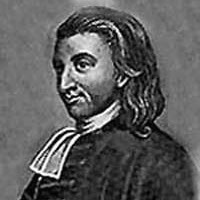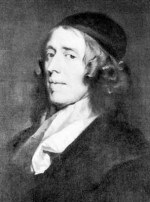
Thomas Boston – The Smiling World’s Deadly Hug

10 Jun
tbost

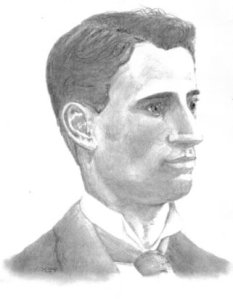
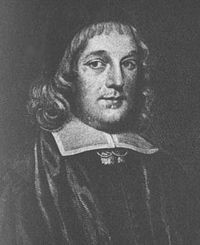
1676-1732. A Scottish Church Leader. One of the twelve Marrow Men.

The smiling world is meeting and embracing some. It is casting into their lap plentifully, and still they have prospect of more. But O! take heed to the dangerous embraces, lest it hug you to death, as surely it will, if you do not shake yourselves loose of it, “For the turning away of the simple, shall slay them, and the prosperity of fools shall destroy them.”

~Thomas Boston~


The Whole Works of Thomas Boston: An Illustration of the Doctrines of the Christian Religion, Part 1, ed. Samuel M‘Millan, vol. 3 (Aberdeen: George and Robert King, 1848), 122. From Sermon IX: Christ’s Invitation To His Bride.

Books by Thomas Boston

Kindle Books

Thomas Boston on Logos Bible Software

Other Thomas Boston Quotes at the Old Guys.

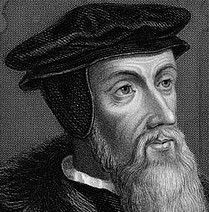
John Calvin – The Kind Of Knowledge We Are After

9 Jun

john-calvin

We are called to a knowledge of God: not that knowledge which, content with empty speculation, merely flits in the brain, but that which will be sound and fruitful if we duly perceive it, and if it takes root in the heart. For the Lord manifests himself by his powers, the force of which we feel within ourselves and the benefits of which we enjoy. We must therefore be much more profoundly affected by this knowledge than if we were to imagine a God of whom no perception came through to us. Consequently, we know the most perfect way of seeking God, and the most suitable order, is not for us to attempt with bold curiosity to penetrate to the investigation of his essence, which we ought more to adore than meticulously to search out, but for us to contemplate him in his works whereby he renders himself near and familiar to us, and in some manner communicates himself. The apostle was referring to this when he said that we need not seek him far away, seeing that he dwells by his very present power in each of us [Acts 17:27–28]. For this reason, David, having first confessed his unspeakable greatness [Ps. 145:3], afterward proceeds to mention his works and professes that he will declare his greatness [Ps. 145:5–6; cf. Ps. 40:5]. It is also fitting, therefore, for us to pursue this particular search for God, which may so hold our mental powers suspended in wonderment as at the same time to stir us deeply. And as Augustine teaches elsewhere, because, disheartened by his greatness, we cannot grasp him, we ought to gaze upon his works, that we may be restored by his goodness.

~John Calvin~


Institutes of the Christian Religion, Volumes 1 & 2, ed. John T. McNeill, trans. Ford Lewis Battles, The Library of Christian Classics (Louisville, KY: Westminster John Knox Press, 2011) Vol. 1.5.9. p. 61-62.

Books by John Calvin

Biography of John Calvin

Calvin’s Works on Logos Bible Software

Kindle Books

Online Books Available

Other Calvin Quotes

John Calvin – What Will Prove That God’s Word Is True?

28 May

john-calvin

There are other reasons, neither few nor weak, for which the dignity and majesty of Scripture are not only affirmed in godly hearts, but brilliantly vindicated against the wiles of its disparagers; yet of themselves these are not strong enough to provide a firm faith, until our Heavenly Father, revealing his majesty there, lifts reverence for Scripture beyond the realm of controversy. Therefore Scripture will ultimately suffice for a saving knowledge of God only when its certainty is founded upon the inward persuasion of the Holy Spirit. Indeed, these human testimonies which exist to confirm it will not be vain if, as secondary aids to our feebleness, they follow that chief and highest testimony. But those who wish to prove to unbelievers that Scripture is the Word of God are acting foolishly, for only by faith can this be known. Augustine therefore justly warns that godliness and peace of mind ought to come first if a man is to understand anything of such great matters.

~John Calvin~


Institutes of the Christian Religion, Volumes 1 & 2, ed. John T. McNeill, trans. Ford Lewis Battles, The Library of Christian Classics (Louisville, KY: Westminster John Knox Press, 2011) Vol. 1.8.12. p. 92.

Books by John Calvin

Biography of John Calvin

Calvin’s Works on Logos Bible Software

Kindle Books

Online Books Available

Other Calvin Quotes

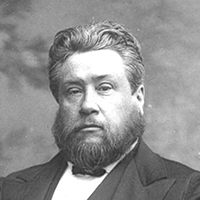
Charles Spurgeon – It Matters What You Do With Your Knowledge

26 May

Spurgeon

Those who boast of their knowledge betray their ignorance. Knowledge is not a possession to be proud of, since it brings with it so great a responsibility that a nurse might as well be proud of watching over a life in peril. Knowledge may become good or ill according to the use which is made of it. If men know God, for instance, and then glorify him as God, and are thankful, their knowledge has become the means of great blessing to them; but if they know God, and fail to glorify him, their knowledge turns to their condemnation. There is a knowledge which does not puff up the mind, but builds up the soul, being joined with holy love. Did not our Lord say, “And this is life eternal, that they might know thee the only true God, and Jesus Christ, whom thou hast sent”? But for men to know God, and not to glorify him as God, and to be unthankful, is, according to our text, no benefit to them: on the contrary, it becomes a savour of death unto them, because it leaves them without excuse. Our Saviour could plead for some, “Father, forgive them, for they know not what they do.” But what plea is to be used for those who know what they do, and yet do evil; who know what they ought to do, and do it not? These have the light, and close their eyes; or, to use another figure, they have the light, and use it to sin by. They take the golden candlestick of the sanctuary into their hands, and by its help they perform their evil deeds the more dexterously, and run in the way of wickedness the more swiftly.


Charles Spurgeon


The Metropolitan Tabernacle Pulpit Sermons, vol. 30 (London: Passmore & Alabaster, 1884), 61. Vol. 30, Sermon No. 1,763; Titled: Knowledge, Worship, Gratitude Click here for a free PDF of this sermon.

Books by Charles Spurgeon

Kindle Books

Spurgeon’s Works on Logos Bible Software

Biography of Charles Spurgeon

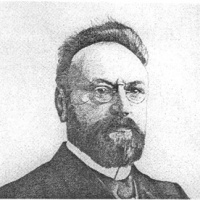
Herman Bavinck – Everyone Worships Something

20 May
bavinck-sketch

1854-1921. Dutch Reformed Theologian and Churchman. Professor at Free University in Amsterdam.

Taken in an absolute sense, as the denial of an absolute power, atheism is almost unthinkable. In the final analysis, all people again recognize a power that they venerate as God. Just as the Christian believer calls others to reverence his or her God, so Strauss demands a like piety toward his universe. Atheism and materialism again and again changed into pantheism for the obvious reason that humans cannot resist the recognition of a Supreme Power. At the very moment they deny the true God, they fashion for themselves a false God. Religion is too deeply rooted in human nature, and God’s revelation speaks too clear a language for them to resist this tendency

.

~Herman Bavinck~


Reformed Dogmatics Vol. 2: God and Creation John Bolt and John Vriend (Grand Rapids, MI; Baker Academic; 2004) p. 58.

Books by Herman Bavinck

Kindle Books

The Works of Herman Bavinck on Logos Bible Software.

Biography of Herman Bavinck

More Bavinck Quotes

John Owen: True Holiness

19 May

1616 -1683. Preeminent English Puritan theologian, pastor, and independent.

Plainly, all the power we have of ourselves to obey the law of God, and all that we do in the pursuit and exercise of that power, upon any reasons, motives, or considerations whatever,—which may all be resolved into fear of punishment and hope of reward, with some present satisfaction of mind, on the account of ease in conscience within or outward reputation, whether in abstinence from sin or the performance of duties,—are intended hereby, and are not that holiness which we inquire after. And the reason is plain, even because those things are not wrought in us by the power of the especial grace of God, in the pursuit of the especial promise of the covenant, as all true holiness is. If any shall say that they are so wrought in us, they do expressly change the nature of them: for thereby those powers would be no more natural, but supernatural; and those duties would be no more merely moral, but evangelical and spiritual;—which is to grant all we contend for. Wherefore, that which men call “moral virtue” is so far from being the whole of internal grace or holiness, that if it be no more than so, it belongs not at all unto it, as not being effected in us by the especial grace of God, according to the tenor and promise of the covenant.

~John Owen~


The Works of John Owen, ed. William H. Goold, vol. 3: Pneumatologia: A Discourse Concerning the Holy Spirit (Edinburgh: T&T Clark, n.d.), 383-384.

Books by John Owen

Kindle Books

The Works of John Owen on Logos Bible Software

Biography of John Owen

Other Owen Quotes

Geerhardus Vos – The Father of Christian Eschatology

15 May
GVos1

(1862-1949) Professor of Biblical Theology at Princeton Theological Seminary.

In the period of the Reformation the problem of the obtaining of righteousness before God filled hearts and minds. For the time this forced the eschatological hope into the background, although even then it would have been by no means paradoxical to say that the two strands of the justifying faith and the eschatological outlook remained closely intertwined. Paul knew the inevitableness of this and knew it better, perhaps, than the foremost heroes of the Reformation, not even Luther or Calvin excepted. While the Reformers were by no means unacquainted with the melodies of eschatological music, theirs was by preference martial music drawn from the storm and stress of the Psalter. But they received something better from Paul than either prophet or Psalmist had been able to give. Paul had been the first to grasp with his master-mind the single items of eschatological belief scattered through Scripture, and to weave them into a compact, well-rounded system, so coherent, that, speaking after the manner of man, it became next to impossible for any of the precious texture henceforth to be lost. He it was who made the single items of hope find themselves and group themselves into crystal formations with symmetrical shapes. Truly for this, not his smallest gift, he may justly be called the father of Christian eschatology.

~Geerhardus Vos~


The Pauline Eschatology (Princeton, NJ: Geerhardus Vos, 1930), vi.

Books by Geerhardus Vos

Kindle Books

Books by Geerhardus Vos on Logos Bible Software

More Vos Quotes at The Old Guys

John Calvin – The Unassailable Word of God

10 May

john-calvin

Besides this, there are other very good reasons why the consent of the church should not be denied its due weight. Since the publication of Scripture, age after age agreed to obey it steadfastly and harmoniously. By countless wondrous means Satan with the whole world has tried either to oppress it or overturn it, to obscure and obliterate it utterly from the memory of men—yet, like the palm, it has risen ever higher and has remained unassailable. Indeed, there has scarcely ever been either a sophist or rhetorician of superior ability who did not try his power against it; yet all were unsuccessful. Such facts as these should be accounted of no slight importance. The whole power of earth has armed itself to destroy it, yet all these efforts have gone up in smoke. How could it, assailed so strongly from every side, have resisted if it had relied upon human protection alone? Rather, by this very fact it is proved to be from God, because, with all human efforts striving against it, still it has of its own power thus far prevailed. Besides this, it is not one state, not one people, that has agreed to receive and embrace it; but, as far and as wide as the earth extends, it has obtained its authority by the holy concord of divers peoples, who otherwise had nothing in common among themselves. Such agreement of minds, so disparate and otherwise disagreeing in everything among themselves, ought to move us greatly, since it is clear that this agreement is brought about by nothing else than the divine will.

~John Calvin~


Institutes of the Christian Religion, Volumes 1 & 2, ed. John T. McNeill, trans. Ford Lewis Battles, The Library of Christian Classics (Louisville, KY: Westminster John Knox Press, 2011) Vol. 1.8.12. p. 91-92.

Books by John Calvin

Biography of John Calvin

Calvin’s Works on Logos Bible Software

Kindle Books

Online Books Available

Other Calvin Quotes

John Owen: Evangelical Holiness

8 May

1616 -1683. Preeminent English Puritan theologian, pastor, and independent.

But neither yet are we left in this matter merely under the authority of God’s command, with an expectation of our compliance with it from our own ability and power; God, moreover, has promised to sanctify us, or to work this holiness in us, the consideration whereof will give us yet a nearer prospect into its nature. He that requires it of us knows that we have it not of ourselves. When we were in our best condition by nature, in the state of original holiness, vested with the image of God, we preserved it not; and is it likely that now, in the state of lapsed and depraved nature, it is in our own power to restore ourselves, to re-introduce the image of God into our souls, and that in a far more eminent manner than it was at first created by God? What needed all that contrivance of infinite wisdom and grace for the reparation of our nature by Jesus Christ, if holiness, wherein it does consist, be in our own power, and educed out of the natural faculties of our souls? There can no more fond imagination befall the minds of men than that defiled nature is able to cleanse itself, or depraved nature to rectify itself, or that we, who have lost that image of God which he created in us and with us, should create it again in ourselves by our own endeavours. Wherefore, when God commands and requires us to be holy, he commands us to be that which by nature and of ourselves we are not; and not only so, but that which we have not of ourselves a power to attain unto. Whatever, therefore, is absolutely in our own power is not of that holiness which God requires of us; for what we can do ourselves, there is neither necessity nor reason why God should promise to work in us by his grace. And to say that what God so promises to work, he will not work or effect indeed, but only persuade and prevail with us to do it, is, through the pride of unbelief, to defy the truth and grace of God, and with the spoils of them to adorn our own righteousness and power. Now, God has multiplied his promises to this purpose, so that we shall need to call over only some of them in way of instance: Jer. 31:33, “I will put my law in their inward parts, and write it in their hearts; and will be their God, and they shall be my people.” Chap. 32:39, 40, “I will give them One heart, and one way, that they may fear me for ever; and I will put my fear in their hearts, that they shall not depart from me.” Ezek. 36:26, 27, “A new heart will I give you, and a new spirit will I put within you: and I will take away the stony heart out of your flesh, and I will give you an heart of flesh. And I will put my Spirit within you, and cause you to walk in my statutes, and ye shall keep my judgments, and do them.” Verse 25, “I will sprinkle clean water upon you, and ye shall be clean; from all your filthiness will I cleanse you.” Verse 29, “I will also save you from all your uncleannesses.” The whole of our sanctification and holiness is comprised in these promises. To be cleansed from the defilements of sin, whatever they be, to have a heart inclined, disposed, enabled, to fear the Lord always, and to walk in all his ways and statutes accordingly, with an internal habitual conformity of the whole soul unto the law of God, is to be sanctified or to be holy. And all this God promises directly to work in us and to accomplish himself.

~John Owen~


The Works of John Owen, ed. William H. Goold, vol. 3: Pneumatologia: A Discourse Concerning the Holy Spirit (Edinburgh: T&T Clark, n.d.), 382–383.

Books by John Owen

Kindle Books

The Works of John Owen on Logos Bible Software

Biography of John Owen

Other Owen Quotes

Thomas Manton – What is Sin?

7 May
Manton_1

1620–1677. English Puritan clergyman. Lecturer at Westminster Abbey. Noncomformist.

Sin is a violation of the law of the eternal and living God: 1 John 3:4, ‘Whosoever committeth sin, transgresseth also the law, for sin is the transgression of the law.’ God is the lawgiver, who hath given a righteous law to his subjects, under the dreadful penalty of a curse. In his law there are two things—the precept and the sanction. The precept is the rule of our duty, which showeth what we must do, or not do. The sanction or penalty showeth what God will do, or might justly do, if he should deal with us according to the merit of our actions. Accordingly, in sin, there is the fault and the guilt.

~Thomas Manton~


The Complete Works of Thomas Manton, vol. 1 (London: James Nisbet & Co., 1870), 417.

Books by Thomas Manton

Biography of Thomas Manton

Manton’s Works on Logos Bible Software

Kindle Books

Online Books Available

Other Manton Quotes at The Old Guys