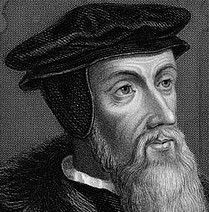
John Calvin – The Changed Lives of the Apostles

6 May

john-calvin

But this one fact raises their [the writers of the New Testament] doctrine more than enough above the world: Matthew, previously tied to the gain of his table, Peter and John going about in their boats—all of them rude, uneducated men—had learned nothing in the school of men that they could pass on to others. Paul, not only a sworn but fierce and murderous enemy, was converted into a new man; this sudden and unhoped-for change shows that he was compelled by heavenly authority to affirm a doctrine that he had assailed. Let these dogs deny that the Holy Spirit came down upon the apostles; or even let them discredit history. Yet the truth cries out openly that these men who, previously contemptible among common folk, suddenly began to discourse so gloriously of the heavenly mysteries must have been instructed by the Spirit.

~John Calvin~


Institutes of the Christian Religion, Volumes 1 & 2, ed. John T. McNeill, trans. Ford Lewis Battles, The Library of Christian Classics (Louisville, KY: Westminster John Knox Press, 2011) Vol. 1.8.11. p. 91.

Books by John Calvin

Biography of John Calvin

Calvin’s Works on Logos Bible Software

Kindle Books

Online Books Available

Other Calvin Quotes

Charles Spurgeon – Delight In God With Living Love

5 May

Spurgeon

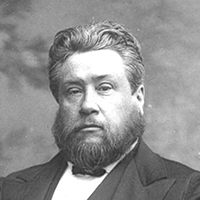
Many may be met with who know God, but never glorify him as God, because they never adore him, and worship him, with the love of their hearts. They go to church or to some place of worship regularly, and sing psalms and hymns, and they may even have family-prayer at home; but their heart has never adored the living God with living love. Their worship has a name to live, but it is dead. They present to the Lord all the external harvest of worship, but the corn is gone, only the straw and the husk are there. And what is the value of your husky prayers? your prayers without a kernel, made up of the straw of words, and the chaff of formality? What is the value of professions of loyalty from a rebel? What is the worth of professed friendship to God when your heart is at enmity against him? Is it not a mockery of God to present to him a sacrifice “where not the heart is found”? When the Lord has to say—They come as my people, and they sit as my people, and they sing as my people, but their heart is far from me,—can he take any pleasure in them? May not God thus complain of many? Oh, let it not be so with you! I know that there are some here against whom that charge would lie if we preferred it—that they know God, but they do not glorify him as God, for they do not love him. The name and service of God are much on their tongues, but they do not delight in him, they do not hunger and thirst after him, they do not find prayer and praise to be their very element, but such service as they render is merely lip-service, the unwilling homage of bond-slaves, and not the delighted service of those who are the children of God. Oh, my brethren, if we accept Jehovah as the living God, let us give him the utmost love of our souls. Will you call a man brother, and then treat him like a dog? Dare you call God your God, and then act towards him as though he were not worthy of a thought? With what joy does David cry, “I am thy servant, and the son of thine handmaid: thou hast loosed my bonds”! This is the kind of spirit with which to deal with the Lord. Oh, to rejoice in God all the day, and to make him our exceeding joy! Thus, and thus only, do we glorify him as God. Without the fire of love no incense will ever rise from the censer of praise. If we do not delight in God we do not fitly adore God.


Charles Spurgeon


The Metropolitan Tabernacle Pulpit Sermons, vol. 30 (London: Passmore & Alabaster, 1884), 65. Vol. 30, Sermon No. 1,763; Titled: Knowledge, Worship, Gratitude Click here for a free PDF of this sermon.

Books by Charles Spurgeon

Kindle Books

Spurgeon’s Works on Logos Bible Software

Biography of Charles Spurgeon

Charles Hodge – What Is Regeneration?

1 May

1797-1898. Principal of Princeton Theological Seminary from 1851-1878.

It is a New Life

5. While denying that regeneration is a change either in the essence or acts of the soul, evangelical Christians declare it to be, in the language of Scripture, “a quickening,” a ζωοποιει̂ν, a communication of a new principle of life. It is hard, perhaps impossible, to define what life is. Yet every man is familiar with its manifestations. He sees and knows the difference between death and life, between a dead and living plant or animal. And, therefore, when the Bible tells us that in regeneration God imparts a new form of life to the soul, the language is as intelligible as human language can be in relation to such a subject. We know that when a man is dead as to the body he neither sees, feels, nor acts. The objects adapted to impress the senses of the living make no impression upon him. They awaken no corresponding feeling, and they call forth no activity. The dead are insensible and powerless. When the Scriptures declare that men are spiritually dead they do not deny to them physical, intellectual, social, or moral life. They admit that the objects of sense, the truths of reason, our social relations and moral obligations, are more or less adequately apprehended; these do not fail to awaken feeling and to excite to action. But there is a higher class of objects than these, what the Bible calls “The things of God,” “The things of the Spirit,” “The things pertaining to salvation.” These things, although intellectually apprehended as presented to our cognitive faculties, are not spiritually discerned by the unrenewed man. A beautiful object in nature or art may be duly apprehended as an object of vision by an uncultivated man, who has no perception of its esthetic excellence, and no corresponding feeling of delight in its contemplation. So it is with the unrenewed man. He may have an intellectual knowledge of the facts and doctrines of the Bible, but no spiritual discernment of their excellence, and no delight in them. The same Christ, as portrayed in the Scriptures, is to one man without form or comeliness that we should desire Him; to another He is the chief among ten thousand and the one altogether lovely; “God manifest in the flesh,” whom it is impossible not to adore, love, and obey.

This new life, therefore, manifests itself in new views of God, of Christ, of sin, of holiness, of the world, of the gospel, and of the life to come; in short, of all those truths which God has revealed as necessary to salvation. This spiritual illumination is so important and so necessary and such an immediate effect of regeneration, that spiritual knowledge is not only represented in the Bible as the end of regeneration (Col. 3:10; 1 Tim. 2:4), but the whole of conversion (which is the effect of regeneration) is summed up in knowledge. Paul describes his conversion as consisting in Christ’s being revealed to Him (Gal. 1:16); and the Scriptures make all religion, and even eternal life, to be a form of knowledge. Paul renounced everything for the excellency of the knowledge of Christ (Philippians. 3:8), and our Lord says that the knowledge of Himself and of the Father is eternal life. (John 17:3). The whole process of salvation is described as a translation from the kingdom of darkness into the kingdom of light. There is no wonder, therefore, that the ancients called regeneration a φωτισμός, an illumination. If a man born blind were suddenly restored to sight, such a flood of knowledge and delight would How in upon him, through the organ of vision, that he might well think that all living consisted in seeing. So the New Testament writers represent the change consequent on regeneration, the opening the eyes on the certainty, glory, and excellence of divine things, and especially of the revelation of God in the person of his Son, as comprehending almost everything which pertains to spiritual life. Inseparably connected with this knowledge and included in it, is faith, in all the forms and exercises in which spiritual truths are its objects. Delight in the things thus revealed is the necessary consequence of spiritual illumination; and with delight come satisfaction and peace, elevation above the world, or spiritual mindedness, and such a sense of the importance of the things not seen and eternal, that all the energies of the renewed soul are (or, it is acknowledged, they should be) devoted to securing them for ourselves and others.

This is one of the forms in which the Bible sets forth the doctrine of regeneration. It is raising the soul dead in sin to spiritual life. And this spiritual life unfolds or manifests itself just as any other form of life, in all the exercises appropriate to its nature.

~Charles Hodge~


Systematic Theology, vol. 3 (Oak Harbor, WA: Logos Research Systems, Inc., 1997), 144–145. Free PDF | $2.99 Kindle Version

Books by Charles Hodge

The Works of Charles Hodge on Logos Bible Software

Kindle Books

More Quotes by Hodge at The Old Guys

Charles Hodge – The Imputation of Righteousness

30 Apr

It seems unnecessary to remark that this does not, and cannot mean that the righteousness of Christ is infused into the believer, or in any way so imparted to him as to change, or constitute his moral character. Imputation never changes the inward, subjective state of the person to whom the imputation is made. When sin is imputed to a man he is not made sinful; when the zeal of Phinehas was imputed to him, he was not made zealous. When you impute theft to a man, you do not make him a thief. When you impute goodness to a man, you do not make him good. So when righteousness is imputed to the believer, he does not thereby become subjectively righteous. If the righteousness be adequate, and if the imputation be made on adequate grounds and by competent authority, the person to whom the imputation is made has the right to be treated as righteous. And, therefore, in the forensic, although not in the moral or subjective sense, the imputation of the righteousness of Christ does make the sinner righteous. That is, it gives him a right to the full pardon of all his sins and a claim in justice to eternal life.

~Charles Hodge~


Systematic Theology, vol. 3 (Oak Harbor, WA: Logos Research Systems, Inc., 1997), 144–145. Free PDF | $2.99 Kindle Version

Books by Charles Hodge

The Works of Charles Hodge on Logos Bible Software

Kindle Books

More Quotes by Hodge at The Old Guys

New Spurgeon RePreached Audio: Sermon 2257 Inexcusable Irreverence and Ingratitude (Romans 1:20-21)

28 Apr

A dramatic re-preaching of Spurgeon’s Sermon 2257 from Metropolitan Tabernacle Pulpit sermons volume 39.

Romans 1:20-21:
“20 For his invisible attributes, namely, his eternal power and divine nature, have been clearly perceived, ever since the creation of the world, in the things that have been made. So they are without excuse. 21 For although they knew God, they did not honor him as God or give thanks to him, but they became futile in their thinking, and their foolish hearts were darkened.”

Excerpt:
Away with everything that is in you, or about you, and just trust Christ, and you shall immediately be saved. Whoever, in this great congregation, will but look to Jesus, shall be saved upon the spot. However great your iniquities, however stony your heart, however despairing your mind, look, look, look, look. And then, when you look to Christ, your ingratitude will be forgiven, and it will die. You will love him who has loved you, and you shall be saved, and saved for ever.

A PDF of this sermon in updated language can be found here.

Music credit: Dexter Britain “The Time to Run” found here: http://freemusicarchive.org/music/Dexter_Britain/Creative_Commons_Selection/The_Time_To_Run

Listen on SoundCloud.
https://soundcloud.com/spurgeonrepreached/sermon-2257-inexcusable-irreverence-and-ingratitude-romans-120-21

Herman Bavinck – Nothing Is Atheistic

28 Apr
bavinck-sketch

1854-1921. Dutch Reformed Theologian and Churchman. Professor at Free University in Amsterdam.

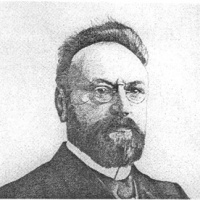
According to Scripture the whole universe is a creation and hence also a revelation of God.

In an absolute sense, therefore, nothing is atheistic. And this witness of Scripture is confirmed on every side. There is no atheistic world. There are no atheistic peoples. Nor are there atheistic persons. The world cannot be atheistically conceived since in that case it could not be the work of God but would have to be the creation of an anti-god.

~Herman Bavinck~


Reformed Dogmatics Vol. 2: God and Creation John Bolt and John Vriend (Grand Rapids, MI; Baker Academic; 2004) p. 56-57.

Books by Herman Bavinck

Kindle Books

The Works of Herman Bavinck on Logos Bible Software.

Biography of Herman Bavinck

More Bavinck Quotes

Dive Deep In The Reformed Confessions

25 Apr

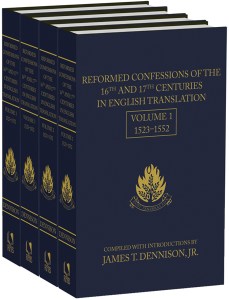
A few weeks back I recommended this new 4 volume set from Reformation Heritage Books. I’ve updated the pricing below and also wanted to point you to its new availability on Kindle.

All four volumes are available as one Kindle book for $89.99.

Reformed Confessions of 16th and 17th Centuries in English Translation, Volume 1-4.
Kindle Price: $89.99


Previous post with updated pricing info:
—————————————————————

9781601783318500 years in the making this is a set you will want to take a look at.

The 4 vol. Reformed Confessions of the 16th and 17th Centuries in English Translation is on sale at WTS Books for $150 for the set or $37 a volume. It is also available on Amazon for $175.

What’s Included?

Volume 1 – 1523-1552:

1. The Sixty-Seven Articles of Huldrych Zwingli (1523)
2. Zwingli’s Short Christian Instruction (1523)
3. The Ten Theses of Bern (1528)
4. Confession of the East Friesland Preachers (1528)
5. William Farel’s Summary (1529)
6. Zwingli, Fidei ratio (1530)
7. The Tetrapolitan Confession(1530)
8. Waldensian Confession (1530)
9. Zwingli, Fidei Expositio (1531)
10. The Bern Synod (1532)
11. Waldensian Synod of Chanforan (1532)
12. The Waldensian Confession of Angrogna (1532)
13. The First Confession of Basel (1534)
14. The Bohemian Confession (1535)
15. The Lausanne Articles (1536)
16. The First Helvetic Confession (1536)
17. Calvin’s Catechism (1537)
18. Geneva Confession (1536/37)
19. Calvin’s Catechism (1538)
20. Waldensian Confession of Mérindol (1541)
21. Waldensian Confession of Provence (1543)
22.The Waldensian Confession of Mérindol (1543)
23. The Walloon Confession of Wesel(1544/45)
24. Calvin’s Catechism (1545)
25. Juan Diaz’s Sum of the Christian Religion (1546)
26. Valdés’s Catechism (1549)
27. Consensus Tigurinus (1549)
28. Anglican Catechism (1549)
29. London Confession of John à Lasco (1551)
30. Large Emden Catechism of the Strangers’ Church, London (1551)
31. Vallérandus Poullain: Confession of the Glastonbury Congregation (1551)
32. Rhaetian Confession (1552)
33. Consensus Genevensis: Calvin on Eternal Predestination (1552)

Volume 2 – 1552-1566:

34. The Forty-Two Articles of the Church of England (1552/53)
35. Anglican Catechism (1553)
36. Emden Examination of Faith (1553)
37. The Frankfort Confession (1554)
38. The Emden Catechism (1554)
39. The Confession of Piotrków (1555)
40. Confession of the English Congregation at Geneva (1556)
41. Waldensian Confession of Turin (1556)
42. Confession of the Italian Church of Geneva (1558)
43. Guanabara Confession (1558)
44. Geneva Students’ Confession (1559)
45. Confession of Marosvásárhley/Vásárhelyi (1559)
46. The French Confession (1559)
47. Confession of Piñczow (1559)
48. Lattanzio Ragnoni’s Formulario (1559)
49. The Confession of Faith in the Geneva Bible (1560)
50. The Scottish Confession (1560)
51. The Waldensian Confession (1560)
52. The Prussian-Vilnian Discussion (1560)
53. Theodore Beza’s Confession (1560)
54. The Confession of the Spanish Congregation of London (1560/61)
55. Waldensian Confession (1561)
56. Theodore Beza’s Confession at Poissy(1561)
57. The Belgic Confession (1561)
58. The Hungarian Confessio Catholica (1562)
59. The Confession of Tarcal (1562) and Torda (1563)
60. The Thirty-nine Articles (1562/63)
61. The Heidelberg Catechism (1563)
62. The Synod of Enyedi (1564)
63. The Second Helvetic Confession (1566)
64. The Antwerp Confession (1566)
65. The Netherlands Confession (1566)
66. The Synod of Gönc (1566)
67. Synod of Torda (1566)
68. The Synods of Gyulafehérvár and of Marosvásárhely (1566)

Volume 3 – 1567-1599:

69. Documents of the Debrecen Synod (1567)
70. The Synod at Szikszo (1568)
71. Confession of the Synod of Cassov (1568)
72. Confession of Varadiensis/Nagyvßrad (1569)
73. Sandomierz Consensus (1570)
74. The Confession of the Synod of Csenger (1570)
75. The Confession of La Rochelle (1571)
76. The Bohemian Confession (1573)
77. The Synod of Cracow (1573)
78. The Bohemian Confession (1575/1609)
79. The Synod of Hercegszoloski (1576)
80. The Confession of Frederick III (1577)
81. The Nassau (Dillenburger Synod) Confession (1578)
82. The Synod of Piotrkow (1578)
83. Craig’s Catechism (1581)
84. The King’s Confession (1581)
85. The Synod of Wlodislaw (1583)
86. General Synod of Herborn (1586)
87. The Synod of Thorn (1595)
88. The Bremen Consensus (1595)
89. The Lambeth Articles (1595)
90. The Second Confession of the London-Amsterdam Church (1596)
91. The Stafforts Book (1599)

Volume 4 – 1600-1693:

92. The Points of Difference (1603)
93. Waldensian Confession (1603)
94. Confession of the Synod of Cassel (1607)
95. Hessian Catechism (1607)
96. Confession of the Heidelberg Theologians (1607)
97. The Remonstrance (1610)
98. The Counter Remonstrance (1611)
99. The Bentheim Confession (1613)
100. Confession of the Evangelical Church of Germany (1614)
101. The Confession of John Sigismund (1614)
102. The Irish Articles (1615)
103. Scottish Confession (1616)
104. Seven Articles of the Church of Leiden (1617)
105. The Canons of Dort (1618–1619)
106. The Confession of Cyril Lukaris (1629)
107. Leipzig Colloquy (1631)
108. The London Baptist Confession (1644)
109. Brief Confession of the Westminster Assembly (1645)
110. The Colloquy of Thorn (1645)
111. The Westminster Confession of Faith (1646)
112. The London Confession (1646)
113. Benjamin Cox’s Baptist Appendix (1646)
114. Westminster Larger Catechism (1647)
115. Westminster Shorter Catechism (1647)
116. The Cambridge Platform (1648)
117. The Geneva Theses (1649)
118. The Principles of Faith (1652)
119. A New Confession of Faith (1654)
120. The Midlands Confession (1655)
121. Waldensian Confession (1655)
122. The Somerset Confession (1656)
123. The Savoy Declaration (1658)
124. Waldensian Confession (1662)
125. The Formula Consensus Helvetica (1675)
126. The London Baptist Confession (1677)
127. The Baptist Catechism (1693)

Herman Bavinck – God: Knowable, Yet Incomprehensible

24 Apr
bavinck-sketch

1854-1921. Dutch Reformed Theologian and Churchman. Professor at Free University in Amsterdam.

God’s incomprehensibility, so far from canceling out God’s knowability, rather presupposes and affirms it. The riches of God’s being—riches that surpass all knowledge—are in fact a necessary and significant component of our knowledge of God. The fact remains that God makes himself known to us in the manner and measure in which he reveals himself in his creatures.

~Herman Bavinck~


Reformed Dogmatics Vol. 2: God and Creation John Bolt and John Vriend (Grand Rapids, MI; Baker Academic; 2004) p. 56.

Books by Herman Bavinck

Kindle Books

The Works of Herman Bavinck on Logos Bible Software.

Biography of Herman Bavinck

More Bavinck Quotes

John Owen Sale

23 Apr


Screen Shot 2014-04-23 at 9.38.06 AM

Overcoming Sin and Temptation | Communion With the Triune God
John Owen
Both Books: $24.00


john-owen-06

The Works of John Owen (16 vols)
John Owen
Sale Price: $280

John Owen: Merit and Grace

22 Apr

1616 -1683. Preeminent English Puritan theologian, pastor, and independent.

God requireth not any thing of us whereby we should purchase or merit for ourselves life and salvation: for “by grace are we saved through faith; not of works, lest any man should boast,” Eph. 2:8, 9. God doth save us neither by nor for the “works of righteousness which we have done,” but “according to his mercy,” Tit. 3:5: so that although, on the one side, the “wages of sin is death,” there being a proportion in justice between sin and punishment, yet there is none between our obedience and our salvation; and therefore “eternal life is the gift of God through Jesus Christ our Lord,” Rom. 6:23. God, therefore, requires nothing at our hands under this notion or consideration, nor is it possible that in our condition any such thing should be required of us; for whatever we can do is due beforehand on other accounts, and so can have no prospect to merit what is to come. Who can merit by doing his duty? Our Saviour doth so plainly prove the contrary as none can farther doubt of it than of his truth and authority, Luke 17:10. Nor can we do any thing that is acceptable to him but what is wrought in us by his grace; and this overthrows the whole nature of merit, which requires that that be every way our own whereby we would deserve somewhat else at the hands of another, and not his more than ours.

~John Owen~


The Works of John Owen, ed. William H. Goold, vol. 3: Pneumatologia: A Discourse Concerning the Holy Spirit (Edinburgh: T&T Clark, n.d.), 379.

Books by John Owen

Kindle Books

The Works of John Owen on Logos Bible Software

Biography of John Owen

Other Owen Quotes