Archive | Quotes RSS feed for this section

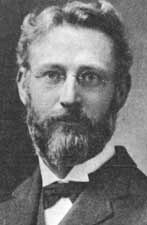
Geerhardus Vos – God Alone Possesses Ideal Knowledge

17 Mar

It is also true that we do not have an in-depth and comprehensive knowledge of God. All our knowledge, even with regard to created things, is in part. This is even truer of God. We only know Him insofar as He reveals Himself, that is, has turned His being outwardly for us. God alone possesses ideal knowledge of Himself and of the whole world, since He pervades everything with His omniscience.

~Geerhardus Vos~


Reformed Dogmatics ed. Richard B. Gaffin and Richard de Witt, trans. Annemie Godbehere et al., vol. 1 (Bellingham, WA: Lexham Press, 2013), 8.

Books by Geerhardus Vos

Kindle Books

Books by Geerhardus Vos on Logos Bible Software

More Vos Quotes at The Old Guys

Herman Bavinck – God, Both Exalted and Near

14 Mar

1854-1921. Dutch Reformed Theologian and Churchman. Professor at Free University in Amsterdam.

The same God who in his revelation limits himself, as it were, to certain specific places, times, and persons is at the same time infinitely exalted above the whole realm of nature and every creature. Even in the parts of Scripture that stress this temporal and local manifestation, the sense of his sublimity and omnipotence is not lacking. The Lord who walks in his garden is the Creator of heaven and earth. The God who appears to Jacob is in control of the future. Although the God of Israel dwells in the midst of his people in the house that Solomon built for him, he cannot even be contained by the heavens (1 Kings 8:27). He manifests himself in nature and sympathizes, as it were, with his people, but he is simultaneously the incomprehensible One (Job 26:14; 36:26; 37:5), the incomparable One (Isa. 40:18, 25; 46:5), the one who is infinitely exalted above time and space and every creature (Isa. 40:12ff.; 41:4; 44:6; 48:12), the one true God (Exod 20:3, 11; Deut. 4:35, 39; 32:19; 1 Sam. 2:2; Isa. 44:8). Although he reveals himself in his names, no name is adequate to the purpose. He is nameless; his name is a name of wonder (Gen. 32:29; Judg. 13:18; Prov. 30:4). Neither the hidden ground, the depths [חֵקֶר] of God, nor the boundaries, the extreme limit, the very essence [תַּכְלִית] of the Almighty, is attainable (Job 11:7; Sirach 43:31–32). In a word, throughout the Old Testament these two elements occur hand in hand: God is with those who are of a contrite and humble spirit, and nevertheless is the high and lofty One who inhabits eternity (Isa. 57:15).

~Herman Bavinck~


Reformed Dogmatics Vol. 2: God and Creation John Bolt and John Vriend (Grand Rapids, MI; Baker Academic; 2004) p. 33-34.

Books by Herman Bavinck

Kindle Books

Reformed Dogmatics on Logos Bible Software

Biography of Herman Bavinck

More Bavinck Quotes

Charles Spurgeon – Full-Orbed Gospel

13 Mar

20120713-214637.jpg

‘Christ died for the ungodly.’—Romans 5:6.

CONSCIENCE in every man must tell him that God is just, and, as a necessary consequence, that God must punish sin. Then comes the question,—How can God be just, and yet the justifier of the ungodly? The answer is,—There is redemption in Christ Jesus. God is ‘just, and the justifier of him which believeth in Jesus.’ Believers are ‘now justified by his blood.’ In Jesus, God’s justice is vindicated to the very utmost, and yet his mercy shines forth in all its glory. The religion which denies the doctrine of the atonement is not of God, and never can succeed. It may hold together the few, who affect to be intellectual, because they are ignorant. The doctrine of the substitutionary sacrifice of our Lord Jesus Christ is the fundamental principle of the Christian religion. This is the only doctrine that teaches how justice can have its full dominion, and yet mercy exercise its sway. Here we have a full-orbed mercy and a fullorbed justice; and neither of them eclipses or casts a shadow over the other. All God’s attributes are at one at Calvary. We must stem the torrent of error by preaching ‘Jesus Christ and him crucified.’ As we clearly proclaim the gospel, ‘as the truth is in Jesus,’ we shall undermine every citadel of error and falsehood; and we must often preach the great central truths of the gospel, such as this, ‘In due time Christ died for the ungodly.’ ‘While we were yet sinners, Christ died for us.’ ‘For Christ also hath once suffered for sins, the just for the unjust, that he might bring us to God.’


~Charles Spurgeon~


C H Spurgeon’s Forgotten Early Sermons: A Companion to the New Park Street Pulpit–28 Sermons Compiled from the Sword and the Trowel (Leominster, Day One Publications, 2010), 57-58. Delivered on Thursday evening, 14 May 1857. Reported by Pastor T.W. Medhurst, Cardiff

Books by Charles Spurgeon

Kindle Books

Biography of Charles Spurgeon

Other Spurgeon Quotes

Thomas Boston – Eternal Life Beginning Now

11 Mar

Thomas Boston2-719007

It is not only life that is promised, but life eternal, life for evermore, Psalm 133:3; which, from the moment it is given, shall never be extinguished, through the ages of time and eternity. In the style of the Scripture, eternal life is not restricted to the state of glory in heaven. But the life communicated to a sinner, in the first moment of his union with Christ, is eternal: it is the eternal life promised in the covenant, according to the Scripture, John 3:36, “He that believeth on the Son, hath everlasting life.” See chap. 5:24; 1 John 5:11, 12. Hence, from the promise of the covenant, “The just shall live by faith,” the apostle proves the perseverance of the saints, Heb. 10:38. A plain evidence, that perseverance in grace, in this our state of imperfection, is a part of the eternal life promised in the covenant, as well as heaven’s happiness. And thus the covenant-life extends to that which now is, and that which is to come, 1 Tim. 4:8.

~Thomas Boston~


The Whole Works of Thomas Boston: Human Nature in Its Fourfold State and a View of the Covenant of Grace, ed. Samuel M‘Millan, vol. 8 (Aberdeen: George and Robert King, 1850), 474.

Books by Thomas Boston

Kindle Books

Thomas Boston on Logos Bible Software

Other Thomas Boston Quotes at the Old Guys.

Charles Spurgeon – Living Epistles

10 Mar

20120713-214637.jpg

13 Now when they saw the boldness of Peter and John, and perceived that they were uneducated, common men, they were astonished. And they recognized that they had been with Jesus. – Acts 4:13 ESV

BEHOLD! what a change divine grace will work in a man, and in how short a time! That same Peter, who so lately followed his Master afar off, and with oaths and curses denied that he knew his name, is now to be found side by side with the loving John, boldly declaring that there is salvation in none other name save that of Jesus Christ, and preaching the resurrection of the dead, through the sacrifice of his dying Lord. The Scribes and Pharisees soon discover the reason of his boldness. Rightly did they guess that it rested not in his learning or his talents, for neither Peter nor John had been educated; they had been trained as fishermen; their education was a knowledge of the sea—of the fisherman’s craft: none other had they; their boldness could not therefore spring from the self-sufficiency of knowledge, but from the Spirit of the living God. Nor did they acquire their courage from their station; for rank will confer a sort of dignity upon a man, and make him speak with a feigned authority even when he has no talent or genius; but these men were, as it says in the original text, “ιδιωται” private men, who stood in no official capacity; men without rank or station. When they saw the boldness of Peter and John, and perceived that they were unlearned and private individuals, they marvelled, and they came to a right conclusion as to the source of their power—they had been dwelling with Jesus. Their conversation with the Prince of light and glory, backed up, as they might also have known, by the influence of the Holy Spirit, without which even that eminently holy example would have been in vain, had made them bold for their Master’s cause. Oh! my brethren, it were well if this commendation, so forced from the lips of enemies, could also be compelled by our own example. If we could live like Peter and John; if our lives were “living epistles of God, known and read of all men;” if, whenever we were seen, men would take knowledge of us, that we had been with Jesus, it would be a happy thing for this world, and a blessed thing for us. It is concerning that I am to speak to you this morning; and as God gives me grace, I will endeavour to stir up your minds by way of remembrance, and urge you so to imitate Jesus Christ, our heavenly pattern, that men may perceive that you are disciples of the holy Son of God.


~Charles Spurgeon~


The New Park Street Pulpit Sermons, vol. 1 (London: Passmore & Alabaster, 1855), 157. Vol. 1, Sermon No. 20; Titled: Christ’s People – Imitators of Him; Delivered on Sabbath Morning, April 29th, 1855.

Books by Charles Spurgeon

Kindle Books

Biography of Charles Spurgeon

Other Spurgeon Quotes

John Flavel – The Glory of Regeneration

7 Mar

Man, by degeneration, is become a most disordered and rebellious creature, contesting with, and opposing his Maker, as the first cause, by self-dependence; as the chiefest good, by self-love; as the highest Lord, by self-will, and as the last end, by self-seeking; and so is quite disordered, and all his acts irregular: His illuminated understanding is clouded with ignorance, his complying will full of rebellion and stubbornness; his subordinate powers, casting off the dominion and government of the superior faculties.

But by regeneration this disordered soul is set aright again: sanctification being the rectifying and due framing, or as the scripture phrases it, the renovation of the soul after the image of God, Eph. 4:24 in which self-dependence is removed by faith; self-love by the love of God; self-will by subjection and obedience to the will of God; and self-seeking by self-denial. The darkened understanding is again illuminated, Eph. 1:18 the refractory will sweetly subdued, Psalm 110:3 the rebellious appetite, or concupiscence gradually conquered, Rom. 5:7 per tot. And thus the soul which sin had universally depraved is again by grace restored and rectified.

~John Flavel~


The Whole Works of the Reverend John Flavel, Volumes 1-6, vol. 5 (London; Edinburgh; Dublin: W. Baynes and Son; Waugh and Innes; M. Keene, 1820), 425–426.

Books by John Flavel

More Flavel Quotes at The Old Guys

John Calvin – Christ, Our Righteousness

6 Mar

It is necessary that Christ should come to our aid; who, being alone just, can render us just by transferring to us his own righteousness. You now see how the righteousness of faith is the righteousness of Christ. When therefore we are justified, the efficient cause is the mercy of God, the meritorious is Christ, the instrumental is the word in connection with faith. Hence faith is said to justify, because it is the instrument by which we receive Christ, in whom righteousness is conveyed to us. Having been made partakers of Christ, we ourselves are not only just, but our works also are counted just before God, and for this reason, because whatever imperfections there may be in them, are obliterated by the blood of Christ; the promises, which are conditional, are also by the same grace fulfilled to us; for God rewards our works as perfect, inasmuch as their defects are covered by free pardon.

~John Calvin~


Commentary on the Epistle of Paul the Apostle to the Romans (Bellingham, WA: Logos Bible Software, 2010), 138–139.

Books by John Calvin

Biography of John Calvin

Kindle Books

Online Books Available

Other Calvin Quotes

Martin Luther – God’s Love Creates, Not Finds

5 Mar

The love of God does not find, but creates, that which is pleasing to it. The love of man comes into being through that which is pleasing to it.

The second part is clear and is accepted by all philosophers and theologians, for the object of love is its cause, assuming, according to Aristotle, that all power of the soul is passive and material and active only in receiving something. Thus it is also demonstrated that Aristotle’s philosophy is contrary to theology since in all things it seeks those things which are its own and receives rather than gives something good. The first part is clear because the love of God which lives in man loves sinners, evil persons, fools, and weaklings in order to make them righteous, good, wise, and strong. Rather than seeking its own good, the love of God flows forth and bestows good. Therefore sinners are attractive because they are loved; they are not loved because they are attractive. For this reason the love of man avoids sinners and evil persons. Thus Christ says: “For I came not to call the righteous, but sinners” [Matt. 9:13]. This is the love of the cross, born of the cross, which turns in the direction where it does not find good which it may enjoy, but where it may confer good upon the bad and needy person. “It is more blessed to give than to receive” [Acts 20:35], says the Apostle. Hence Ps. 41[:1] states, “Blessed is he who considers the poor,” for the intellect cannot by nature comprehend an object which does not exist, that is the poor and needy person, but only a thing which does exist, that is the true and good. Therefore it judges according to appearances, is a respecter of persons, and judges according to that which can be seen, etc.

~Martin Luther~


Luther’s Works – Vol. 31: Career of the Reformer (Philadelphia: Fortress Press, 1999), 57–58.

Books by Martin Luther

Luther’s Works on Logos Bible Software

Kindle Books

Biography

Other Luther Quotes The Old Guys

Thomas Chalmers – Lean Wholly Upon Christ

4 Mar

ichalms001p1The foundation of your trust before God, must either be your own righteousness out and out, or the righteousness of Jesus Christ out and out. To attempt a composition of them is to lean on a foundation, of which many of the materials may be solid; but many of them also are brittle, and all of them are frailly cemented together with untempered mortar. If you are to lean upon your own merit, lean upon it wholly – If you are to lean upon Christ, lean upon Him wholly. The two will not amalgamate together; and it is the attempt to do so which keeps many a weary and heavy- laden enquirer at a distance from rest, and at a distance from the truth of the gospel. Maintain a clear and a consistent posture. Stand not before God with one foot upon a rock, and the other upon a treacherous quick-sand. And it is not your humility alone which we want to inspire – it is the stable peace of your hearts that we are consulting, when we tell you that the best use you can make of the law is to shut your mouth when it offers to speak in the language of vindication; and to let its requirements on the one hand, and your rebellion on the other, give you the conviction of sin.

~Thomas Chalmers~


Lectures on Romans (http://newble.co.uk/chalmers) Excerpted from Lecture XI on Romans 3:20-26 [Also found cited by the editor in a footnote in Calvin’s Commentaries on Romans 3:21]

Books By Thomas Chalmers

Herman Bavinck – The Comfort In Election

1 Mar

1854-1921. Dutch Reformed Theologian and Churchman. Professor at Free University in Amsterdam.

Both for unbelievers and believers, the doctrine of election is a source of inexpressibly great comfort. If it were based on justice and merit, all would be lost. But now that election operates according to grace, there is hope even for the most wretched. If work and reward were the standard of admission into the kingdom of heaven, its gates would be opened for no one. Or if Pelagius’s doctrine were the standard, and the virtuous were chosen because of their virtue, and Pharisees because of their righteousness, wretched publicans would be shut out. Pelagianism has no pity. But to believe in and to confess election is to recognize even the most unworthy and degraded human being as a creature of God and an object of his eternal love. The purpose of election is not—as it is so often proclaimed—to turn off the many but to invite all to participate in the riches of God’s grace in Christ. No one has a right to believe that he or she is a reprobate, for everyone is sincerely and urgently called to believe in Christ with a view to salvation. No one can actually believe it, for one’s own life and all that makes it enjoyable is proof that God takes no delight in his death. No one really believes it, for that would be hell on earth. But election is a source of comfort and strength, of submissiveness and humility, of confidence and resolution. The salvation of human beings is firmly established in the gracious and omnipotent good pleasure of God.

~Herman Bavinck~


Reformed Dogmatics Vol. 2: God and Creation John Bolt and John Vriend (Grand Rapids, MI; Baker Academic; 2004) p. 402.

Books by Herman Bavinck

Kindle Books

Reformed Dogmatics on Logos Bible Software

Biography of Herman Bavinck

More Bavinck Quotes