Archive | Quotes RSS feed for this section

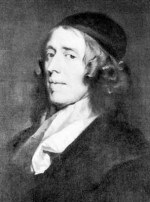
John Owen: Christ is God and Man in One Person

28 Dec

1616 -1683. Preeminent English Puritan theologian, pastor, and independent.

QUESTION. It was queried by some, how we may make our application unto Christ; not in general, but under what notion and apprehension of the person of Christ?

ANSWER. Because some seem to apprehend there might be danger in terminating our worship upon the nature of Christ as a creature, I shall give you my thoughts and directions in it. And,—
First. You must observe we are to have no conceptions, in our acting of any duty, towards Christ or about him, but with respect unto his person as he is God and man in one person. It is not lawful for us to have any apprehensions of Christ, to make any application to him, as man only; nor is it lawful for us to have any apprehensions of him as God only: but all our apprehensions of Christ, and all our addresses unto him, must be as God and man in one person. So he is, and so he will be to all eternity. The union is inseparable and indissoluble; and for any man to make his application unto Christ either as God or as man, is to set up a false Christ. Christ is God and man in one person, and no other. So, in all our actings of faith upon him, and applications unto him, we ought to consider him as he was “the seed of David,” and as “God over all, blessed for ever,” in one person.

~John Owen~


The Works of John Owen, ed. William H. Goold, vol. 8: Sermons to the Nations (Edinburgh: T&T Clark, n.d.), 373.
Books by John Owen

Kindle Books

Biography of John Owen

Other Owen Quotes

Charles Wesley – Happy the Place, But Happier Still

26 Dec
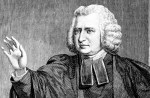
Charles-Wesley

1707-1788. English leader of the Methodist movement along with brother John Wesley.

“Now after Jesus was born in Bethlehem of Judea” – Matthew 2:1

HAPPY the place, but happier still
The heart where Christ is born:
The heart which He vouchsafes to fill
Need neither sin nor mourn;
No city could with Bethlehem share
The honour of His birth,
But every soul by faith may bear
The Lord of heaven and earth.

~Charles Wesley~


The Poetical Works of John and Charles Wesley, ed. G. Osborn, vol. 10 (London: Wesleyan-Methodist Conference Office, 1871), 142.

Books by Charles Wesley

Kindle Books

Wilhelmus à Brakel – Joyously Magnify God For the Incarnation

25 Dec

brakel

The incarnation is that great work of God in which the wisdom, goodness, power, mercy, and glory of God shine forth in a most excellent manner. What wisdom, goodness, and power is manifested in bringing a sinner back to a holy God by way of the most sublime manifestation of His justice; by a Person who is both God and man; through such a way of suffering; and by leading the sinner to such a felicity in ways which pass all understanding! All this the holy angels observe, and it is an element of their felicity to perceive the perfections of God in the work of redemption revealed by the incarnation. “To the intent that now unto the principalities and powers in heavenly places might be known by the church the manifold wisdom of God” (Eph. 3:10). Mary perceived all this and said, “For He that is mighty hath done to me great things; and holy is His Name; and His mercy is on them that fear Him from generation to generation. He hath shewed strength with His arm” (Luke 1:49–51).

One ought thus to meditate upon the incarnation, in order to discern clearly these and other attributes of God, approving of them with holy adoration and joyously magnifying God with the holy angels, saying, “Glory to God in the highest, and on earth peace, good will toward men” (Luke 2:14).

~Wilhelmus à Brakel~


The Christian’s Reasonable Service, ed. Joel R. Beeke, trans. Bartel Elshout, vol. 1 (Grand Rapids, MI: Reformation Heritage Books, 1992), 513-514.

Books by Wilhelmus à Brakel

Kindle Books

Herman Bavinck – Jesus: David’s Son and David’s Lord

24 Dec

Jesus was counted a son of David by the reckoning of Joseph’s lineage, not by that of Mary’s. All the emphasis is on Joseph’s Davidic descent, not only in Matthew (1:16, 20) but also in Luke (1:27; 2:4). Although Jesus was not the natural son of Joseph, through Mary, who was engaged to Joseph, he was civilly and legally the son of Joseph (Luke 2:27, 41, 48) and inherited from him the rights to David’s throne. Also for that reason Joseph was warned by God to take Mary as his lawful wife, to act as head and father of the family, and in that capacity to give the child the name “Jesus” (Matt. 1:18–21). Thus Christ became David’s son and simultaneously remained David’s Lord.

The exclusion of the man from his conception at the same time had the effect that Christ, as one not included in the covenant of works, remained exempt from original sin and could therefore also be preserved in terms of his human nature, both before and after his birth, from all pollution of sin. As subject, as “I,” he did not descend from Adam but was the Son of the Father, chosen from eternity to be the head of a new covenant. Not Adam but God was his father. As a person he was not the product of humankind but himself came to humankind from without and entered into its ranks. And since he thus, in God’s righteous judgment, remained exempt from all original sin, he could be conceived by the Holy Spirit and by that Spirit remain free from all pollution of sin. Conception by the Holy Spirit was not the deepest ground and final cause of Jesus’ sinlessness, as many theologians say, but it was the only way in which he who already existed as a person and was appointed head of a new covenant could now also in a human way—in the flesh—be and remain who he was: the Christ, Son of God the Most High.

~Herman Bavinck~


Reformed Dogmatics Volume 3: Sin and Salvation in Christ (Grand Rapids, MI: Baker Academic, 2006), p. 294-295.

Books by Herman Bavinck

Kindle Books

Biography of Herman Bavinck

More Bavinck Quotes

Wilhelmus à Brakel – The Incarnation Was For You

23 Dec

brakel

(4) You who yearn for Jesus, however, in order to be justified and sanctified by Him, even if it is accompanied by much darkness, fear, anxiety, and concern (John 6:40); you, in whose heart Jesus dwells by faith, so that your desires are repeatedly drawn towards Him (Eph. 3:17); you, in whom Jesus has been formed (Gal. 4:19) and in whom Jesus lives (Gal. 2:20), so that He is all your joy and desire, generating within you a hatred towards sin, a desire to walk as He walked, and perceiving within you a battle between spirit and flesh; you, who love Jesus (1 John 4:19)—you have reason to be assured that He has been born for you. Therefore you have double reason to rejoice with delightful and unspeakable joy, and to jubilate concerning the coming of the Lord Jesus in the flesh.

Fifthly, come therefore, and acknowledge Him as your Lord. “Kiss the Son” (Psa. 2:12), “For He is thy Lord; and worship thou Him” (Psa. 45:11). Surrender yourself to Him, seek to please Him, fear Him, serve Him, and hold Him before you as your only and perfect example, and thus follow in His footsteps (1 Pet. 2:21).

As one must consider the Lord Jesus as being very God—and thus interact with Him with awe, reverence, fear, confidence, and in a worshipful frame—one may and must likewise have fellowship with Him as man, as being our brother, “for … He is not ashamed to call them brethren” (Heb. 2:11). Such fellowship with Him the bride desired. “O that Thou wert as my brother!” (Song of Sol. 8:1). Since He has become our brother, we may and must have fellowship with Him as such, always viewing Him as being in such a relationship to us, “For both He that sanctifieth and they who are sanctified are all of one” (Heb. 2:11). He is flesh of our flesh and bone of our bones. This yields boldness and familiarity to bring all our needs before Him who, being man Himself, understands man’s frame of mind when he suffers pain and is troubled in both soul and body. He can and does have compassion with them (Heb. 2:17; 4:15). This familiarity makes the heart tender. It gives boldness to approach unto Him and commune with Him in human fashion as speaking to a man, commending our cause to Him, and on the basis of His Godhead entrusting it to Him. This in turn will stir up the heart in sweet love towards Him.

~Wilhelmus à Brakel~


The Christian’s Reasonable Service, ed. Joel R. Beeke, trans. Bartel Elshout, vol. 1 (Grand Rapids, MI: Reformation Heritage Books, 1992), 516.

Books by Wilhelmus à Brakel

Kindle Books

Old Guy Kindle Deals: John Owen Edition

22 Dec


Communion With God
John Owen
Kindle Price: $3.99


The Priesthood of Christ
John Owen
Kindle Price: $3.99


The Holy Spirit
John Owen
Kindle Price: $3.99


Assurance
John Owen
Kindle Price: $3.99


The Glory of Christ
John Owen
Kindle Price: $3.99

John Newton – Let Us Love And Sing And Wonder

6 Dec

Praise For Redeeming Love

Let us love, and sing, and wonder,
Let us praise the Saviour’s name!
He has hush’d the law’s loud thunder,
He has quench’d mount Sinai’s flame:
He has wash’d us with his blood,
He has brought us nigh to God.

2 Let us love the Lord who bought us,
Pity’d us when enemies,
Call’d us by his grace, and taught us,
Gave us ears, and gave us eyes:
He has wash’d us with his blood,
He presents our souls to God.

3 Let us sing, though fierce temptations
Threaten hard to bear us down!
For the Lord, our strong salvation,
Holds in view the conqu’ror’s crown:
He who wash’d us with his blood,
Soon will bring us home to God.

4 Let us wonder, grace and justice
Join, and point to mercy’s store;
When through grace in Christ our trust is,
Justice smiles, and asks no more:
He who wash’d us with his blood,
Has secur’d our way to God.

5 Let us praise and join the chorus
Of the saints enthron’d on high;
Here they trusted him before us,
Now their praises fill the sky;
“Thou hast wash’d us with thy blood,
Thou art worthy, Lamb of God!”

6 Hark! the name of Jesus sounded
Loud from golden harps above!
Lord, we blush, and are confounded,
Faint our praises, cold our love!
Wash our souls and songs with blood,
For by thee we come to God.

~John Newton~


The Works Of John Newton, Vol. III – LXXXII: Praise For Redeeming Love (Edinburgh, Scotland; The Banner of Truth Trust; 1985) p. 653.

Modern Versions of the Hymn:

Daniel Renstrom from the Adore and Tremble album:

(RSS & Email click for video)

Indelible Grace from the For All The Saints album:

(RSS & Email click for video)


Books by John Newton

Kindle Books

Other Newton Quotes

Charles Spurgeon – He Drank Damnation Dry

5 Dec

20120713-214637.jpg

The whole of the punishment of his people was distilled into one cup; no mortal lip might give it so much as a solitary sip. When he put it to his own lips, it was so bitter, he well nigh spurned it.—“Let this cup pass from me.” But his love for his people was so strong, that he took the cup in both his hands, and

“At one tremendous draught of love
He drank damnation dry,”

for all his people. He drank it all, he endured all, he suffered all; so that now for ever there are no flames of hell for them, no racks of torment; they have no eternal woes; Christ hath suffered all they ought to have suffered, and they must, they shall go free.


~Charles Spurgeon~


The New Park Street Pulpit Sermons, Vol. III (London: Passmore & Alabaster, 1855), 155. Sermon No. 126; Titled: Justification by Grace; Delivered on Sabbath Morning, April 5th, 1857.

Books by Charles Spurgeon

Kindle Books

Biography of Charles Spurgeon

Other Spurgeon Quotes

John Bunyan – Jesus Is The Virgin’s Son

4 Dec

John_Bunyan

14 Therefore the Lord himself will give you a sign. Behold, the virgin shall conceive and bear a son, and shall call his name Immanuel. – Isaiah 7:14 ESV.

This woman must be a virgin (Isa 7:14) where it is said, ‘A virgin shall conceive, and bear a son, and shall call his name Imanuel.’ And Jesus is he that was the fulfilling of this scripture (Matt 1:22, 23), ‘Now all this was done, that it might be fulfilled which was spoken of the Lord by the prophet, saying, Behold, a virgin shall be with child, and shall bring forth a Son, and they shall call his name Imanuel.’

~John Bunyan~


The Works of John Bunyan Vol. 2: Some Gospel Truths Opened (Edinburgh, London; Banner of Truth, 2009) p. 144

Books by John Bunyan

Online Books Available

B.B. Warfield – Who Is The Calvinist?

3 Dec

The exact formulation of the formative principle of Calvinism, as I have said, has taxed the acumen of a long line of distinguished thinkers. Many modes of stating it have been proposed. Perhaps after all, however, its simplest statement is the best. It lies then, let me repeat, in a profound apprehension of God in His majesty, with the poignant realization which inevitably accompanies this apprehension, of the relation sustained to God by the creature as such, and particularly by the sinful creature. The Calvinist is the man who has seen God, and who, having seen God in His glory, is filled on the one hand, with a sense of his own unworthiness to stand in God’s sight as a creature, and much more as a sinner, and on the other hand, with adoring wonder that nevertheless this God is a God who receives sinners. He who believes in God without reserve and is determined that God shall be God to him, in all his thinking, feeling, willing–in the entire compass of his life activities, intellectual, moral, spiritual–throughout all his individual, social, religious relations–is, by the force of that strictest of all logic which presides over the outworking of principles into thought and life, by the very necessity of the case, a Calvinist.


~B.B. Warfield~


The Theology of John Calvin (Presbyterian Board of Education; 1909) HT: Tony Reinke

The Calvinist: A Poem and Video by John Piper
(RSS click through for video)


Books by B.B. Warfield

More Warfield Quotes at The Old Guys