Archive | Quotes RSS feed for this section

Cornelius Van Til – Life and Light

13 Aug

Van Till

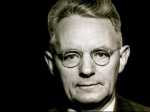
The conception of man as entertained by modern thought in general cannot be assumed to be the same as that set forth in Scripture. It is therefore imperative that the Christian apologist be alert to the fact that the average person to whom he must present the Christian religion for acceptance is a quite different sort of being than he himself thinks he is. A good doctor will not prescribe medicines according to the diagnosis that his patient has made of himself. The patient may think that he needs nothing more than a bottle of medicine while the doctor knows that an immediate operation is required.

Christianity then must present itself as the light that makes the facts of human experience, and above all the nature of man himself, to appear for what they really are. Christianity is the source from which both life and light derive for men.

~Cornelius Van Till~


The Defense of the Faith (Phillipsburg, NJ; P&R Publishing; 2008) p. 92.

Books by Cornelius Van Till

Kindle Books

More Van Til Quotes

Martin Luther – The Old Interpreted with the Help of the New

12 Aug

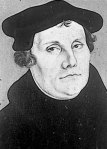
If the Old Testament can be interpreted by human wisdom without the New Testament, I should say that the New Testament has been given to no purpose. So Paul concluded that ‘Christ died to no purpose’ if the Law were sufficient (Gal. 2:21).

~Martin Luther~


Luther’s Works – Vol. 10 (St. Louis, MI; Concordia Publishing House, 1974) p. 6

Books by Martin Luther

Luther’s Works on Logos Bible Software

Kindle Books

Biography

Other Luther Quotes

Charles Spurgeon – Great Sorrow Turned to Great Joy

9 Aug

20120713-214637.jpg

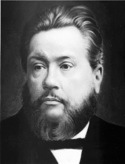
First, I would bid you stand and see the place where the Lord lay with emotions of deep sorrow. O come, my beloved brother, thy Jesus once lay there. He was a murdered man, my soul, and thou the murderer.

“Ah, you, my sins, my cruel sins,
His chief tormentors were,
Each of my crimes became a nail,
And unbelief the spear.”

“Alas! and did my Saviour bleed?
And did my Sov’reign die?”

I slew him—this right hand struck the dagger to his heart. My deeds slew Christ. Alas! I slew my best beloved: I killed him who loved me with an everlasting love. Ye eyes, why do ye refuse to weep when ye see Jesus’ body mangled and torn? Oh! give vent to your sorrow, Christians, for ye have good reason to do so…

My soul was drowning. From heaven’s high portals he saw me sinking in the depths of hell. He plunged in.

“He SANK beneath his heavy woes,
To raise me to a crown;
There’s ne’er a gift his hand bestows.
But cost his heart a groan.”

Ah! we may indeed regret our sin, since it slew Jesus.
Now, Christian, change thy note a moment. “Come, see the place where the Lord lay,” with joy and gladness. He does not lie there now. Weep, when ye see the tomb of Christ, but rejoice because it is empty. Thy sin slew him, but his divinity raised him up. Thy guilt hath murdered him, but his righteousness hath restored him. Oh! he hath burst the bonds of death; he hath ungirt the cerements of the tomb, and hath come out more than conqueror, crushing death beneath his feet. Rejoice, O Christian, for he is not there—he is risen.


~Charles Spurgeon~


The New Park Street Pulpit Sermons, Vol. I (London: Passmore & Alabaster, 1855), 137. eBook. Vol. 1, Sermon No. 18; Titled: The Tomb of Jesus; Delivered on Sabbath Morning, April 8th, 1855.

Books by Charles Spurgeon

Kindle Books

Biography of Charles Spurgeon

Other Spurgeon Quotes

Cornelius Van Til – Our World is Not Normal

6 Aug

Van Till

Men are glad to read the utopias that dreamers have dreamed; they are glad even to include the story of Genesis in their repertoire of light reading for leisure hours, but men rebel against being told that their ethical ideals must be judged by the ethical ideals of Adam.

The real meaning of this opposition to the original perfect ethical ideal is nothing short of hatred of the living God. If God does exist as man’s Creator, it is as we have seen, impossible that evil should be inherent in the temporal universe. If God exists, man himself must have brought in sin by an act of wilful transgression. Hence, existence, as it now is, is not normal but abnormal. Accordingly, to maintain that existence, as it now is, is normal, is tantamount to a denial of man’s responsibility for sin, and this in turn makes God responsible for sin, and this simply means that there is no absolute God.

~Cornelius Van Till~


The Defense of the Faith (Phillipsburg, NJ; P&R Publishing; 2008) p. 85.

Books by Cornelius Van Till

Kindle Books

More Van Til Quotes

Herman Bavinck – Suffering and Self-Defense

5 Aug

38 “You have heard that it was said, ‘An eye for an eye and a tooth for a tooth.’ 39 But I say to you, Do not resist the one who is evil. But if anyone slaps you on the right cheek, turn to him the other also. 40 And if anyone would sue you and take your tunic, let him have your cloak as well. 41 And if anyone forces you to go one mile, go with him two miles. 42 Give to the one who begs from you, and do not refuse the one who would borrow from you. – Matthew 5:38-42

To understand this saying correctly, one must note that Jesus does not cite the words “an eye for an eye and a tooth for a tooth” directly from the Old Testament, for in that case he would certainly have introduced it with the formula “it is written.” But he cites it in the way it had from ancient times been taught and explained in Jewish schools and opposes the false interpretation that had been given of it. And that false interpretation did not consist in the fact that people considered the law of retribution as taught in the Old Testament also applicable in private life and mutual interactions, but that publicly as well, before a judge, they made it a tool of self-interest, personal vengeance, and hatred. Jesus, opposing this abuse, offers in its place the principle of love and patience. His disciples must not resist one who is evil, that is, they must not (according to the rule “an eye for an eye and a tooth for a tooth”) return evil for evil. They must not counter an unfair demand of their neighbor with an equally unfair demand of their own. They must not attempt to avenge themselves on their neighbor with like conduct but rather seek to win him with love, patience, long-suffering, leniency, and a spirit of accommodation. In saying this, however, Christ is absolutely not condemning every instance of defending one’s own rights. For when one of the officers in the high priest’s hall of justice struck Jesus, Jesus does not turn the other cheek but defends himself, saying: “If I have spoken wrongly, testify to the wrong. But if I have spoken rightly, why do you strike me?” (John 18:22–23; also cf. Paul, Acts 22:25; 23:3; 25:10). But the rights of others as well as our own must, according to Christ, be esteemed so highly that they may not in any way be subordinated to personal vindictiveness, hatred, self-interest, to the evil tendencies of the human heart. When we fight for them, we must do so out of love for God and our neighbor. Vengeance and recompense, also according to the Old Testament, are the Lord’s own cause (Deut. 32:35).

~Herman Bavinck~


Reformed Dogmatics Volume 3: Sin and Salvation in Christ (Grand Rapids, MI; Baker Academic; 2006) p. 161-162.

Books by Herman Bavinck

Kindle Books

Biography of Herman Bavinck

More Bavinck Quotes

John Calvin – Doctrine and the Fear of God

1 Aug

No man can rightly handle the doctrine of godliness, unless the fear of God reign and bear the chief sway in him.

~John Calvin~


Calvin’s Commentaries – Acts (Bellingham, WA: Logos Bible Software; 2010) Vol. 2, p. 312. Commentary on Acts 23:1

Books by John Calvin

Kindle Books

Biography of John Calvin

Online Books Available

Other Calvin Quotes at the Old Guys

Herman Bavinck – The World Is Never Godless

31 Jul

All knowledge of God rests on revelation. Though we can never know God in the full richness of his being, he is known to all people through his revelation in creation, the theater of his glory. The world is never godless. In the end there are no atheists; there is only argument about the nature of God. The recognition is universal of a power greater than human beings themselves, to whom they owe piety.

~Herman Bavinck~


Reformed Dogmatics Vol. 2: God and Creation (Grand Rapids, Michigan; Baker Academic; 2004) p. 53.

Books by Herman Bavinck

Kindle Books

Reformed Dogmatics on Logos Bible Software

Biography of Herman Bavinck

More Bavinck Quotes

John Calvin – Suppressing Storehouses of Truth

30 Jul

4. But man turns ungratefully against God
Here, however, the foul ungratefulness of men is disclosed. They have within themselves a workshop graced with God’s unnumbered works and, at the same time, a storehouse overflowing with inestimable riches. They ought, then, to break forth into praises of him but are actually puffed up and swollen with all the more pride. They feel in many wonderful ways that God works in them; they are also taught, by the very use of these things, what a great variety of gifts they possess from his liberality. They are compelled to know—whether they will or not—that these are the signs of divinity; yet they conceal them within. Indeed, there is no need to go outside themselves, provided they do not, by claiming for themselves what has been given them from heaven, bury in the earth that which enlightens their minds to see God clearly.

~John Calvin~


The Institutes of the Christian Religion (Louisville, KY; Westminster John Knox Press; 1974) Vol. 1.5.4. p. 55.

Books by John Calvin

Biography of John Calvin

Kindle Books

Online Books Available

Other Calvin Quotes

Charles Hodge – The Existence of Evil and the Glory of God

26 Jul

The Scriptures teach, (1.) That the glory of God is the end to which the promotion of holiness, and the production of happiness, and all other ends are subordinate. (2.) That, therefore, the self-manifestation of God, the revelation of his infinite perfection, being the highest conceivable, or possible good, is the ultimate end of all his works in creation, providence, and redemption. (3.) As sentient creatures are necessary for the manifestation of God’s benevolence, so there could be no manifestation of his mercy without misery, or of his grace and justice, if there were no sin. As the heavens declare the glory of God, so He has devised the plan of redemption, “To the intent that now unto the principalities and powers in heavenly places, might be known by the Church the manifold wisdom of God.” (Eph. iii. 10.) The knowledge of God is eternal life. It is for creatures the highest good. And the promotion of that knowledge, the manifestation of the manifold perfections of the infinite God, is the highest end of all his works. This is declared by the Apostle to be the end contemplated, both in the punishment of sinners and in the salvation of believers. It is an end to which, he says, no man can rationally object. “What if God, willing to show his wrath (or justice), and to make his power known, endured with much long suffering the vessels of wrath fitted to destruction: and that He might make known the riches of his glory on the vessels of mercy, which He had afore prepared unto glory.” (Rom. ix. 22, 23.) Sin, therefore, according the Scriptures, is permitted, that the justice of God may be known in its punishment, and his grace in its forgiveness. And the universe, without the knowledge of these attributes, would be like the earth without the light of the sun.

The glory of God being the great end of all things, we are not obliged to assume that this is the best possible world for the production of happiness, or even for securing the greatest degree of holiness among rational creatures. It is wisely adapted for the end for which it was designed, namely, the manifestation of the manifold perfections of God. That God, in revealing Himself, does promote the highest good of his creatures, consistent with the promotion of his own glory, may be admitted. But to reverse this order, to make the good of the creature the highest end, is to pervert and subvert the whole scheme; it is to put the means for the end, to subordinate God to the universe, the Infinite to the finite. This putting the creature in the place of the Creator, disturbs our moral and religious sentiments and convictions, as well as our intellectual apprehensions of God, and of his relation to the universe.

~Charles Hodge~


Systematic Theology, Vol. 1 (Peabody, MA; Hendrickson Publishers; 2013) p. 435-436

Free PDF
$2.99 Kindle Version

Books by Charles Hodge

Kindle Books

More Quotes by Hodge at The Old Guys

Herman Bavinck On Marriage and the Family

25 Jul

Nelson Kloosterman and Christian’s Library Press recently did us all a service by translating Herman Bavinck’s work on the Christian family into English.

A century ago when this book was first published, marriage and the family were already weathering enormous changes, and that trend has not abated. Yet by God’s power the unchanging essence of marriage and the family remains proof, as Bavinck notes, that God’s “purpose with the human race has not yet been achieved.”

Neither a ten-step guide nor a one-sided approach, this book embodies a Christian theology of marriage and the family. Accessible, thoroughly biblical, and astonishingly relevant, it offers a mature and concise handling of the origins of marriage and family life and the effects of sin on these institutions, an appraisal of historic Christian approaches, and an attempt to apply that theology.

Aptly reminding Christians that “the moral health of society depends on the health of family life,” Bavinck issues an evergreen challenge to God’s people: “Christians may not permit their conduct to be determined by the spirit of the age, but must focus on the requirement of God’s commandment.”


If you’d like to hear more about this project The Reformed Forum did an interview with Dr. Kloosterman that was very informative.


View the Table of Contents and download a PDF of the first 2 chapters here:

Screen Shot 2013-07-25 at 1.23.06 PM


Find the book at:

WTS – Paperback: $10.80 | Amazon – Kindle: $7.99